
The first shirt sample often answers the wrong question. Everyone debates the collar while the size chart, label artwork and washing instructions remain unresolved.
For a private label dress shirt, a useful sample must do more than look finished. It should show which decisions are approved, which need revision, and which materials or details are still substitutes. That record is what turns a promising prototype into a repeatable product.
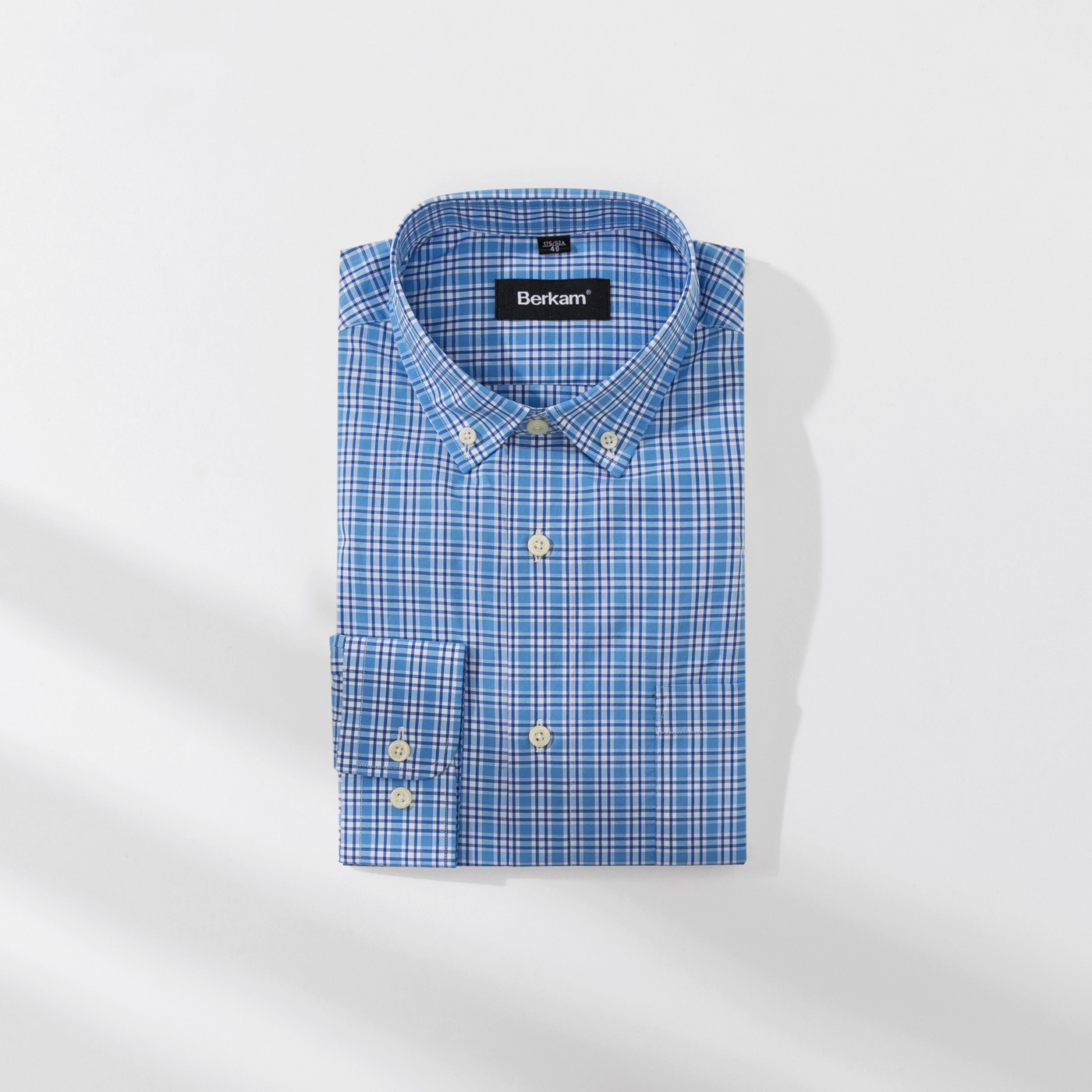
Choose the development route before requesting a sample
Private label describes the brand on the product; it does not tell the manufacturer how much development you need. You may want an existing base shirt with your labels, changes to a base pattern, or a shirt developed from your own technical specification.
OEM and ODM are used differently across suppliers. Explain the deliverables instead of relying on the acronym: who prepares the pattern, who supplies the measurement chart, who sources fabric, and who owns the approved artwork and development files? Ask those questions before paying for development.
BERKAM’s OEM/ODM enquiry page outlines the sourcing route. The available development scope is confirmed for each project.
Give the tech pack a clear order of authority
A reference shirt has a pointed collar. The sketch shows a spread collar. A later email asks for button-down points. Without a written decision, all three can look like instructions.
Assign one version to the brief and state which reference governs each feature. A practical shirt tech pack can begin with the following sections:
- Style identity: style code, date, version and a front/back drawing or marked reference photograph.
- Materials: proposed fabric, colour reference, interfacing, thread, buttons and any approved alternatives.
- Measurements: measuring points, base size, size range, grading and agreed tolerances.
- Construction: collar, cuff, placket, pocket, yoke, hem and seam details that affect the design.
- Branding and packing: artwork files, dimensions, placement, labels and carton instructions.
You do not need to pretend every detail is settled. Mark an unresolved item “for supplier proposal” and name the person who will approve it. An honest blank is easier to resolve than a guessed specification that reaches production.
Fit approval needs a measuring method
“Sleeve too short” is a useful observation, but not a complete correction. Did someone measure from the shoulder seam, the centre back, or another point? Was the cuff included? Describe the measuring method before changing the number.
Fit the sample on a suitable wearer and check the intended movements: sitting, reaching forward, bending the elbow and wearing the planned jacket or tie. Then measure the garment flat according to the agreed chart. Keep wearer feedback separate from measured deviations so the pattern team can identify the cause.
After the base fit is approved, review how it extends across the ordered size range. A good middle-size sample does not settle the fit at both ends of that range. Agree which additional sizes need checking for your programme.

Separate the sample review into decisions
| Review | Record | Do not assume |
|---|---|---|
| Appearance | Collar roll, placket alignment, pocket position, visible puckering | A folded sample proves fit |
| Measurements | Actual values against the agreed chart and method | Size labels are interchangeable |
| Materials | Fabric and trim references; any substitutes | Prototype materials equal bulk materials |
| Branding | Artwork version, scale, placement and physical execution | Screen approval settles embroidery appearance |
| Laundering | Agreed care procedure and observations or test results | New-shirt appearance predicts wash performance |
Use a short correction list with one issue per line. “Move pocket” is vague. A marked photograph plus a dimension from an agreed reference point gives the factory something to act on. Where a correction changes the pattern or material, ask whether another sample is needed before approval.
Check the small label before the large order
The brand label is only part of the label set. Agree size identification, fibre information, care instructions and any origin or importer information required for the destination market. Have the responsible importer or adviser confirm the applicable requirements; a manufacturer’s generic label layout is not a compliance review.
Check physical placement as well as spelling. A neck label can rub, a care label can show through a pale fabric, and a bulky fold can be uncomfortable. Review the actual execution where those details matter.
Make production release a separate decision
Sample approval and permission to start bulk production should be unambiguous. Keep a sealed or otherwise identified reference sample, the final specification and the approval record together. State whether approval is full or conditional. List every condition that must close before cutting.
Ask the supplier to confirm how changes after approval affect cost, material commitments and timing. A late button change may be simple; a late fabric change can reopen fit, colour and wash evaluation. Deal with that before a revised instruction reaches the cutting room.
A useful approval says what was accepted, against which version, and what still needs to happen.
Send a brief the manufacturer can work from
For a private label dress-shirt enquiry with BERKAM, share a tech pack or reference shirt, your target wearer, size range, proposed quantity, branding files and intended schedule. Flag the decisions you need help resolving. Sampling scope, materials, MOQ and production lead time are reviewed per project.
Planning a team allocation as well? The corporate shirt programme covers the business context. Send the specifications for review when your first brief is ready.