
Hospitality / Hotel Uniforms
Custom Hotel Staff Uniforms for Multi-Department Programs
Hotel staff uniforms are never one garment. Front desk, housekeeping, F&B, concierge, and management teams all need different performance logic while still feeling like one hotel brand system.
Hotel uniforms by role, not one generic garment
Use one visual identity across the property while giving front desk, concierge, housekeeping, and restaurant teams the fit, fabric, and construction their work actually requires.
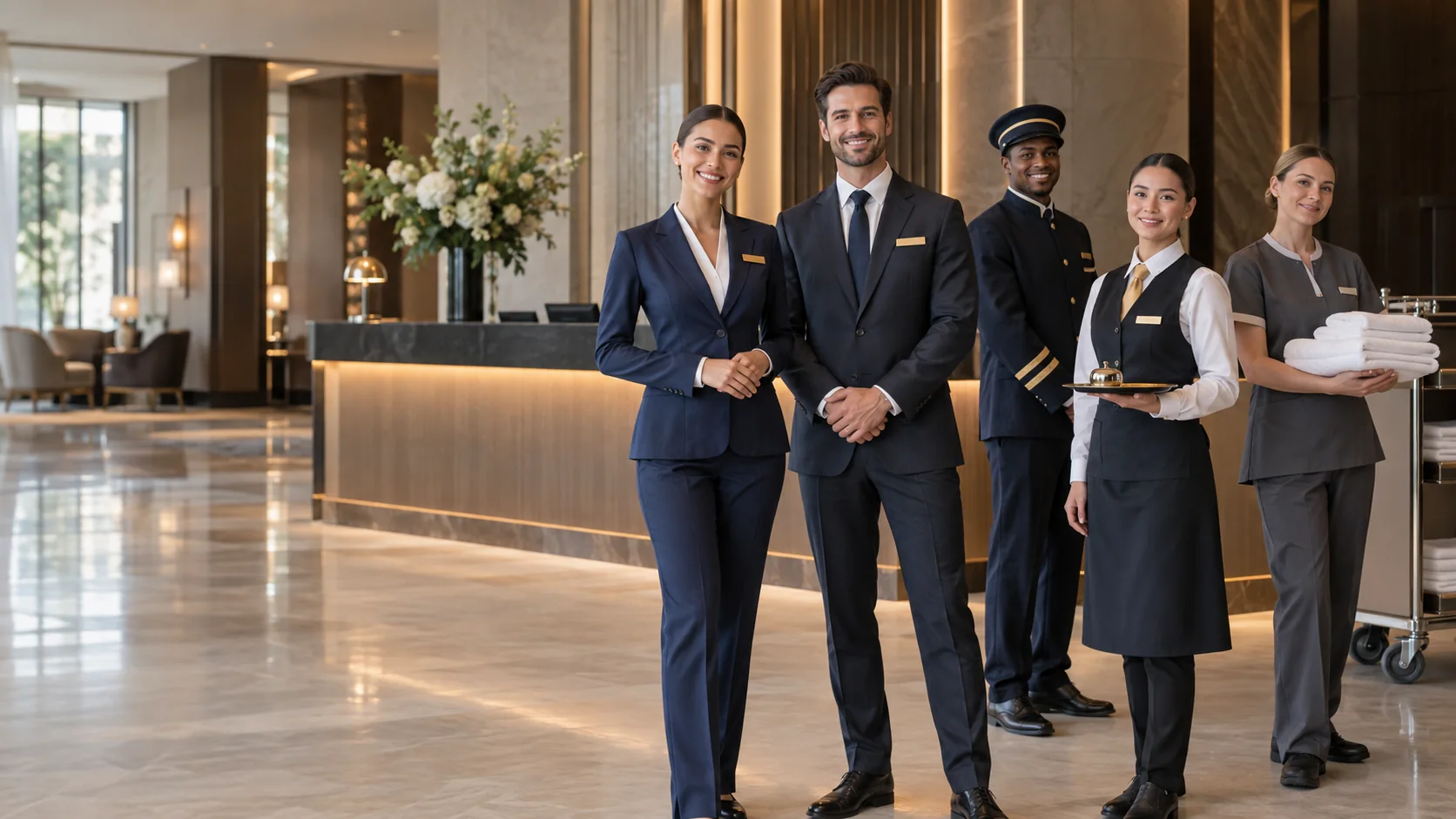
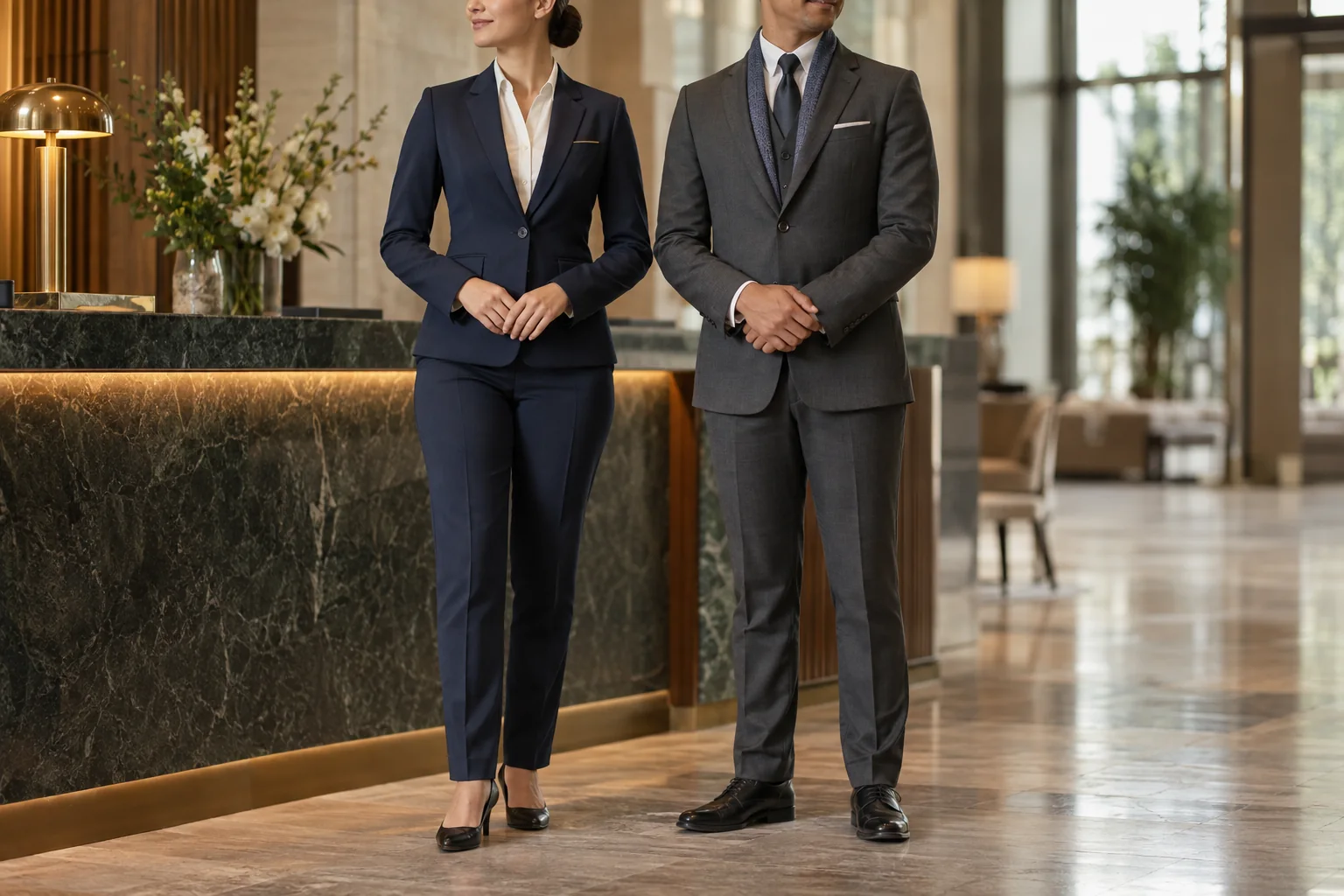
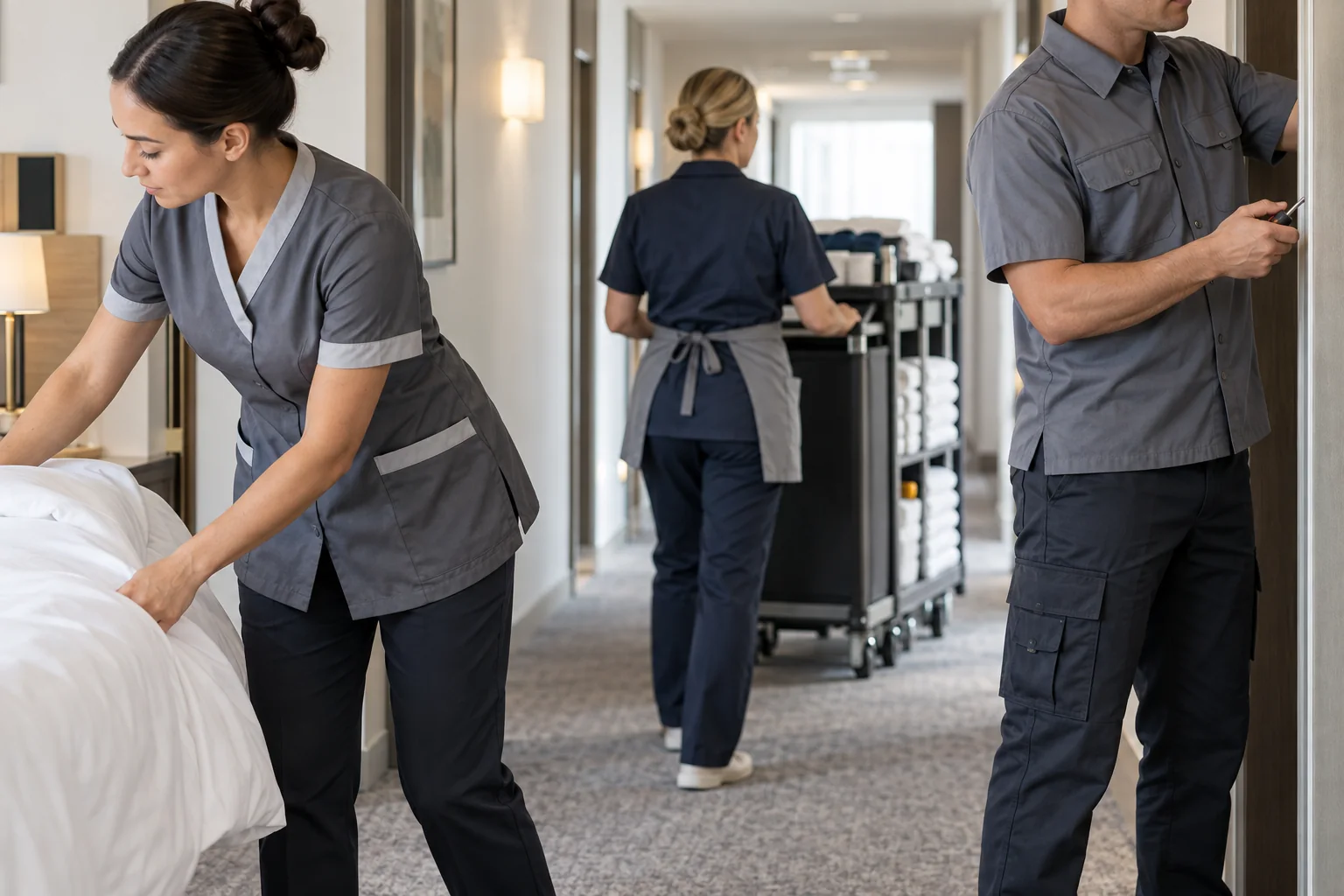
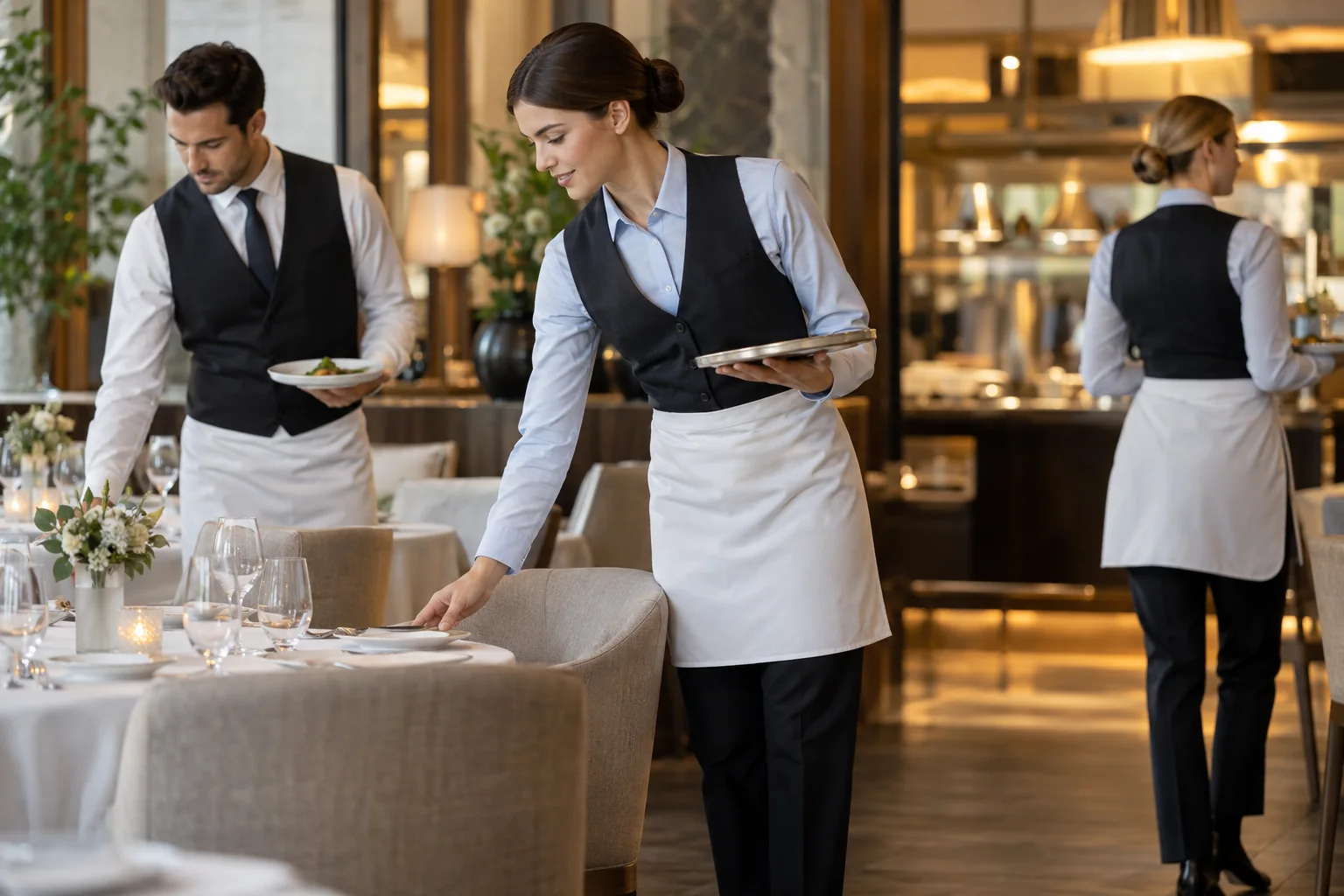
Illustrative reconstructions for programme planning; final fabrics, colors, trims, and fit are confirmed through project sampling.
Request a Hotel Uniform QuoteQuick answer
- Roles covered
- Front desk, housekeeping, F&B, management
- Common items
- Shirts, suits, vests, workwear
- MOQ
- Project-specific MOQ and lead time are confirmed after style, fabric, construction, quantity, and schedule review
- Lead time
- Project-specific MOQ and lead time are confirmed after style, fabric, construction, quantity, and schedule review
Typical Hotel Uniform Scope
| Department | Typical Items | Operational Context | Buying Priority |
|---|---|---|---|
| Front Desk | Shirts, blazers, scarves, trousers | Guest arrival and first-brand impression | Sharpness, color control, and fit discipline |
| Housekeeping | Tunics, utility shirts, aprons | High movement and frequent washing | Wash durability, breathability, and mobility |
| Restaurant | Service shirts, aprons, vests | Close-range service and stain-prone work | Presentation, stain logic, and layering balance |
| Concierge | Suits, jackets, shirts | Lobby presence and premium guest contact | Recognition, polish, and seasonal flexibility |
| Management | Formal suiting programs | Executive representation and oversight | Brand continuity, elevated handfeel, and reorder control |
Types of Uniforms in the Hotel Industry
The main types of uniforms in the hotel industry usually include front desk uniforms, concierge suits, housekeeping uniforms, restaurant and banquet uniforms, chef wear, management suiting, valet or door-staff outerwear, and maintenance workwear. Buyers searching for hotel staff uniforms or a hotel staff uniform program are usually trying to coordinate all of these categories inside one sourcing system.
As a hotel uniform company and hotel uniform supplier, BERKAM helps properties coordinate those departments through one approved palette, sizing system, sampling process, and repeat-order standard.
If you need a longer hotel staff uniforms guide, see our detailed sourcing article on hotel staff uniforms for department logic, fabrics, MOQ, and replenishment planning.
How Strong Hotel Programs Are Usually Structured
A hotel can share one visual identity without forcing front desk and housekeeping into the same cloth.
The best programs feel cohesive across roles while still respecting different job realities.
Scarves, ties, aprons, and badges are where brand identity often becomes visible and where repeat-order drift often starts.
Multi-department hospitality programs work better when fit coverage is solved early, not after samples are approved.
Luxury hotels still live inside real wash cycles, staff rotation, and replenishment needs.
New-hire orders are constant, so size matrices, trims, and fabric continuity need a repeatable framework.
Fabric and Construction Guidance
- Front desk and concierge programs usually benefit from shirt and suiting fabrics with stable drape, reliable color control, and a cleaner formal line.
- Housekeeping uniforms should prioritize low-maintenance washing performance, lighter handling, and movement comfort over luxury handfeel.
- Restaurant service uniforms are strongest when shirts, vests, and aprons are planned as one coordinated system rather than separate items sourced independently.
- Management uniforms can share the same brand palette as guest-facing teams while upgrading handfeel or structure in controlled ways.
What to Confirm Before Sampling Starts
- Which roles belong to a formal businesswear logic and which belong to a true workwear logic.
- Whether the garments will be home-washed, standard washed, or commercially laundered.
- Whether the main palette, trim colors, and accessories are already aligned before color approval starts.
- Whether long-term replenishment and future property expansion need to be built into the size and sample system.
Custom Uniforms for Hotel Employees vs One-Style Programs
Custom uniforms for hotel employees usually perform better than forcing every department into one identical garment idea. Bespoke hotel uniforms are most valuable for front desk, concierge, and management teams where silhouette, accessories, and precise color control shape the guest-facing brand impression. Housekeeping, F&B, and kitchen roles can still stay visually aligned while using more practical easy-care constructions.
Typical Project Snapshots
A common brief is that front desk, concierge, housekeeping, and F&B all need to launch within a 60- to 90-day window. The real work is usually sequencing the formal front-of-house line, the laundry-safe housekeeping line, and the accessory palette in the right order.
These projects are rarely about redesign. They are about making new-hire orders and new-property duplication look identical to the original launch, which depends on master samples, approved cloth shades, and controlled trims.
Sometimes the hotel identity is already stable but the dining team needs a sharper, more practical sub-system. The safer move is usually to keep the brand palette and rebuild shirts, aprons, and vest layers as one coordinated service set.
What to Prepare Before Requesting a Quote
| Input | Why It Matters | Minimum Useful Version |
|---|---|---|
| Department list | Determines whether the project needs separate front-of-house, housekeeping, F&B, and management systems | A simple role list with approximate headcount |
| Project timeline | Affects sample priority, trim planning, and bulk scheduling | An opening month or target launch window |
| Laundry method | Directly changes fabric direction and construction choices | Home wash, standard wash, or commercial laundry |
| Style references | Helps define the formality level, palette, and accessory approach quickly | Reference images, existing uniforms, or mood boards |
| Budget range | Helps balance premium feel against operational realism | A rough per-piece or per-set target |
Hotel Uniform Buying Checklist
- Decide which departments need their own garment logic and which only need visual distinction.
- Lock the main, secondary, and accessory colors before going deep into fabric discussion.
- Confirm laundry expectations early instead of judging only the first sample appearance.
- Build repeat orders, new hires, and future property expansion into the system from the beginning.
- Make sure front-of-house polish and back-of-house durability both work at the same time.
Typical Rollout Flow
Define the product matrix across front desk, housekeeping, F&B, concierge, and management.
Confirm the visual direction, main colors, and accessory logic before sampling deepens.
Most programs start by proving the front-of-house hero line and one functional department line first.
Lock the fabric, fit, trims, and future reorder rules together, not separately.
Hotel Uniform FAQ
The most common types of uniforms in the hotel industry are front desk uniforms, concierge suits, housekeeping uniforms, restaurant and banquet uniforms, chef uniforms, management suiting, valet or bellhop outerwear, and maintenance workwear.
Yes. Strong hotel uniform suppliers usually build one visual system across multiple departments while assigning different fabrics, constructions, and size rules to front-of-house, housekeeping, F&B, and management teams.
Bespoke hotel uniforms are usually worth it when the property needs stronger brand differentiation, unusual color control, premium guest-facing presentation, or a more tailored identity for front desk, concierge, or management tiers.
Usually no. A better solution is to unify the brand palette and styling language, then assign different fabrics according to front-of-house, housekeeping, and F&B performance needs.
The practical answer is usually easy-care blends or commercial-friendly constructions, then letting the premium feel come from silhouette, color discipline, and accessory control.
The safest approach is to keep approved fabric standards, trim references, and fit samples on file so every replenishment order follows the same master version.
Planning a hotel uniform program?
Send us the department list, opening timeline, laundry method, and image direction. We can help structure the matrix before sampling starts.
Request a Hotel Uniform Quote