
YOUR BRAND / DRESS SHIRT SPECIFICATIONS
Private Label Shirt Manufacturer
Dress shirts for brands that need more than a logo: a defined garment, collar and cuff construction, fabric reference, label content and branded presentation.

ORDER FACTS
Product scope and purchasing terms.
50-piece minimum
100 pieces recommended because air freight costs are relatively high.
15 / 45 production days
Logo customization: 15 days. Full customization: 45 days. Both after sample and order approval; transit excluded.
10–15 days for sampling
Sampling takes 10–15 days. Charges are confirmed for the garment, fabric and artwork. Sampling and production are separate periods.
01 / PRODUCT CAPABILITY
Private label means defining your branded product
BERKAM manufactures dress shirts in Yiwu, China, with OEM/ODM and private-label requirements reviewed for the selected garment. A private-label brief should establish what the brand owns and specifies: the style reference, fit, fabric direction, artwork, labels and presentation. It should also distinguish a shirt that mainly adds branding from a fully customized garment. A neck label alone does not define the whole product. The commercial specification needs to connect the branded components to a reproducible dress shirt, with agreed measurements and an approved physical reference rather than a collection of unrelated design images.
02 / PRODUCT CAPABILITY
Neck labels and side-seam labels have different jobs
The configurator lists custom woven labels for neck and side-seam positions. Specify the finished label size, text, artwork, colours, fold and intended attachment location. A neck label may carry the brand identity, while another label carries the size or additional product information. The label should be considered with the collar stand and the wearer’s contact with the garment. Confirm the appearance of the actual label on the selected sample, including whether its position, edges and stitching suit the shirt. Artwork dimensions and a digital preview are useful references, but they do not replace the sewn component.
03 / PRODUCT CAPABILITY
Care, composition and size information need approved wording
A private-label product may need several kinds of information, and the required wording depends on the destination market and buyer requirements. Provide the intended care instructions, composition text, size system and other required label content for review. Do not infer the fibre composition from a photograph or copy the label of a different shirt. BERKAM’s fabric references include composition fields that can support the material discussion, but the final product information should match the actual agreed fabric. Any compliance or testing requirement must be identified explicitly; this page does not claim a universal certification for every branded shirt.
04 / PRODUCT CAPABILITY
Collar architecture is part of the brand identity
Classic Spread, Button-Down, Cutaway and Mandarin collar directions are available in the shirt configurator. A brand may use one recognisable collar across a range or define different collars for formal and relaxed products. In either case, record the collar height, point length, opening and desired structure with the sample reference. The collar should be evaluated with the intended fit, neckline and button spacing. Calling a collar classic does not establish its measurements. When a new colour or fabric is introduced, compare how the same construction behaves instead of assuming the first sample represents every material.
05 / PRODUCT CAPABILITY
Cuffs, visible marks and the clean exterior option
Standard Barrel, French Double Cuff and Adjustable Barrel provide different cuff closure directions. Define the cuff depth, wrist dimension, sleeve length and button arrangement together. A cuff monogram can add discreet brand or wearer identification, while chest embroidery creates a more visible mark. A clean exterior without a visible mark is also a listed direction. A private-label collection does not require every shirt to carry exterior embroidery. If marks are used, approve their finished dimensions and position on the actual material so that the brand presentation is consistent with the garment construction.
06 / PRODUCT CAPABILITY
Fabric weight, yarn reference and the chosen hand feel
Named cotton references in BERKAM’s public library include JT0004-01 at 98 gsm, JT0001-02 at 110 gsm and JT0030-01 at 127 gsm. JT0001-02 is listed with a 100/2*80 yarn reference, while JT0030-01 is listed with 100/2*100/2. These are catalogue specifications for particular fabrics, not blanket promises for every private-label collection. Compare the selected swatches for opacity, drape and surface appearance. If the brand intends to make an easy-care, non-iron or other performance claim, identify the actual material and the evidence required before using that claim on a product label or selling page.
07 / PRODUCT CAPABILITY
Fit blocks and size labels must refer to the same garment
Supply the intended measurement chart and define whether it represents body measurements or finished garments. Important fields include neck, shoulder, chest, waist, body length, sleeve and cuff. A private-label size label should correspond to the approved product measurements, not simply reuse a familiar letter size from another supplier. Men’s and women’s versions may need separate blocks and proportion decisions. Record the measuring method, units and any tolerance requirement. A reference garment is helpful when the brand needs to retain a particular fit, but changes in fabric or construction should still be reviewed against that reference.
08 / PRODUCT CAPABILITY
Packaging belongs in the product specification
Discuss the individual shirt presentation, label or tag information and carton identification required by the brand. Packaging requirements should identify the garment reference and size clearly enough to support receiving, distribution and repeat orders. A request for premium packaging is less useful than a defined format, artwork and information layout. If the project uses multiple styles or destinations, specify the differences rather than allowing the packing requirement to remain implied. Availability, component specifications and pricing are reviewed for the order; no packaging material, certification or finishing method is promised merely because it appears in an inspiration image.
09 / PRODUCT CAPABILITY
A clear minimum and two customization lead times
Private-label shirt orders can start at 50 pieces. BERKAM recommends an order of 100 pieces because air freight costs are relatively high. Logo-customized products have a 15-day production period; fully customized products have a 45-day production period. Both are counted after sample and order approval, and transportation is excluded. A private-label neck label does not by itself determine which production route applies; record the actual garment and branding changes in the quotation. Sampling takes 10–15 days, with sample charges confirmed for the development brief. Do not interpret either production period as a fixed sampling duration.
10 / PRODUCT CAPABILITY
Keep the specification usable beyond the first order
A brand needs an approved reference that can be understood when the collection is reordered or expanded. Retain the fabric code, measurement chart, collar and cuff details, artwork, label text and packing instructions with the sample record. If a component changes, identify the revision rather than relying on a verbal description of the previous shirt. Material availability is reviewed again for later production; a previous order is not a guarantee of continuous stock. Wholesale range planning and employee logo programmes have separate pages because their purchasing priorities differ from establishing a branded retail product.
GARMENT DETAILS
See the construction you are specifying.
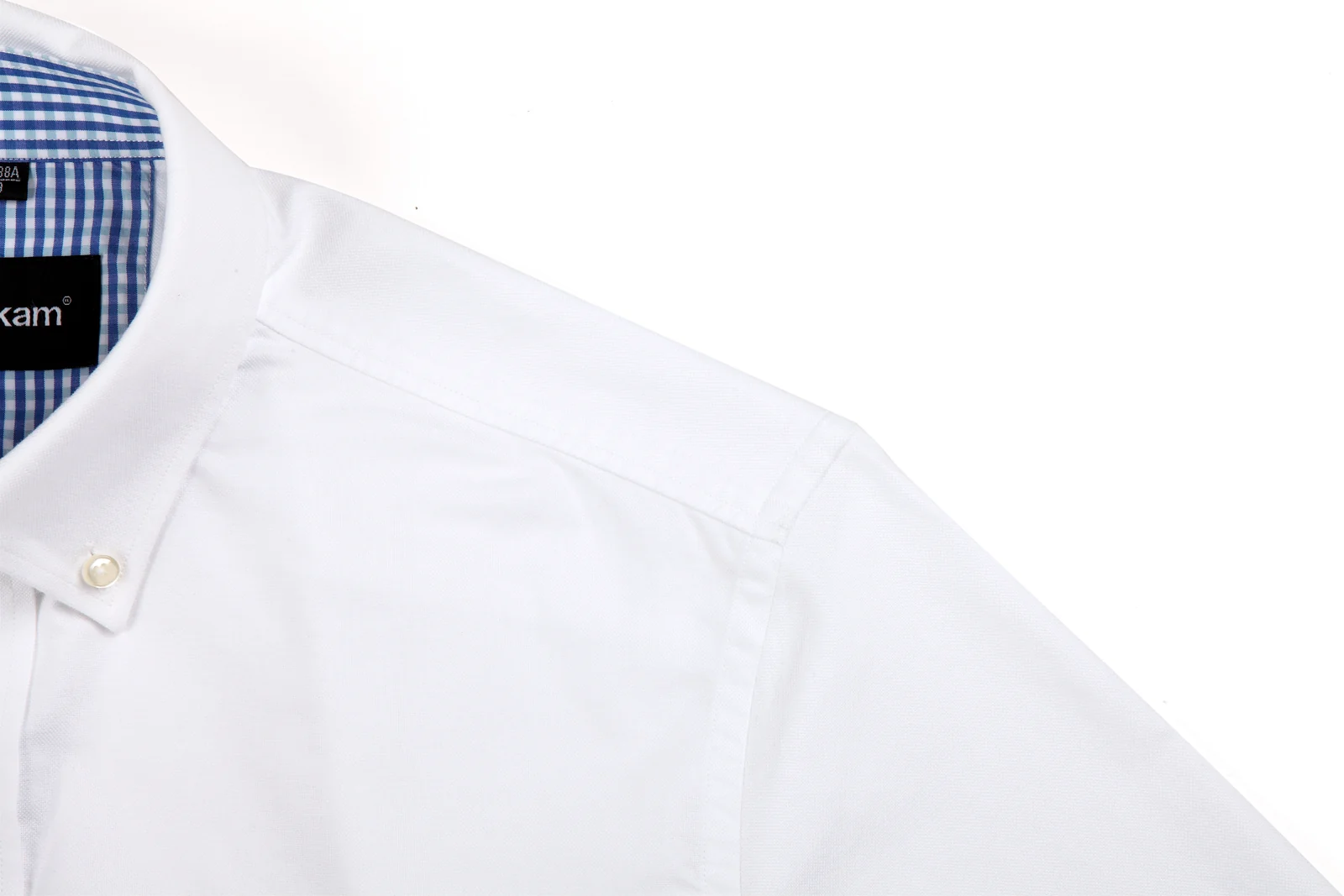
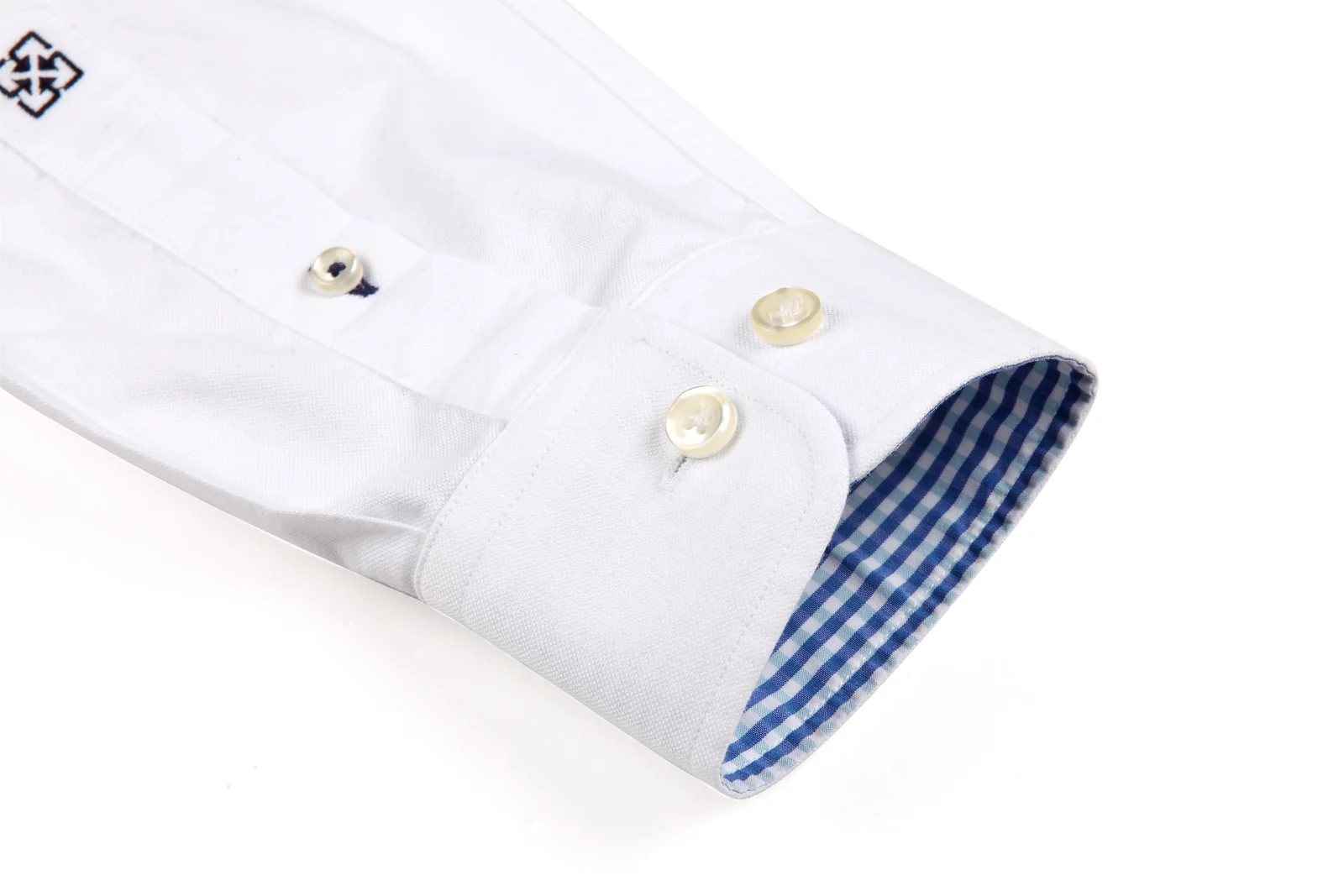
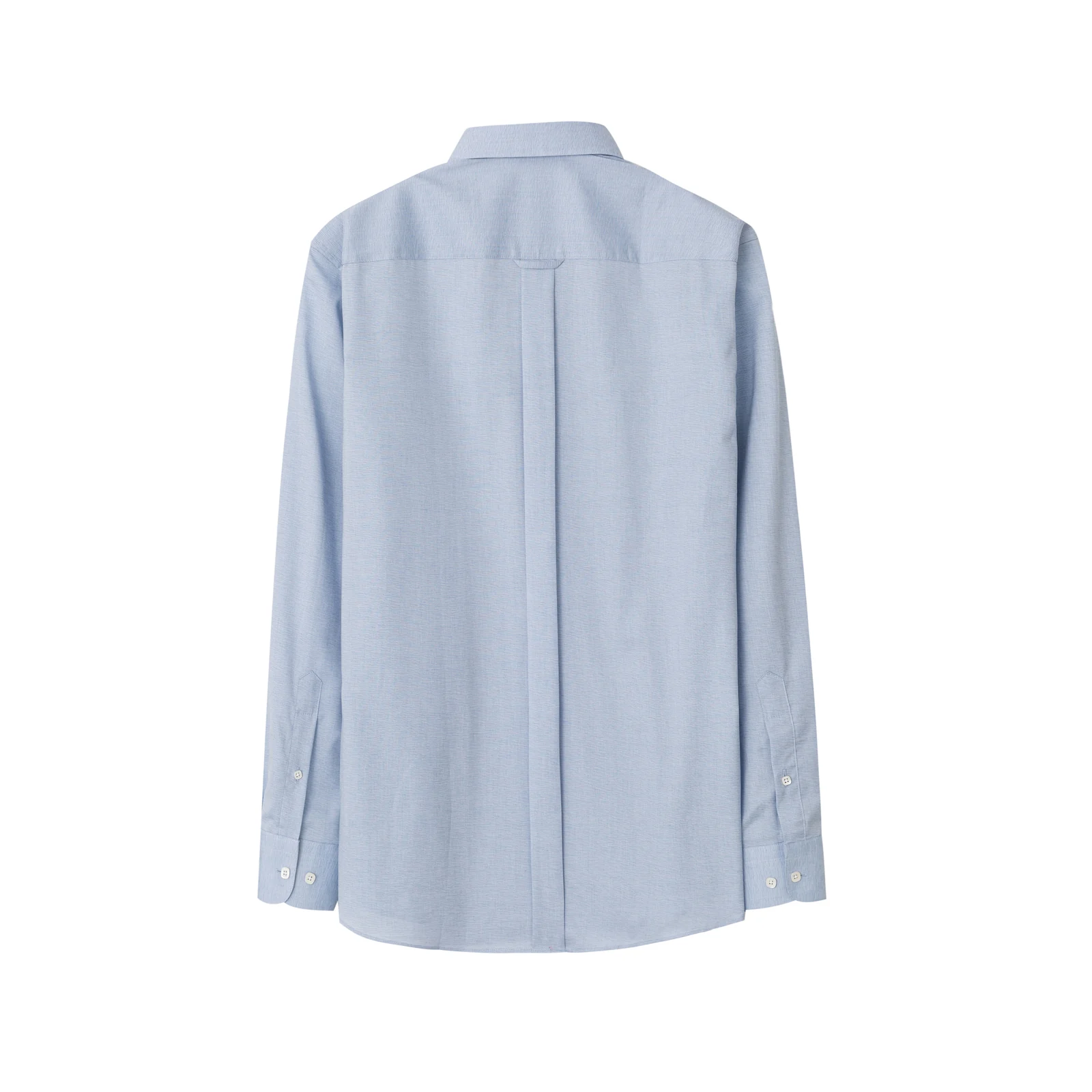
Product photographs show reference construction; selected materials, dimensions and logo application are defined by the approved sample.
CATALOGUE REFERENCES
Fabric weights you can identify.
| Reference | Composition | Weight |
|---|---|---|
| JT0004-01 | 100% cotton | 98 gsm |
| JT0001-02 | 100% cotton | 110 gsm |
| JT0030-01 | 100% cotton | 127 gsm |
Source: BERKAM’s public fabric library, checked 22 October 2026. Catalogue specifications are not live stock, test results or a promise that all colours share the same weight. Open the fabric library ↗
PRODUCT QUESTIONS
Before you choose a supplier.
Can a private-label shirt have no visible exterior logo?
Yes. No Visible Mark is a listed configuration direction. Woven label requirements and the garment specification can be reviewed separately.
Are labels alone enough to define a private-label order?
No. Confirm the actual fabric, fit, collar, cuffs, label content and packaging requirements for the selected shirt.
What are the MOQ and lead times?
50 pieces minimum, with 100 recommended because of air freight costs. Logo customization takes 15 production days and full customization 45, after sample and order approval, excluding transit.
Choose the relevant shirt supply route.
Need a coordinated wardrobe? Explore custom business suit sets alongside the shirt specification.
Define the shirt you want to buy.
Share a garment reference, size chart, fabric direction, branding artwork and quantity breakdown.
Discuss this shirt requirement ↗