
YIWU, CHINA / SHIRT OEM & ODM
Custom Shirt Manufacturer in China
Business dress shirts manufactured in Yiwu for brands, distributors and corporate buyers. Specify the collar, cuff, fabric reference, measurements and branding that define your product.
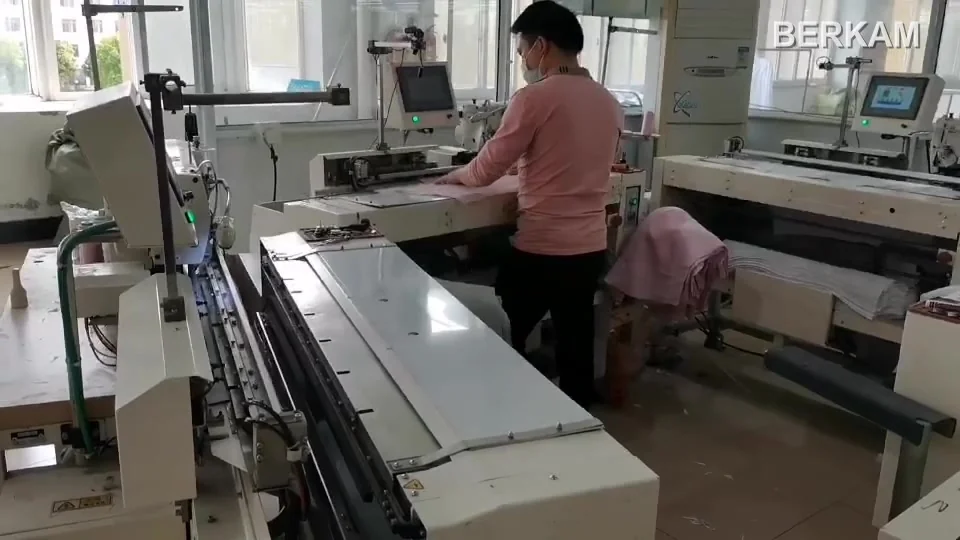
ORDER FACTS
Product scope and purchasing terms.
100-piece minimum
Every style starts at 100 pieces.
15 / 45 production days
Logo customization: 15 days. Full customization: 45 days. Both after sample and order approval; transit excluded.
10–15 days for sampling
Sampling takes 10–15 days. Charges are confirmed for the garment, fabric and artwork. Sampling and production are separate periods.
01 / PRODUCT CAPABILITY
Dress shirts are the product, not a generic apparel category
BERKAM manufactures dress shirts in Dachen Town, Yiwu, China. Orders can specify fabric, collar, cuffs, fit, buttons, embroidery and labels. Send your tech pack or a reference garment with a size and quantity list. If the design is still being developed, mark the details that need to be decided before sampling.
02 / PRODUCT CAPABILITY
Four collar decisions that change the finished shirt
The shirt configurator lists Classic Spread, Button-Down, Cutaway and Mandarin collar directions. A spread collar creates a familiar business-shirt profile; a button-down adds visible collar-point fastening; a cutaway changes the opening around a tie; and a Mandarin collar removes the turned-down points. The profile alone is not a complete specification. Collar height, point length, opening, interlining feel and closure position also affect the result. These dimensions should be recorded against the selected sample, particularly when the same shirt must be repeated across different sizes or reordered later.
03 / PRODUCT CAPABILITY
Cuffs, sleeve openings and wearable proportions
Available configuration directions include Standard Barrel, French Double Cuff and Adjustable Barrel. Standard barrel cuffs use a button closure; French cuffs require cufflinks; adjustable barrel cuffs offer alternative button positions. Specify the finished cuff depth, closure location and wrist measurement as well as the name of the style. Sleeve length and cuff position should be evaluated together, including whether the shirt will be worn under a business jacket. A cuff monogram is a separate branding choice: its location and dimensions should not interfere with the fold, placket or fastening.
04 / PRODUCT CAPABILITY
Fabric weight is tied to a named reference
The public fabric library contains identifiable fabric codes with composition, yarn count and grams per square metre. Examples include JT0004-01 at 98 gsm, JT0001-02 at 110 gsm and JT0030-01 at 127 gsm, all listed as cotton fabrics. These are individual catalogue references, not a promise that every colour is available at every weight. Compare the actual swatch for opacity, drape, surface appearance and the intended care routine. Yarn count and fabric weight describe different properties; neither alone proves durability, shrinkage performance or a particular certification.
05 / PRODUCT CAPABILITY
Measurements for each shirt size
A label reading medium does not define a reproducible shirt. Provide the measurement points for neck, shoulder, chest, waist, body length, sleeve length and cuff, together with units and a diagram of the measuring method. Distinguish body measurements from finished garment measurements. Men’s and women’s versions may need separate blocks, proportions and size allocation. For an existing product, mark which measurements must remain fixed and which may be reviewed. Size grading, fit preferences and tolerance requirements belong in the product specification rather than being inferred from a photograph.
06 / PRODUCT CAPABILITY
Brand marks, components and finishing details
Branding choices shown in the configurator include chest embroidery, cuff monograms, woven labels and a clean exterior without a visible mark. A quotation should identify the artwork, finished size, position, thread colour and relevant label text. Buttons, neck labels, side-seam labels and packaging details can be reviewed with the shirt specification. The construction of the fabric matters: a logo that looks clear on one reference may need adjustment on another. Approve the actual application on the chosen material; a screen preview does not establish the appearance of a sewn or embroidered sample.
07 / PRODUCT CAPABILITY
Order quantities and two production lead times
The minimum order is 100 pieces. The recommendation is a purchasing consideration, not a higher minimum or a guarantee of a particular freight saving. Logo-customized products have a production lead time of 15 days; fully customized products have a production lead time of 45 days. Both periods start after sample and order approval and exclude transport. The quote should identify which product route applies. Sampling takes 10–15 days. Sample charges are confirmed for the actual fabric, artwork and development requirements.
08 / PRODUCT CAPABILITY
What the development sample needs to establish
A useful sample represents the material, fit, collar, cuff, closures and branding of the intended order. If a reference is supplied, identify whether it is a guide to appearance or a specification to reproduce. Record the agreed fabric code and any differences from the reference, then check measurements and visual details on the physical garment. The sampling period is 10–15 days. The quotation should identify the sample completion date, sample charge and development scope, including whether the sample concerns logo application or a newly developed shirt.
09 / PRODUCT CAPABILITY
Choose the manufacturing relationship that fits your buyer
For a brand, private-label requirements may place more emphasis on neck labels, care information and retail presentation. A distributor may focus on repeatable styles, size ratios and garment identification. An employer may prioritise wearer comfort, logo visibility and coordinated men’s and women’s fits. These are related capabilities, but the information needed to define each product is different. BERKAM keeps those purchasing routes on separate pages so that the brief can stay focused. Suit coordination is also available as a separate product discussion, with fabric matching and size allocation reviewed rather than assumed.
GARMENT DETAILS
See the construction you are specifying.
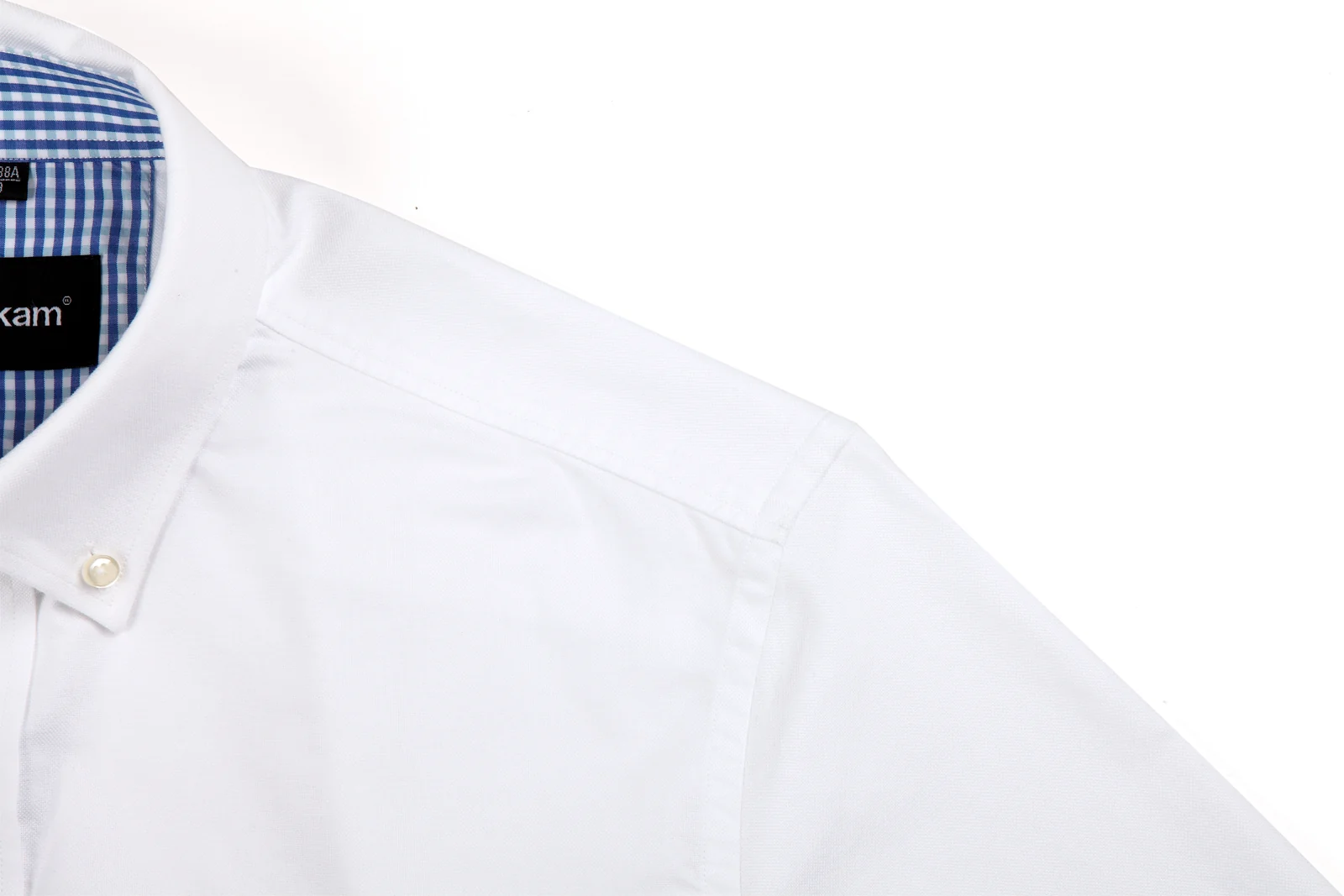
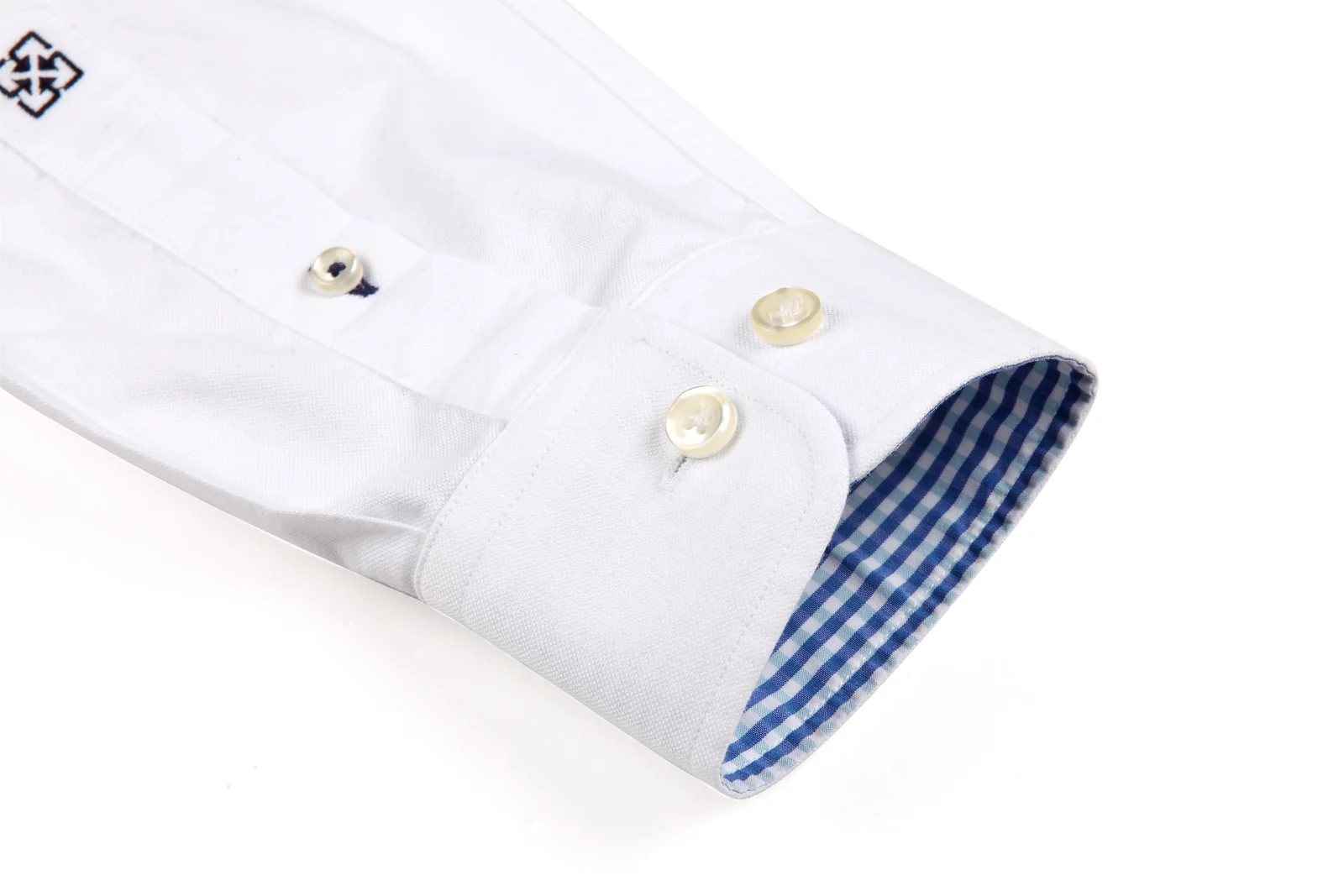
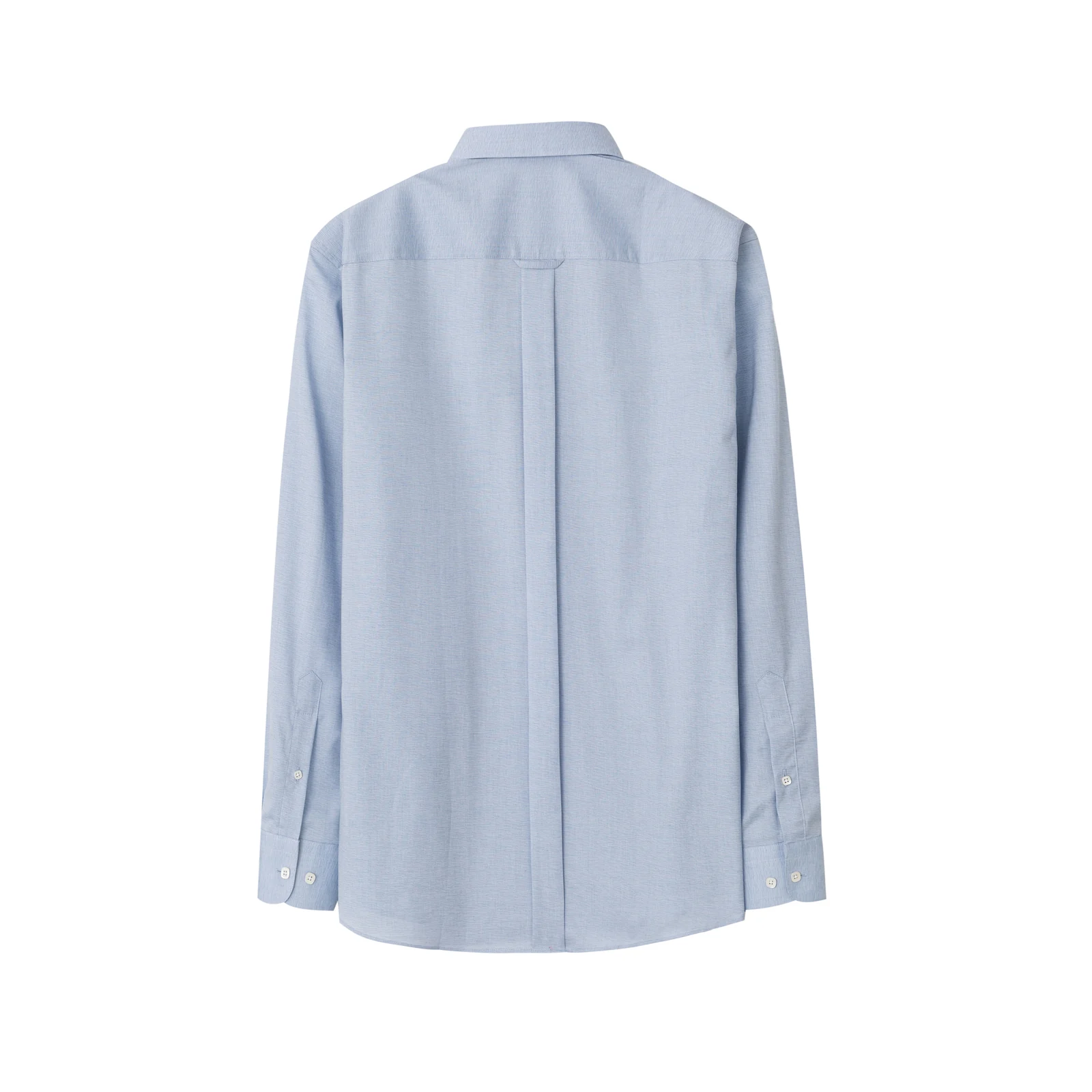
Product photographs show reference construction; selected materials, dimensions and logo application are defined by the approved sample.
CATALOGUE REFERENCES
Fabric weights you can identify.
| Reference | Composition | Weight |
|---|---|---|
| JT0004-01 | 100% cotton | 98 gsm |
| JT0001-02 | 100% cotton | 110 gsm |
| JT0030-01 | 100% cotton | 127 gsm |
Source: BERKAM’s public fabric library, checked 22 October 2026. Catalogue specifications are not live stock, test results or a promise that all colours share the same weight. Open the fabric library ↗
PRODUCT QUESTIONS
Before you choose a supplier.
Can you manufacture a shirt from our specifications?
Submit your tech pack or reference, measurement chart, fabric direction and branding requirements. BERKAM reviews the development scope for the selected dress shirt.
Is 15 days the lead time for every custom shirt?
No. Logo-customized products take 15 production days and fully customized products take 45, after sample and order approval, excluding transport.
Is there a fixed sampling period?
Sampling takes 10–15 days; charges are confirmed for the actual development brief. Sampling is separate from bulk production.
Choose the relevant shirt supply route.
Need a coordinated wardrobe? Explore custom business suit sets alongside the shirt specification.
Define the shirt you want to buy.
Share a garment reference, size chart, fabric direction, branding artwork and quantity breakdown.
Discuss this shirt requirement ↗