
DISTRIBUTORS / BULK DRESS SHIRTS
Wholesale Dress Shirt Manufacturing
A dress shirt manufacturing route for wholesale buyers who need clear styles, size allocation, fabric references and repeatable product specifications.
ORDER FACTS
Product scope and purchasing terms.
50-piece minimum
100 pieces recommended because air freight costs are relatively high.
15 / 45 production days
Logo customization: 15 days. Full customization: 45 days. Both after sample and order approval; transit excluded.
10–15 days for sampling
Sampling takes 10–15 days. Charges are confirmed for the garment, fabric and artwork. Sampling and production are separate periods.
01 / PRODUCT CAPABILITY
Wholesale purchasing starts with a defined shirt range
Buyers comparing dress shirt manufacturers for wholesale supply need to know what is being manufactured and how the product range will be specified. BERKAM focuses on business dress shirts and coordinated corporate clothing from Yiwu, China. This page addresses distributor and bulk sourcing requirements: product references, size quantities, collar and cuff variants, branding and reorder information. Wholesale does not mean an unrestricted catalogue of ready-to-ship sizes. Define the proposed style and colour range first, then identify which details are shared across the order and which require separate references.
02 / PRODUCT CAPABILITY
Separate style variety from size variety
A large size breakdown and a large number of different designs create different purchasing requirements. A style reference should identify the fabric, collar, cuffs, fit, buttons and visible branding, while the size schedule records quantities against that reference. If two shirts share a colour but use different cuffs, they should not be treated as an identical item. Men’s and women’s versions may also require different blocks and measurements. A clear SKU or buyer reference makes the range easier to quote, inspect and reorder without suggesting that every proposed combination is available from stock.
03 / PRODUCT CAPABILITY
Collar and cuff choices across a wholesale collection
Classic Spread, Button-Down, Cutaway and Mandarin are configuration directions listed by BERKAM. They serve different product presentations, from familiar business styling to an open-neck or collarless direction. Cuff directions include Standard Barrel, French Double Cuff and Adjustable Barrel. A wholesale range should describe which combinations form the actual products being purchased. Record collar dimensions, cuff depth, sleeve length and button placement rather than relying only on a style name. Consistency across the order comes from the approved specification; it is not established by using one generic dress-shirt description for every garment.
04 / PRODUCT CAPABILITY
Compare fabric references with real weight information
The public fabric library records composition and gsm for named references. Cotton examples include JT0004-01 at 98 gsm, JT0001-02 at 110 gsm and JT0030-01 at 127 gsm. These references let a wholesale buyer compare lighter and heavier catalogue options without inventing a universal standard for all shirts. A range can differ in hand feel, opacity, surface finish and drape even when all products are described as cotton. Review the swatch and intended care method, and identify the selected code in the quotation. Current colour availability and production suitability still require confirmation.
05 / PRODUCT CAPABILITY
Unbranded appearance, buyer labels and logo options
A wholesaler may want a clean exterior, a private-label collection or company-branded stock for a particular customer. BERKAM lists no visible mark, chest embroidery, cuff monograms and woven labels as branding directions. Identify which route applies to each style and supply the approved artwork and label wording. The size and position of the mark matter as much as the name of the application method. If a wholesale order includes multiple customer logos, separate those product references and quantities in the brief. An approved logo on one fabric is not automatic approval for another material or placement.
06 / PRODUCT CAPABILITY
Measurements make a wholesale size range usable
Use a measurement chart that identifies neck, shoulder, chest, waist, body length, sleeve length and cuff measurements, with units and measurement points. The same size label can mean different dimensions in different markets. State whether the chart contains body sizes or finished garment sizes, and identify the intended fit. For a wholesale buyer supplying corporate customers, allocation across men’s and women’s products should be explicit. Any tolerance, grading or measurement requirement needs to be agreed for the selected product rather than assumed from an online size label or a model photograph.
07 / PRODUCT CAPABILITY
Minimum order and freight considerations
The minimum order is 50 pieces. BERKAM recommends 100 pieces because air freight costs are relatively high. That distinction matters when comparing a trial order with a larger purchase: the accepted minimum is not the same as the recommended purchasing quantity. The quote should identify the style, colour and size split instead of leaving the total quantity unexplained. Freight cost depends on the shipment and destination; no fixed saving or shipping rate is promised here. Ask for the packing arrangement and shipment information needed to assess the actual delivered cost of the wholesale order.
08 / PRODUCT CAPABILITY
Production periods for different levels of customization
Logo-customized products take 15 production days, while fully customized products take 45 production days. Both periods begin after sample and order approval and exclude transportation. A wholesale order with different customization routes should identify the applicable route for each product reference. Sampling takes 10–15 days. The selected garment, fabric and branding brief define the sample scope, while charges are confirmed separately. A production period is not a delivery-to-warehouse promise. The order should distinguish sample readiness, production completion and shipment arrangements so that the buyer can plan the range without relying on a single ambiguous delivery date.
09 / PRODUCT CAPABILITY
Product identification, packing and repeat supply
Wholesale orders need garment identification that supports receiving, counting and later replenishment. Discuss style references, size labels, individual packaging and carton information with the intended distribution requirement. The buyer should be able to connect a received shirt to the approved fabric and specification. For a repeat order, retain the garment reference, measurement chart, artwork and the agreed sample. Fabric availability and the current order mix are checked again; previous production does not prove that every material remains continuously available. Record any approved substitution as a change to the product rather than a silent replacement.
10 / PRODUCT CAPABILITY
Use the correct page for a different buying objective
This wholesale page concentrates on range planning and bulk supply. Buyers whose main requirement is a retail brand label should use the private-label shirt manufacturing page for label architecture and branded presentation. Employers choosing shirts for staff should use the corporate shirt supplier page for logo placement, wearer fit and employee allocation. Buyers defining the garment itself can use the China shirt manufacturing page for the product specification. Keeping these routes distinct helps the enquiry describe the actual purchase, while connecting all four routes to the same confirmed minimum quantity and production lead-time definitions.
GARMENT DETAILS
See the construction you are specifying.
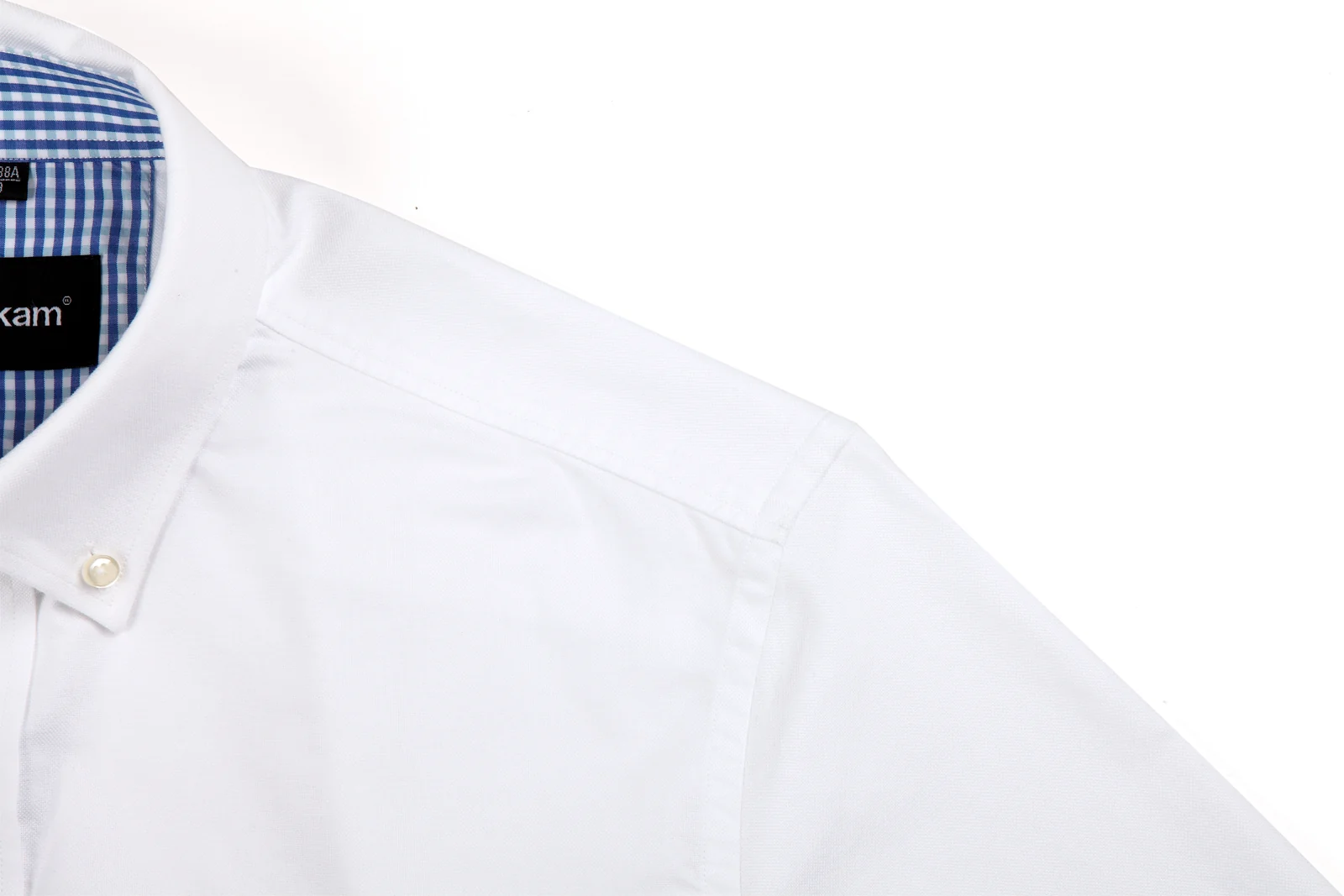
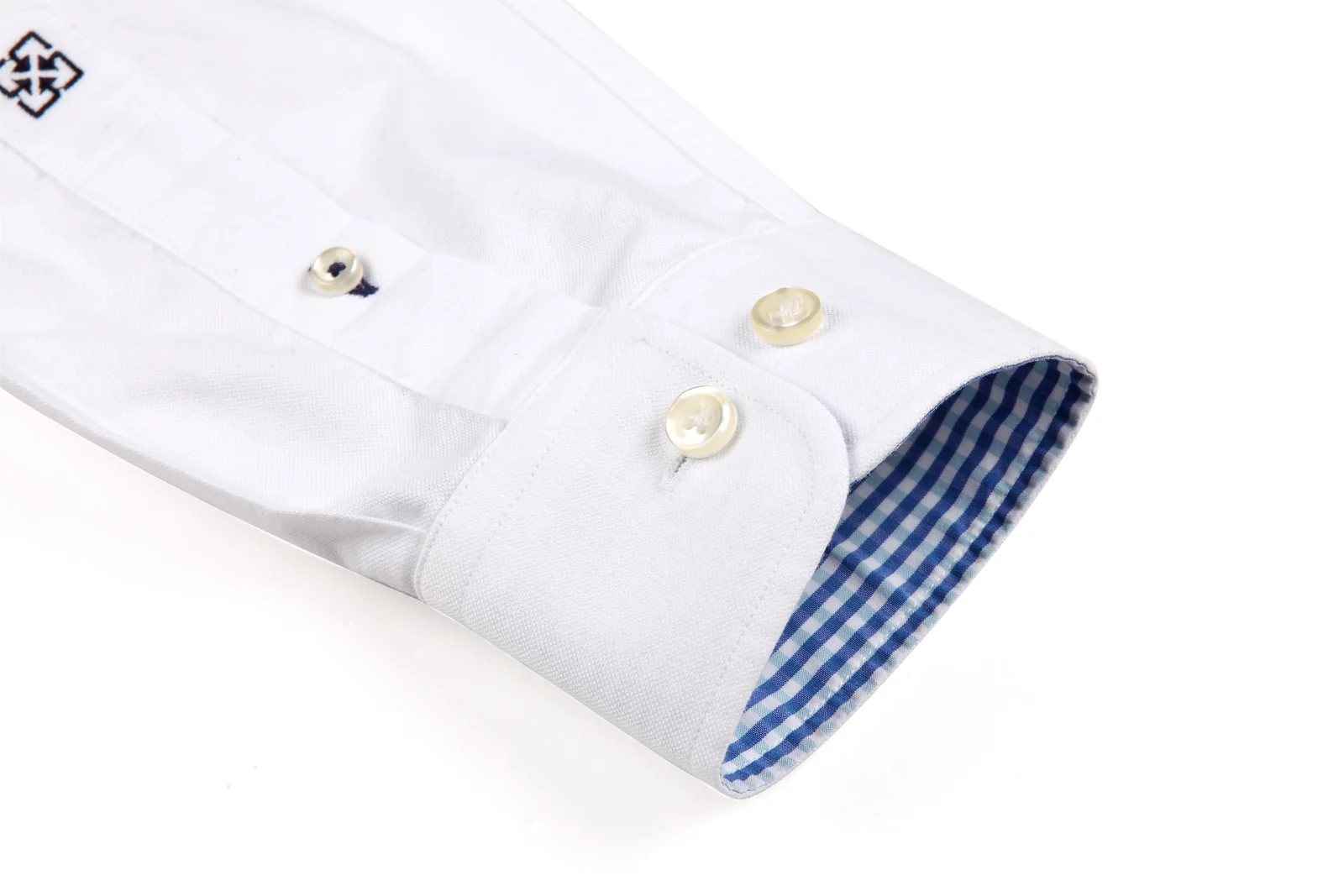
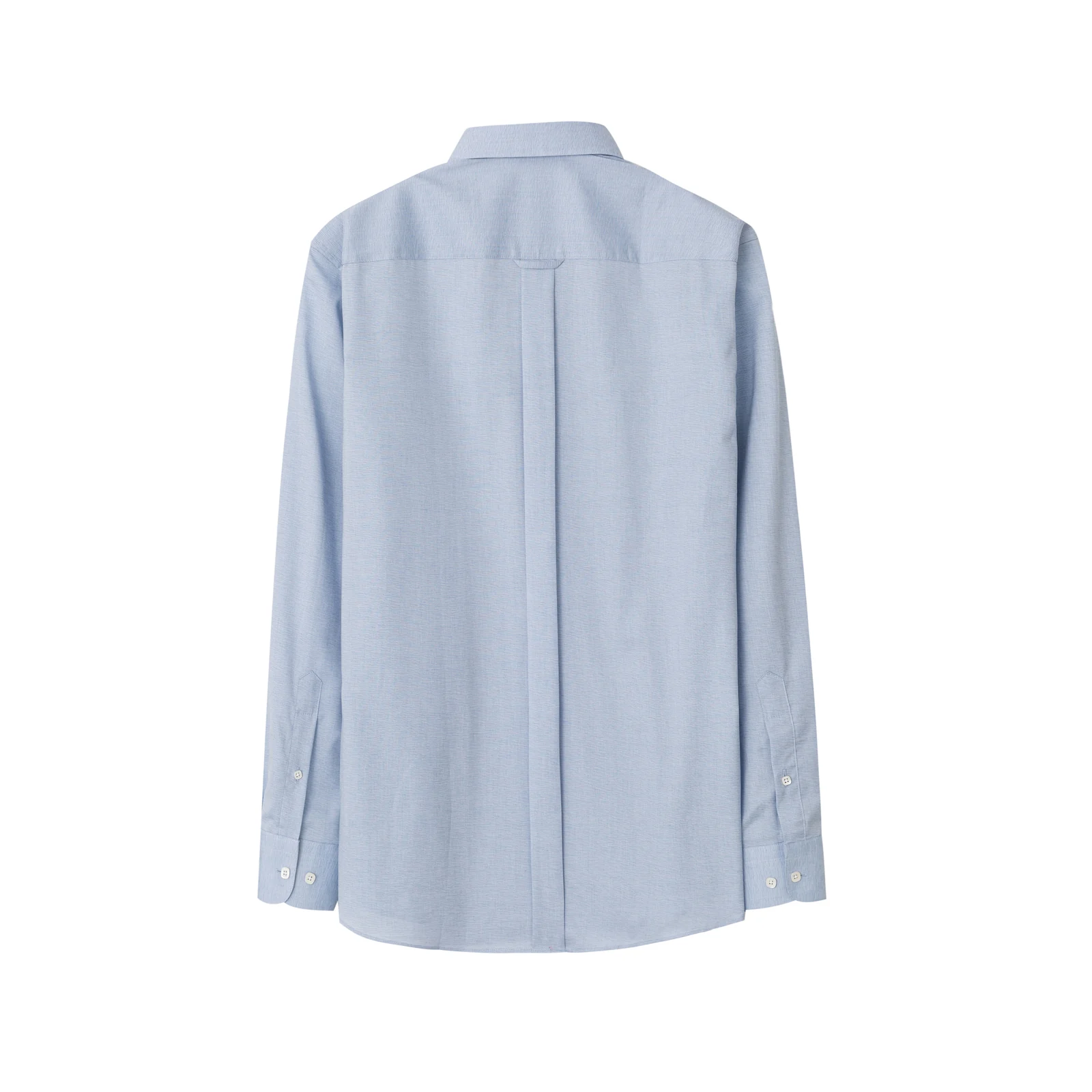
Product photographs show reference construction; selected materials, dimensions and logo application are defined by the approved sample.
CATALOGUE REFERENCES
Fabric weights you can identify.
| Reference | Composition | Weight |
|---|---|---|
| JT0004-01 | 100% cotton | 98 gsm |
| JT0001-02 | 100% cotton | 110 gsm |
| JT0030-01 | 100% cotton | 127 gsm |
Source: BERKAM’s public fabric library, checked 22 October 2026. Catalogue specifications are not live stock, test results or a promise that all colours share the same weight. Open the fabric library ↗
PRODUCT QUESTIONS
Before you choose a supplier.
Are all wholesale dress shirts ready to ship?
No. The selected fabric, style, size quantities and supply arrangement are confirmed for the order; a catalogue reference does not establish live stock.
Can wholesale orders start at 50 pieces?
Yes. The minimum is 50 pieces, with 100 pieces recommended because of relatively high air freight costs.
How long does customized wholesale production take?
Logo customization takes 15 days and full customization takes 45 days after sample and order approval, excluding transportation. Sampling takes 10–15 days and is separate from production.
Choose the relevant shirt supply route.
Need a coordinated wardrobe? Explore custom business suit sets alongside the shirt specification.
Define the shirt you want to buy.
Share a garment reference, size chart, fabric direction, branding artwork and quantity breakdown.
Discuss this shirt requirement ↗