
Shirt Craft
Inside BERKAM’s Shirt Factory: Process & Quality
Explore BERKAM’s four shirt production lines, from cutting and sampling to sewing, pressing and packing. Learn how workmanship, seam control and care performance shape quality and daily output.
BERKAM · SHIRT MANUFACTURING · FACTORY JOURNAL
A well-made shirt depends on consistency: in its seams, collar shape, measurements and performance after laundering. For clothing brands and corporate uniform buyers, understanding how a shirt is made is as important as knowing how many pieces a factory can produce.
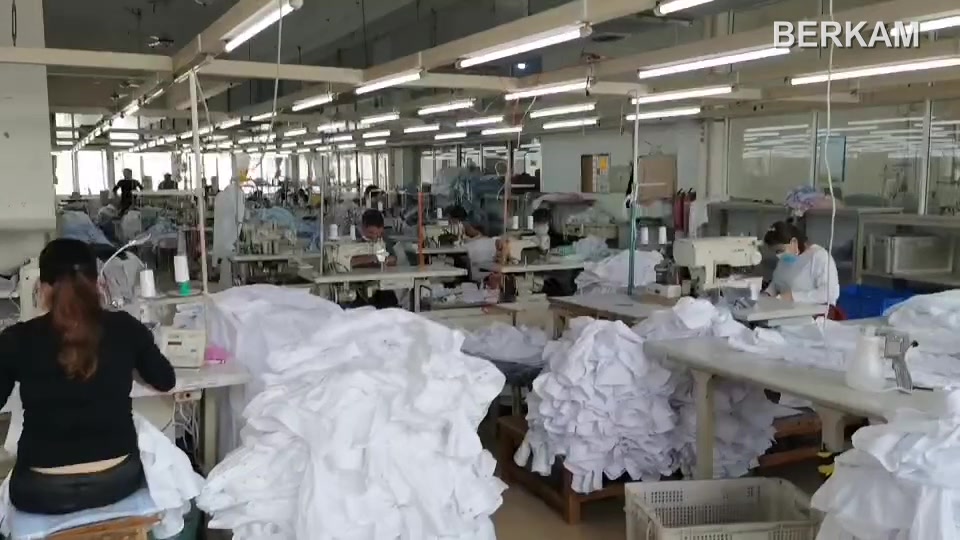
BERKAM’s shirt operation has four production lines. The workshop follows a sequential layout: cutting room, sample-making team, main sewing lines, buttonholing and button attachment, finishing, pressing and packing. This factory journal combines footage from our workshop with industry technical references to explain the process and the questions buyers should resolve before production.
A look inside the workshop
From cutting to packing: seven connected stages
01 · Cutting: establish a consistent starting point
The cutting room supplies the garment panels that every subsequent operation relies on. A shirt specification should define fabric, approved colour, grain direction and panel dimensions. For striped or checked fabrics, buyers should also identify the areas requiring pattern matching, such as the front placket or pocket.
Differences in panel size, orientation or pairing can later appear as uneven construction or measurement variation. Where shrinkage is a concern, dimensional change should be assessed under the intended care conditions. A freshly pressed appearance does not establish how the shirt will behave after washing.
Buyer checkpoint: record the fabric specification, colour approval, pattern-matching positions and measurement method in the technical pack.
02 · Sampling: turn design intent into production instructions
BERKAM’s sample-making team sits before the main production workshop. For a sourcing project, the approved sample should be used alongside a measurement chart, trim list and construction instructions. Collar shape, cuffs, placket, pockets, hem, fit and branding should all refer to the same approved revision.
Define the points of measurement, including collar size, chest, body length, shoulder width, sleeve length and cuff opening. Specify how each measurement is taken and agree the allowable tolerance. Measurements taken by different methods are not directly comparable.
03 · Sewing lines: coordinate component making and assembly
Shirt production commonly includes making collars, cuffs and plackets, followed by assembly operations such as joining shoulders, setting sleeves, closing side seams and hemming. The precise sequence depends on the style and equipment configuration. A line layout connects these operations while coordinating workstation workloads and garment-panel movement.
Demanding orders require attention to seam allowance, topstitch width, symmetry and component alignment, as well as skipped stitches, broken thread and seam puckering. More exacting appearance requirements can add positioning, guiding, handling and intermediate checking time.
04 · Buttonholes and buttons: check alignment and function
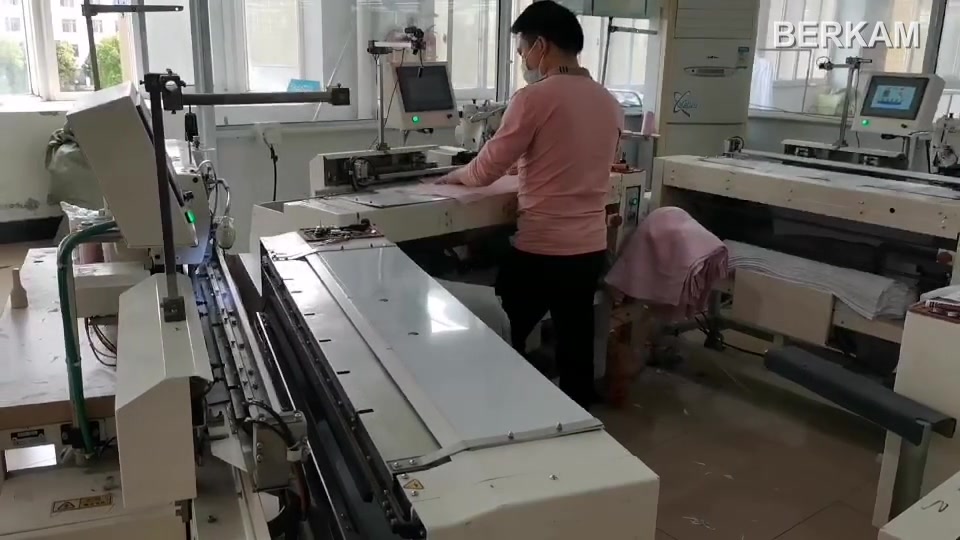
Buttonhole length must suit the button, and button and buttonhole positions must correspond so the placket closes smoothly. Checks should cover buttonhole integrity, thread trimming and secure button attachment, alongside appearance and opening-and-closing function.
JUKI’s industrial buttonholing documentation illustrates why stitch settings need to suit the material and application. Equipment is one part of the process; the result also depends on setup, trial sewing and execution.
05 · Finishing: resolve details before delivery
After sewing, finishing addresses loose threads, surface marks, component condition and garment appearance. The buying specification should distinguish defects requiring repair from unacceptable defects, and define how repaired garments are checked again.
Material approval, in-process inspection and final inspection serve different purposes. Identifying a recurring issue during production helps limit the volume requiring repair after the batch is completed. Intertek’s apparel inspection guidance describes these inspection stages.
06 · Pressing: complete the presentation of the shirt
Pressing influences the collar, cuffs, placket and overall presentation. Review unwanted creases, shine, distortion and component shape. Processing conditions should suit the fabric, interlining and intended care requirements. Evaluate pressing together with sewing workmanship and material stability.
07 · Packing: make the order ready for distribution
For branded shirts and corporate uniform programmes, packing instructions should define size identification, individual packaging, hangtags, care labels and carton assortments. Carton markings must correspond to the packing list. Correct identification and quantity allocation are essential to distributing the finished garments to stores or staff.
Where a demanding shirt specification adds work
Seam appearance: fabric, thread, needle and feed work together
Coats’ technical guidance identifies several potential causes of seam puckering, including thread tension, fabric structure, needle and thread selection, differential feeding and dimensional changes between materials. Seam control therefore requires a compatible combination of materials and sewing conditions. If puckering appears after laundering, investigate differential shrinkage as well as the initial sewing appearance.
Collars and cuffs: coordinate structure, handle and care
These components define much of a shirt’s visual character. Interlining selection should account for the outer fabric, desired stiffness, construction and washing regime. Freudenberg’s shirt interlining guidance addresses different applications and care demands, including the risk of bubbling or delamination under demanding laundering conditions. Comparing approved and washed samples helps buyers assess shape retention and appearance.
Performance after washing: look beyond the first presentation
Corporate shirts need to be assessed against their actual use and care conditions. Intertek lists textile testing areas such as dimensional stability, colourfastness, appearance retention and strength. Buyers should specify which tests are relevant, the care procedure and the acceptance limits. Domestic and industrial laundering require separate consideration.
Why daily output depends on the specification
BERKAM provides the following reference figures for its shirt production:
| Order requirements | Output per line | Planning context |
|---|---|---|
| Shirts with high quality requirements | Approximately 500–700 pieces/day | Production pace reflects more demanding workmanship and quality requirements. |
| Simpler construction and more basic quality specifications | Up to approximately 1,200 pieces/day | A different style and operating specification can permit higher output. |
More operations and finer handling increase the time required per garment and can reduce daily output. However, output alone does not establish quality. Suitable equipment, operator skill and balanced operations can improve productivity and consistency together.
Standard Minute Value (SMV) provides a useful industry concept for discussing work content: the standard time assigned to a defined operation or garment. Coats Digital explains its relationship to production targets, line balance and planning. Within a consistently defined scope, planned output depends on available labour time, efficiency and standard time per garment.
Four lines should therefore not simply be multiplied by the highest daily figure to promise capacity or delivery for every order. Cutting, buttonholing, finishing and packing capacity, style changes, size assortments and the actual production schedule must also be considered. BERKAM’s figures describe reference production conditions; an order’s schedule needs confirmation against its approved sample and specification.
Five things to confirm before a shirt order
- Use and care: business wear, corporate uniforms or another application; domestic or industrial laundering.
- Materials and trims: fabric specification, approved colour, interlining requirements, buttons and branding.
- Fit and measurements: style drawings, points of measurement, size chart, tolerances and approved sample.
- Quality and acceptance: pattern-matching positions, appearance requirements, relevant tests, defect classification and sampling rules.
- Quantity and delivery: size breakdown, individual packaging, carton assortment, target delivery window and repeat-order needs.
A clear technical pack gives sampling, production organisation and delivery discussions a shared reference. BERKAM’s four shirt lines and connected cutting-to-packing layout provide the production framework for branded shirts and corporate uniform projects.
Questions buyers often ask
Why compare more than price and pieces per day?
Fabric, component construction, appearance standards, measurement tolerances and care performance change the work content of a shirt. Align the sample and specification before comparing quotations and production schedules.
Does a higher stitch density always mean better quality?
Stitch density needs to suit the fabric, thread, needle and seam type. Assess seam appearance, strength and performance together; one stitch-density figure cannot define the quality of the entire garment.
Can 500–700 pieces per day be converted directly into lead time?
No. Material readiness, sample approval, available lines, finishing capacity and delivery arrangements must also be confirmed. Daily line output and complete order lead time describe different planning scopes.
Discuss your shirt project with BERKAM
Share your style reference, fabric requirements, quantity by size and target delivery window. We can discuss a production approach around the sample and workmanship your project requires.
Submit your project · Explore dress shirts · Visit our factory page
Email: [email protected]
WhatsApp: +86 136 7680 5256
Sources and production context
The four-line configuration, workshop sequence and daily output figures were supplied by BERKAM. Images and video are from the supplied factory footage. Technical explanations are sourcing guidance; test methods, sampling rules and acceptance limits should be agreed for the specific order. References to the organisations below do not imply certification, endorsement, a commercial relationship or adoption of all their equipment or software by BERKAM.
- Coats — Eliminating Seam Puckering
- Coats Digital — Defining Standard Time in the Garment Industry
- JUKI — Industrial Buttonholing Equipment
- Freudenberg — Shirt Interlinings
- Intertek — Textile and Apparel Inspection
- Intertek — Textile Testing
Technical references accessed 10 October 2026.