
Industry Insights
Hotel Front Desk Uniforms and Attire: Reception, Concierge & Doorman Teams
Plan hotel front desk uniforms and attire by role. Coordinate reception, concierge and doorman outfits, then set what the issued garments cover versus shoes, grooming and personal accessories.
Hotel front desk uniforms do more than identify a department. Reception, concierge and door teams meet guests at different moments, move in different ways and may work in different conditions. A strong program gives those roles one visual identity while letting each garment answer the work of the shift.
Quick answer: plan hotel receptionist uniforms, concierge looks and doorman layers as a coordinated wardrobe. Set shared colors and details first, then adapt silhouette, layers and practical features by role.
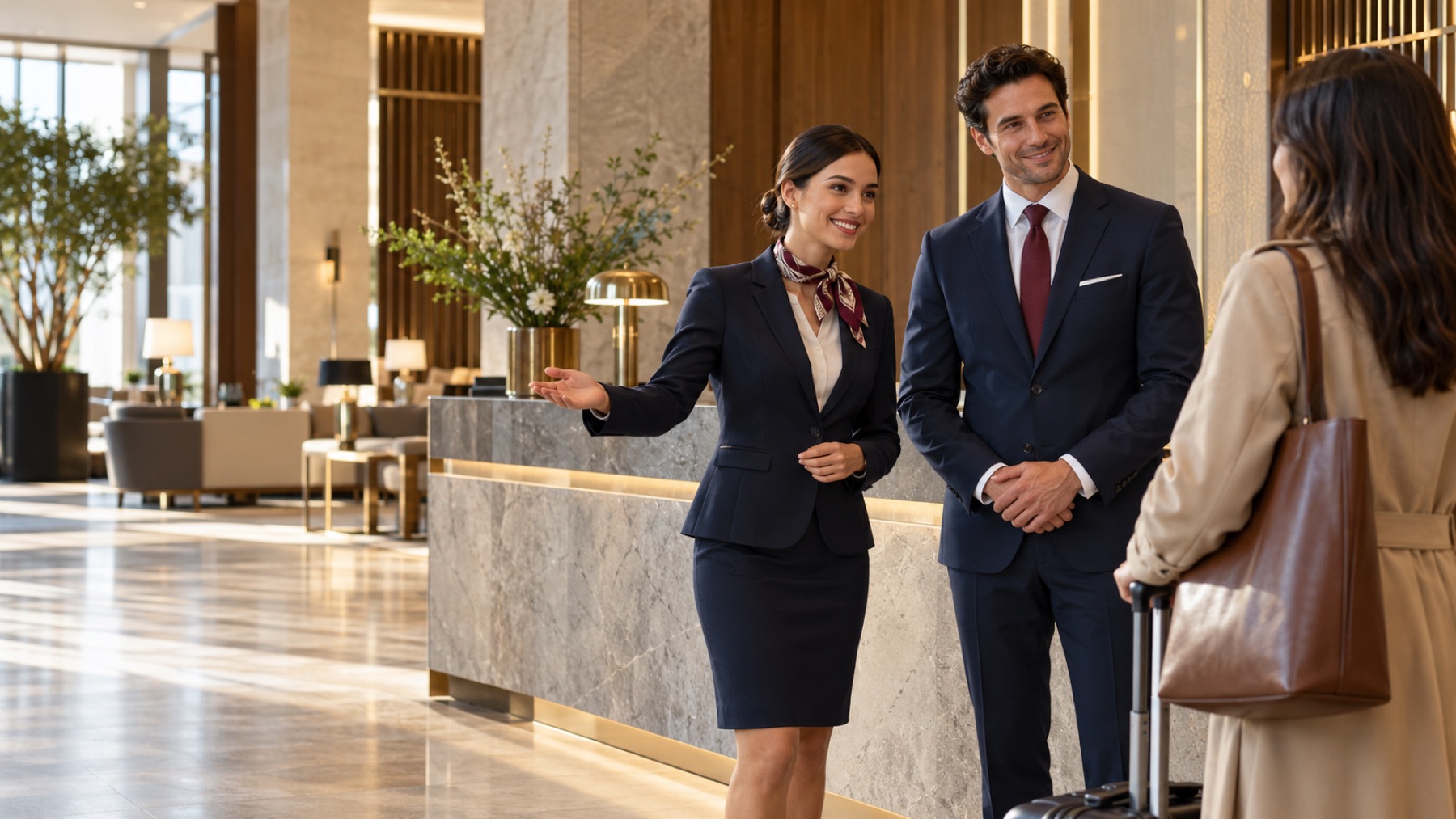
Start with the guest journey
Before selecting a jacket or accessory, list each point where staff interact with a guest. That gives the hotel and its uniform supplier a useful framework for deciding what should look the same and what needs to differ.
| Guest-facing role | Uniform planning focus |
|---|---|
| Reception and front desk | A polished, comfortable base outfit for standing, sitting, reaching and repeated guest interactions. |
| Concierge | A recognizable guest-service look that allows movement between the desk and other areas of the property. |
| Doorman and door team | Clear identification and a layer plan for the actual indoor or outdoor conditions at the entrance. |
| Front-office supervisors | A visible distinction, such as a jacket, vest or accessory, that still belongs to the same wardrobe. |
Build one visual language with role-specific pieces
Choose a restrained base palette, then decide which details repeat across the team: button color, piping, lapel treatment, trim, scarf or tie. The base palette connects hotel uniforms across the lobby, while role-specific pieces help guests recognize who can assist them. Avoid using accessories as the only identifier if they make a full shift less comfortable.
A front desk uniform might pair a tailored jacket with a shirt or blouse and trousers or a skirt. A concierge may use the same color story with a more flexible layer. Hotel doorman uniforms can include an outer layer if the entrance conditions require it. Decide these combinations with the actual work locations in mind, rather than designing from a mood board alone.
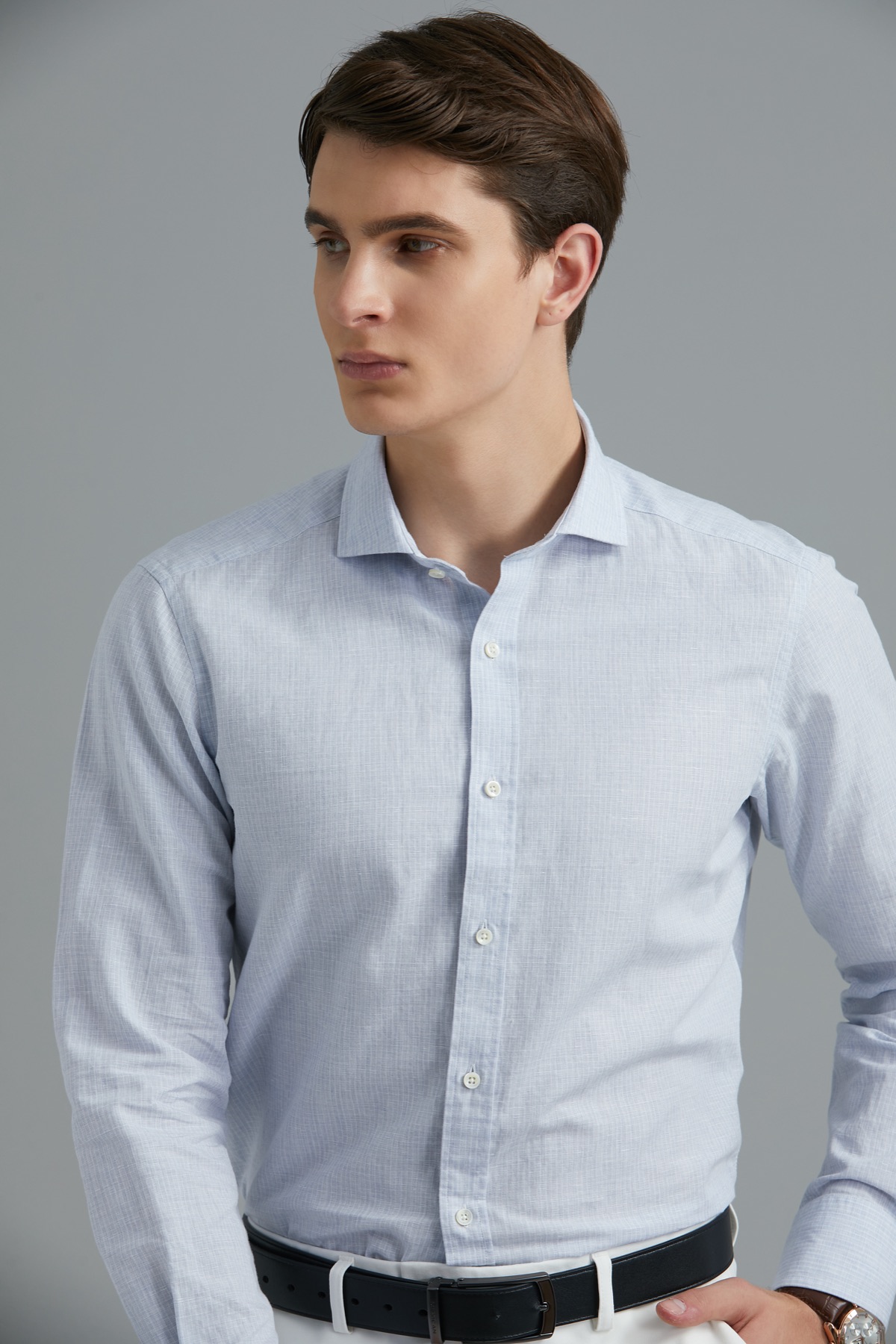
What front desk attire includes
A front desk uniform is the set of garments the hotel issues: typically a jacket or coordinated top, a shirt or blouse, trousers or a skirt, and any agreed scarf, tie or name badge. Attire is broader. It also covers how those garments are worn, and the items the hotel does not usually buy from a uniform supplier — shoes, belts, watches and personal wearables.
Write those rules in the hotel’s own attire standard, not in the garment specification. A supplier can plan pocket, lapel and badge placement around the issued accessories. It cannot decide whether a particular ring, watch or wearable is acceptable on a shift. That remains a property decision, and it should be the same for every receptionist who stands at the desk.
The issued outfit can still be planned by property type, as long as the differences stay in the brief and are checked on a sample:
- A city business hotel often needs a restrained palette and fewer special trims, so replacements stay straightforward.
- A luxury or high-service lobby may want a more formal layer — a jacket, vest or a single distinctive accessory — while keeping the same colour story as the rest of the front office.
- A resort or entrance-facing desk may need a lighter cloth, or a layer that works when staff move between indoor rooms and outdoor arrivals.
These are planning examples, not a dress code. The useful test is still the same: can the receptionist, concierge or door attendant wear the outfit through a real shift, and can the next order match it.
Check fit through a full shift
Front desk staff may alternate between standing, sitting, turning, reaching for documents and walking around the lobby. Fit a sample in those positions. Check jacket closure, sleeve length, shirt collar comfort, trouser or skirt movement and whether an accessory stays in place. If the hotel uses name badges or other identifiers, decide where they belong before finalizing pocket and lapel details.
For concierge and door teams, consider how often staff leave the desk, whether they handle luggage or open doors, and what outerwear or seasonal pieces they need. Those details affect cut, layering and storage. The same fabric or silhouette will not automatically suit every task, even when the colors match.
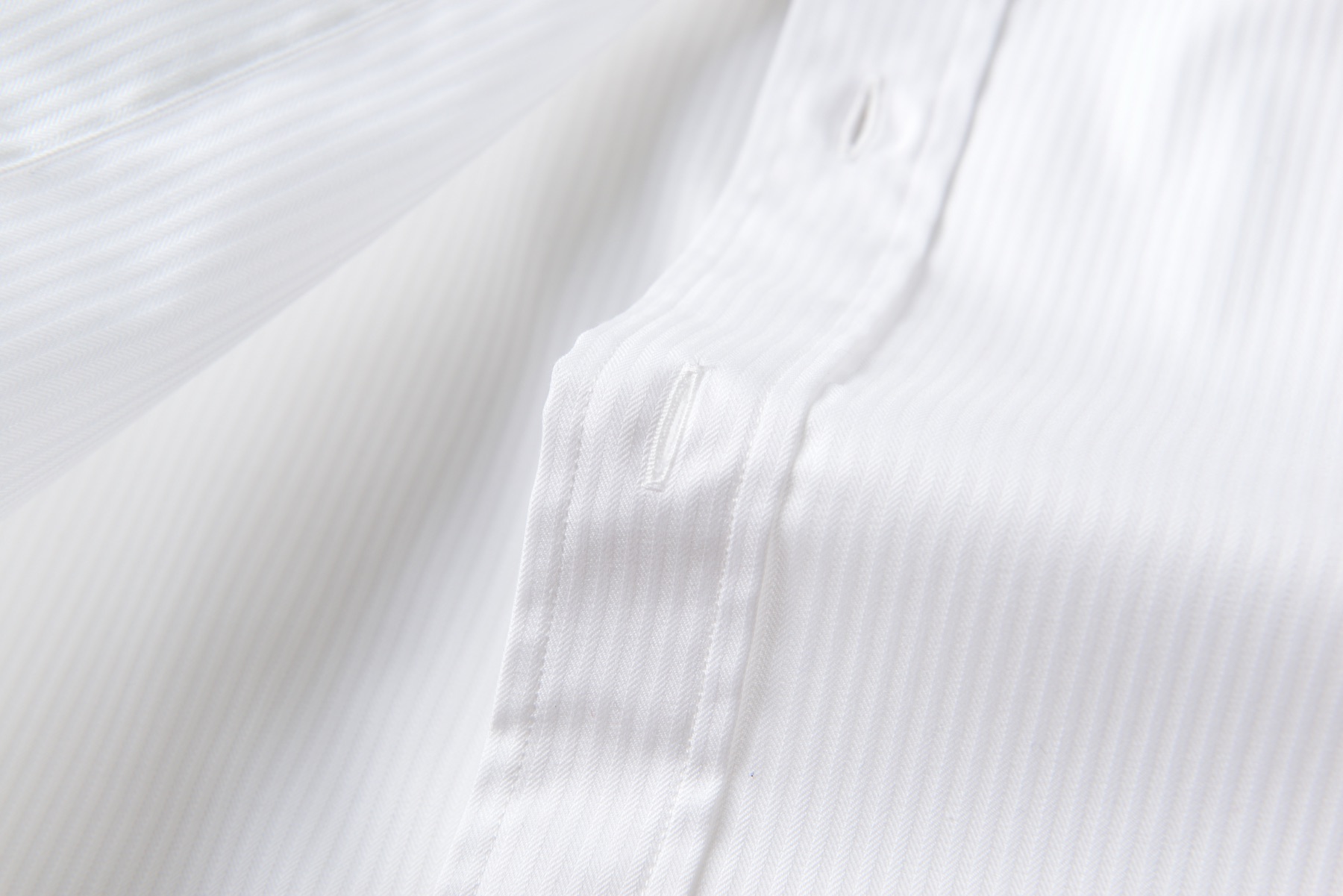
Make the fit program easy to repeat
Staff turnover, seasonal hiring and replacement orders make repeatability part of the uniform design. Agree whether the size chart uses body measurements or finished-garment measurements, keep a sample or fit record, and record each wearer’s assigned size and any approved adjustment. For multi-property groups, use consistent style codes and color references so a new order can be traced to the right version.
Some corporate suit programs can combine prepared size options with selected alterations, while a made-to-measure route can support people whose measurements sit outside the available fit blocks. BERKAM’s business suit program explains how ready stock, alterations and measurement-based service can work together; its custom suit manufacturer guide outlines the B2B planning choices.
A short brief for hotel front desk uniforms
- List reception, concierge, doorman and supervisor roles with wearer counts.
- Describe the locations, movement and indoor or outdoor conditions for each role.
- Set a shared palette and identify which garments or accessories vary by role.
- Share the size chart, measurement method, sample approval steps and alteration rules.
- Specify labels, name badges, packaging, replacement quantities and the target schedule.
- Ask the supplier to confirm what is included in the project quote and what requires a separate approval.
Frequently asked questions
What should a hotel front desk uniform include?
It depends on the hotel’s brand and duties. A typical brief considers a jacket or coordinated top, shirt or blouse, trousers or skirt, and optional accessories such as a tie or scarf. Final choices should be tested for comfort and movement during a real shift.
How should hotel concierge uniforms differ from reception?
Keep shared colors or details for recognition, then adapt the garment and layers to how often the concierge moves around the property. A modest jacket or accessory change can distinguish the role without creating a separate visual system.
Can one uniform work for reception and doormen?
A shared palette can connect the teams, but an indoor desk outfit may not provide the layers a door team needs. Specify the locations and conditions, then sample each role’s version separately.
What is the difference between front desk uniforms and front desk attire?
The uniform is the issued wardrobe. Attire also includes grooming, shoes and personal accessories, which the hotel should set in its own standard. Share that standard with the supplier if it affects badge placement, pocket design or the layers you need to order.
Give me an example of front desk hotel attire.
Start with a coordinated jacket or top, shirt or blouse, and trousers or a skirt in one palette. Add a tie, scarf or name badge only if it stays comfortable for a full shift. Adapt the layer — not the whole colour system — if the desk is formal, or if staff also work at the entrance.
For a broader multi-department view, see BERKAM’s hotel uniform overview. Our hotel housekeeping uniforms buyer’s guide covers room-attendant and cleaning-team planning. To discuss a specific front desk, concierge or door-team brief, share the role list and project requirements.