
Shirt Craft
Non-Iron vs Wrinkle-Free Shirts for Staff Uniforms: Finishes, Washing and How to Specify Them
What “non-iron” and “wrinkle-free” really mean, how standard and moist-cure non-iron finishes differ, and how to specify uniform shirts by fabric code.
Quick answer: “Wrinkle-free” and “wrinkle-resistant” are loose retail terms for any cotton shirt treated to crease less. “Non-iron” describes a stronger result: a shirt that comes out of the wash and dryer presentable with little or no pressing. For staff uniforms, the two finishes to compare are a standard non-iron finish and a moist-cure non-iron finish. Both are often combined with a liquid ammonia treatment that makes cotton smoother and softer. BERKAM’s non-iron career shirts use both routes, and the fabric code tells you which one you are getting.
Key takeaways
- “Wrinkle-free” is a loose retail term; “non-iron” means presentable from the dryer with little or no pressing.
- BERKAM’s 100% cotton shirt cloths use liquid ammonia plus either a standard non-iron finish (89–98 gsm) or a moist-cure non-iron finish (106 gsm).
- Specify uniform shirts by fabric code and finish, then wash-test the sample the way staff will wash it.
This guide is for uniform managers and buyers who keep hearing the same words used for very different shirts. It explains what each finish does, how it behaves in real laundry, and what to write in a specification so a quote is comparable.
2
non-iron finish routes in the fabric library
100%
cotton base on the listed non-iron cloths
89–106
g/m² weights on those cloths
100
pieces minimum order
Why the terms get confused
Shops use “wrinkle-free”, “wrinkle-resistant”, “easy-care” and “non-iron” almost interchangeably. There is no single legal definition behind any of them, so a label alone does not tell you how a shirt will look after fifty washes in a hotel laundry.
What matters is the finish applied to the cotton, and at which stage. In broad terms there are three levels:
| Term you see | What it usually means | Pressing after washing |
|---|---|---|
| Easy-care / wrinkle-resistant | A light finish or a blend fabric that creases less than plain cotton | Usually a quick touch-up |
| Wrinkle-free (retail) | A resin finish of unspecified strength; results vary widely by brand | Ranges from none to a full press |
| Non-iron (career wear) | A durable press finish designed for wash-and-wear, typically after tumble drying | Little or none when laundered as instructed |
The finishes behind a non-iron shirt
Liquid ammonia treatment
Liquid ammonia is a fibre treatment for cotton. It relaxes and swells the fibres so they become rounder and smoother, which improves softness, lustre and dimensional stability. On its own it reduces creasing but does not make a shirt non-iron. It is usually the first step, applied before a resin finish, and it allows the shirt to stay softer than resin alone would leave it.
Standard non-iron finish
A standard non-iron finish applies a cross-linking resin to the fabric and cures it with heat. The resin helps the cotton “remember” a flat state. It gives good, everyday smoothness and a natural hand. In BERKAM’s library, cloths such as JT0004-01 (98 g/m²) and JT0031-01 (89 g/m²) carry a liquid ammonia plus standard non-iron finish.
Moist-cure non-iron finish
Moist-cure applies the cross-linking while the cotton still holds controlled moisture, then lets the reaction complete over time. The fibres are set while swollen, which tends to give a smoother, more durable result than a standard cure. BERKAM fabrics such as JT0010-01 and JT0015-01 (106 g/m²) carry a liquid ammonia plus moist-cure non-iron finish. Choose this route for roles where shirts must look pressed all day with minimal laundry effort.
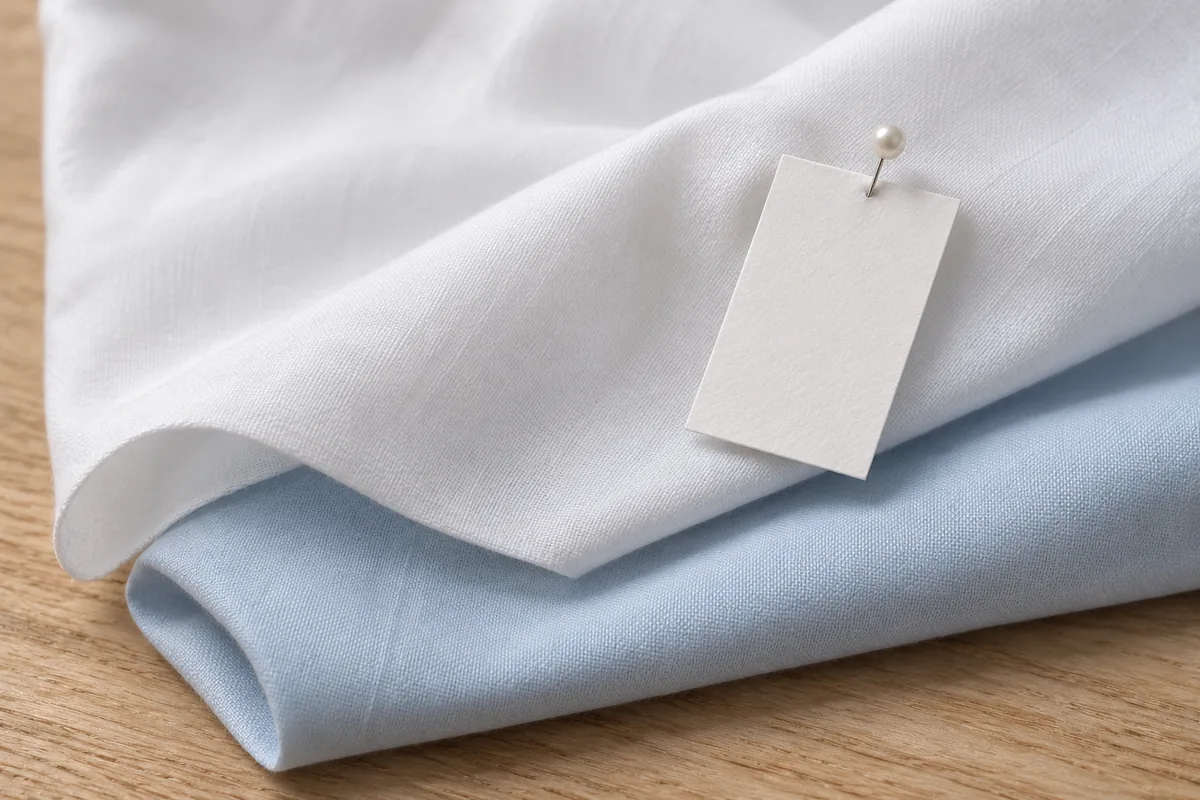
The label says “wrinkle-free”. The fabric code tells you the truth.
How non-iron shirts behave in real laundry
- Tumble drying helps. Most non-iron finishes look their best when removed from the dryer while warm and hung straight away. Line-drying can leave more creases.
- Seams are the weak point. Collar, placket and side seams can pucker if the construction is not matched to the finish. Check these on the sample after washing.
- Heat and harsh chemicals shorten the finish. Follow the care label; very hot washes and heavy bleaching wear the finish faster.
- Expect a gradual change. Smoothness slowly reduces over the shirt’s life. Plan replacement cycles in your entitlement, not on the first sign of a crease.
Exact wash-life figures depend on the cloth, the laundry and the dryer. BERKAM does not publish a fixed number of washes; ask for a wash test on your chosen fabric code.
How to specify non-iron shirts for staff
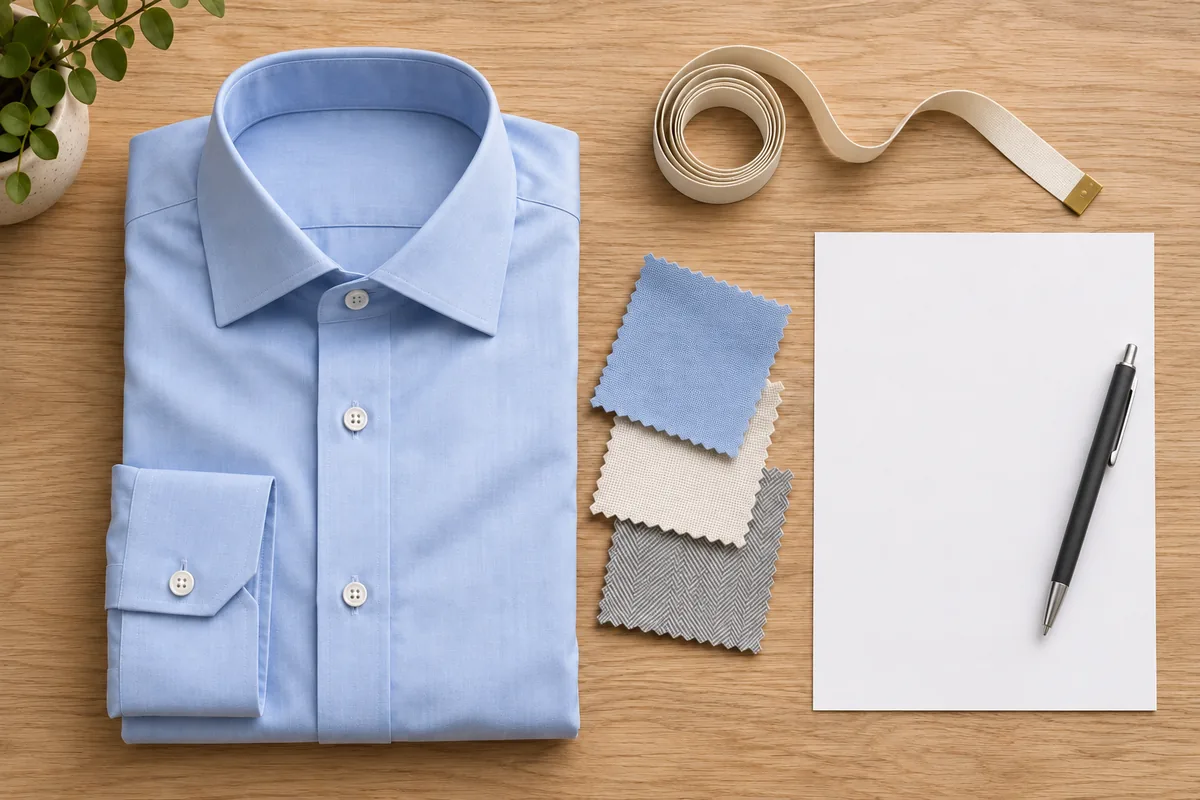
A comparable specification names the cloth, the finish and the proof. Put these lines in your request:
- Fabric code, composition and weight, for example 100% cotton, 106 g/m².
- Finish route: liquid ammonia + standard non-iron, or liquid ammonia + moist-cure non-iron.
- Construction: collar and cuff interlining, seam type, and whether seams are taped or fused to stay flat.
- Care routine: how staff or your laundry will wash and dry the shirts.
- Evidence: a washed sample, plus any test reports the mill or factory can provide for that fabric.
- Logo: method and position, confirmed on the washed sample.
Browse non-iron cloths in the shirt configurator and compare weights in the corporate shirts guide.
Which finish suits which role
| Role | Suggested finish | Why |
|---|---|---|
| Front desk, reception, banking counters | Moist-cure non-iron | Staff are seen all day and often wear jackets; smoothness matters most |
| Office and sales teams | Standard non-iron | Good presentation and a natural hand for a working day |
| Events and short-term staff | Standard non-iron | Wash-and-wear between shifts with minimal pressing |
| Executives and suit wearers | Moist-cure non-iron | Crisp collar and placket under a tie and jacket |
Adding your logo to a non-iron shirt
Embroidery is the usual choice on a career shirt, kept small on the chest or cuff. Because the finish is set into the fabric, check that stitching does not pucker after washing. Approve the logo on a washed sample, not on a fresh one. BERKAM’s branded suit programmes can use the same logo standard for a matching look.
Ordering and timing
The minimum order is 100 pieces. Logo-customised products take 15 days and fully customised products 45 days, counted after sample and order approval; transit is not included. Read the sample approval process before you start.

Five mistakes when buying non-iron uniform shirts
- Buying on the label. “Wrinkle-free” on a product page says nothing about the finish route. Ask for the fabric code and finish.
- Approving an unwashed sample. A new shirt always looks smooth. Wash and dry the sample the way your staff will before you approve it.
- Ignoring the dryer. If staff line-dry at home, test that routine; results differ from tumble drying.
- Choosing the lightest cloth for every role. Very light cloth can look sheer under bright lighting. Compare weight and opacity for customer-facing roles.
- Forgetting reorders. Record the fabric code, finish and colour so the next batch matches the first.
Avoiding these keeps the shirt programme consistent between batches and across sites, which matters more to customers than any single finish.
For collar, cuff and fabric choices beyond the finish, see custom dress shirt options.
FAQ
Is non-iron the same as wrinkle-free?
Not exactly. Wrinkle-free is a loose retail term for any shirt treated to crease less. Non-iron describes a durable press finish meant to come out of the wash and dryer presentable with little or no pressing.
What is a liquid ammonia finish?
A cotton treatment that makes fibres rounder and smoother for softness, lustre and stability. It is usually combined with a non-iron resin finish rather than used alone.
What is the difference between standard and moist-cure non-iron?
Standard non-iron cures a cross-linking resin with heat. Moist-cure sets the cotton while it holds controlled moisture, which tends to give a smoother, more durable result.
Do non-iron shirts need ironing at all?
Usually little or none when tumble dried and hung promptly. Line-dried shirts and older shirts may need a light touch-up.
How many washes does a non-iron finish last?
It depends on the fabric, wash temperature and drying. Ask for a wash test on the exact fabric code instead of relying on a general figure.
Can non-iron shirts carry a company logo?
Yes. Small embroidery on the chest or cuff is common. Approve it on a washed sample to check for puckering.
What is the minimum order for branded non-iron shirts?
BERKAM’s minimum order is 100 pieces. Logo-customised products take 15 days after sample and order approval, excluding transit.
Specify your staff shirts
Send your roles, quantities, preferred finish and logo. The BERKAM team will suggest fabric codes and send a sample.