
Industry Insights
Custom Suits with Your Company Logo: In-Stock Career Wear in 37 Sizes and 3 Fits
How to brand office uniform suits fast: start from in-stock suits in 37 sizes and 3 fits, add your logo, alter sleeves or trouser waist and seat for a fee, and make special sizes to measure.
Quick answer: The fastest way to get office uniform suits with your company logo in bulk is to start from ready-made, in-stock business suits and add your branding, instead of developing a new suit from scratch. At BERKAM, in-stock suits come in 37 sizes across 3 fits (A, B and C). Paid alterations cover jacket sleeve length and trouser waist and seat. Made-to-measure is there for wearers with atypical body shapes. Orders start at 100 pieces.
This guide is for HR teams, procurement managers and uniform programme owners who need a consistent, branded look for front-line and office staff. It explains how the stock route works, where a logo can and cannot go on a tailored jacket, and what to send so a quote reflects your real team.
37
stock sizes
3
fit blocks: A, B, C
100
pieces minimum order
10–15
days for sampling
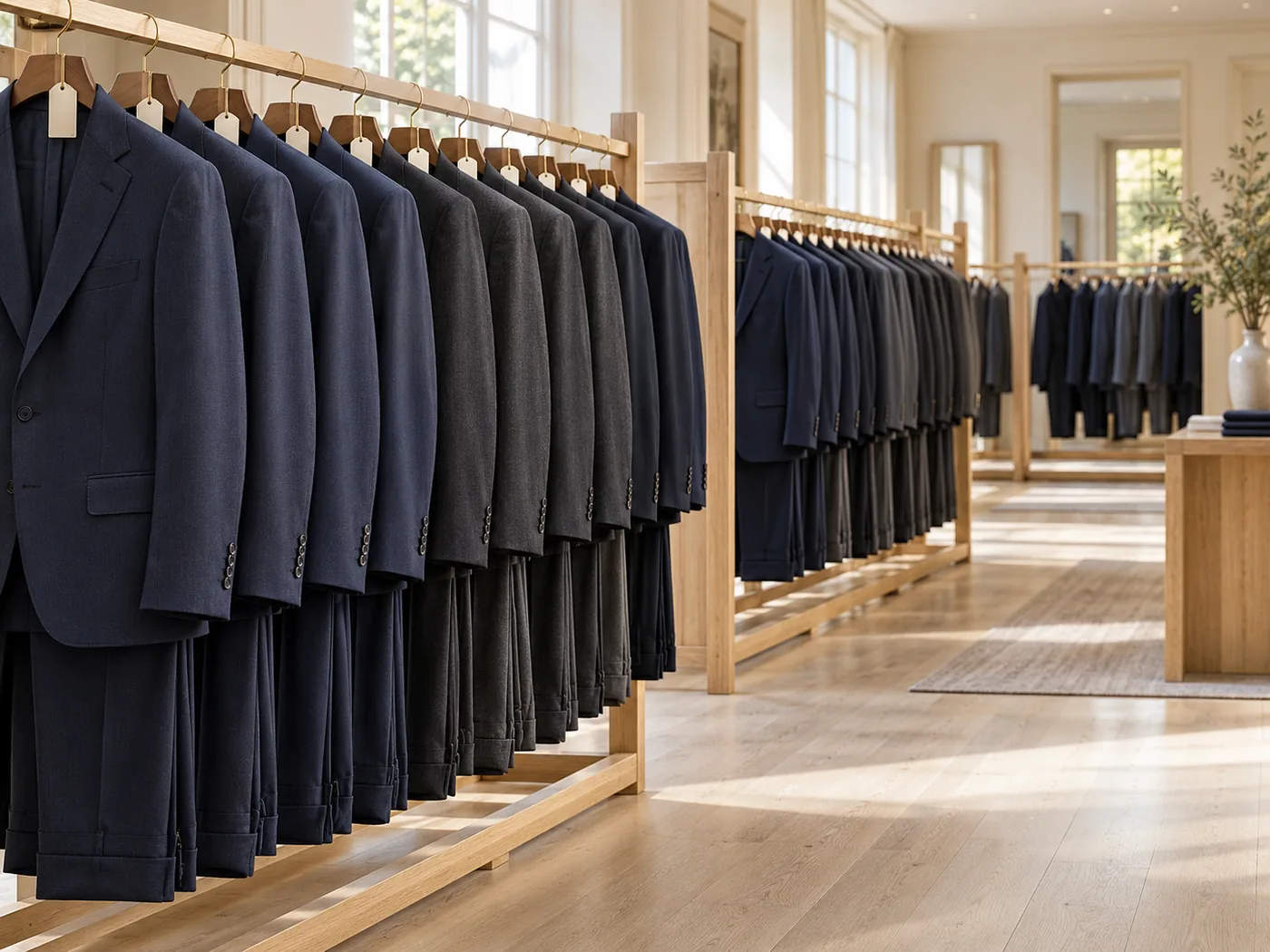
Why in-stock suits are the smart start for a uniform programme
Most branded-suit pages assume every corporate order is a new design. For career wear, that is rarely true. A bank branch, hotel front desk or sales floor needs suits that look identical across dozens of people, fit bodies of very different shapes, and can be topped up when someone new joins.
Ready-made suits solve all three. The style, cloth and colour are already fixed, so the team look is consistent from day one. A wide size system does most of the fitting work. And because the garment already exists, reorders mean matching a style code and a size, not restarting development.
Custom development still has a place, but for most office uniform suits it is the exception, not the default.
How 37 sizes and 3 fits cover a real team
BERKAM’s in-stock suit system lists 37 sizes. They are organised around three fit blocks, labelled A, B and C on the business suits size chart. Each block pairs a height with a different chest-to-waist balance: B and C allow progressively more room through the waist than A, so a wearer with a fuller midsection does not have to size up the whole jacket.
- Jackets and trousers are packed and sized separately. One person can wear a different jacket size and trouser size, which avoids forcing a fixed pair.
- Start with four measurements. Net body height, chest, waist and hip, with units, are enough for the team to recommend a block and size.
- Coordinate men’s and women’s sets. Women’s jackets, trousers and skirts are offered in their own size ranges in the same colour family.
Size counts describe the sizing system, not live stock. Availability of a given style, colour, block and size is confirmed with each enquiry.
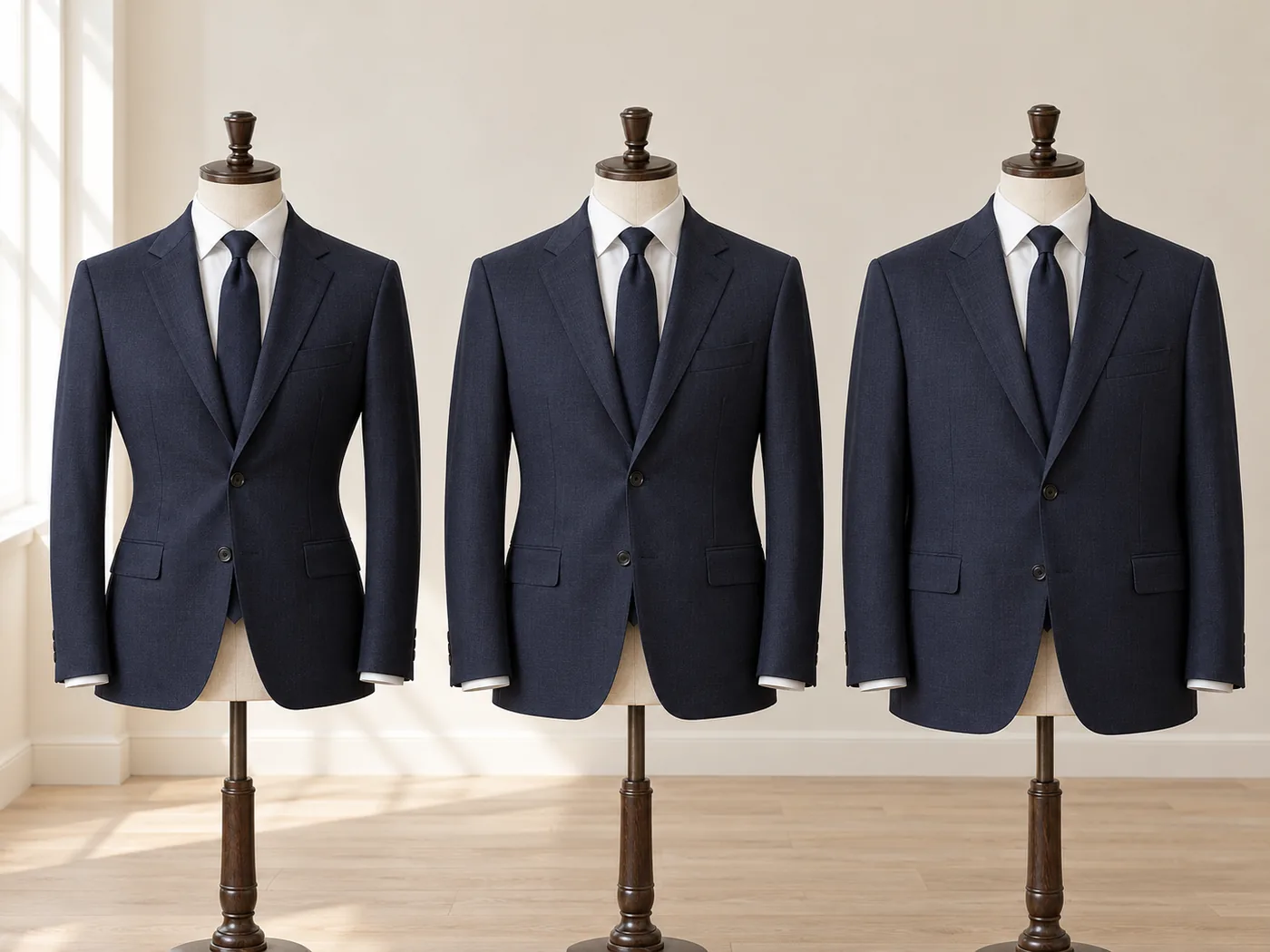
Three routes, one uniform look
Every wearer in a programme does not need the same production route. Choose per person, then keep the cloth, colour and branding identical across all three.
| Route | What changes | Typical use | Notes |
|---|---|---|---|
| Stock + logo | Nothing on the garment except your approved branding | Most of the team; fast rollouts; new-starter top-ups | Fastest route. Branding method and position are confirmed on a sample first. |
| Stock + paid alterations | Jacket sleeve length; trouser waist and seat (hip) | Wearers between sizes or with uneven proportions | Charged per garment. Altered garments cannot be exchanged or returned. |
| Made-to-measure (special sizes) | Suit jacket and/or trousers produced from the wearer’s measurement record | Atypical body shapes outside the 37-size system | Measurements and fit are reviewed before production; terms confirmed per project. |
A uniform programme is only as consistent as its worst-fitting suit. Size first, alter second, make to measure last.
Paid alterations: what can change, and what cannot
When a stock size is close but not perfect, an alteration is quicker than new production. BERKAM offers these areas, for a fee:
- Jacket: sleeve length.
- Trousers: waist (including the waistband) and seat/hip.
How much can change depends on the garment and its seam allowance, so share the style, size, current fit and requested change before work starts. Charges and timing are agreed in writing.
Important: altered garments are final. They cannot be exchanged or returned, so confirm measurements carefully before you approve.
Made-to-measure for special body shapes
Some wearers fall outside any standard size chart. For them, BERKAM produces suit jackets and trousers from the customer’s measurement record.
- Say whether you are sending net body measurements or finished-garment dimensions; they are not the same.
- Use wearer codes and one consistent measuring method across the team.
- Expect the team to ask for extra measurements after review if needed.
The result matches the rest of the programme in cloth and colour. It is measurement-based production, not traditional bespoke tailoring with multiple fittings.
Where your company logo can go on a suit
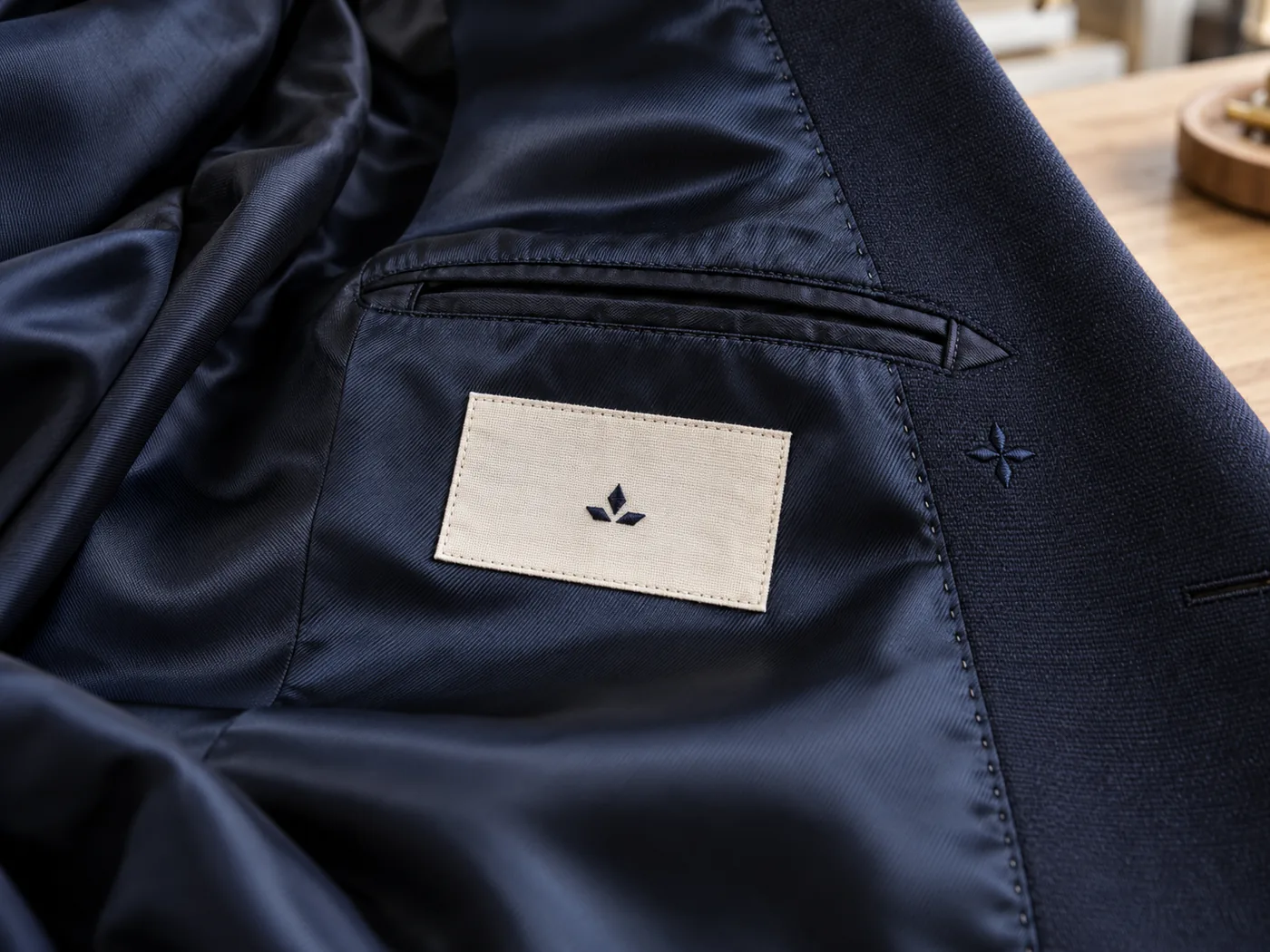
A tailored jacket is a structured garment. Its front, lapel and chest are shaped with interlinings and pressing, so a logo placed carelessly can pucker the cloth or make a career suit look like promotional merchandise. BERKAM uses three methods:
- Inner labels. Your brand on a label inside the jacket. Invisible to customers, clear to the wearer, and the most discreet option.
- An approved badge. A visible identifier for customer-facing roles such as reception, lobby or concierge staff, where guests should recognise the brand.
- Discreet embroidery where construction allows. Small, tonal embroidery placed only on areas the jacket’s structure can take without distortion.
The method, size, colour and exact position are confirmed in the quotation and then checked on a physical sample. Feasibility depends on the chosen style.
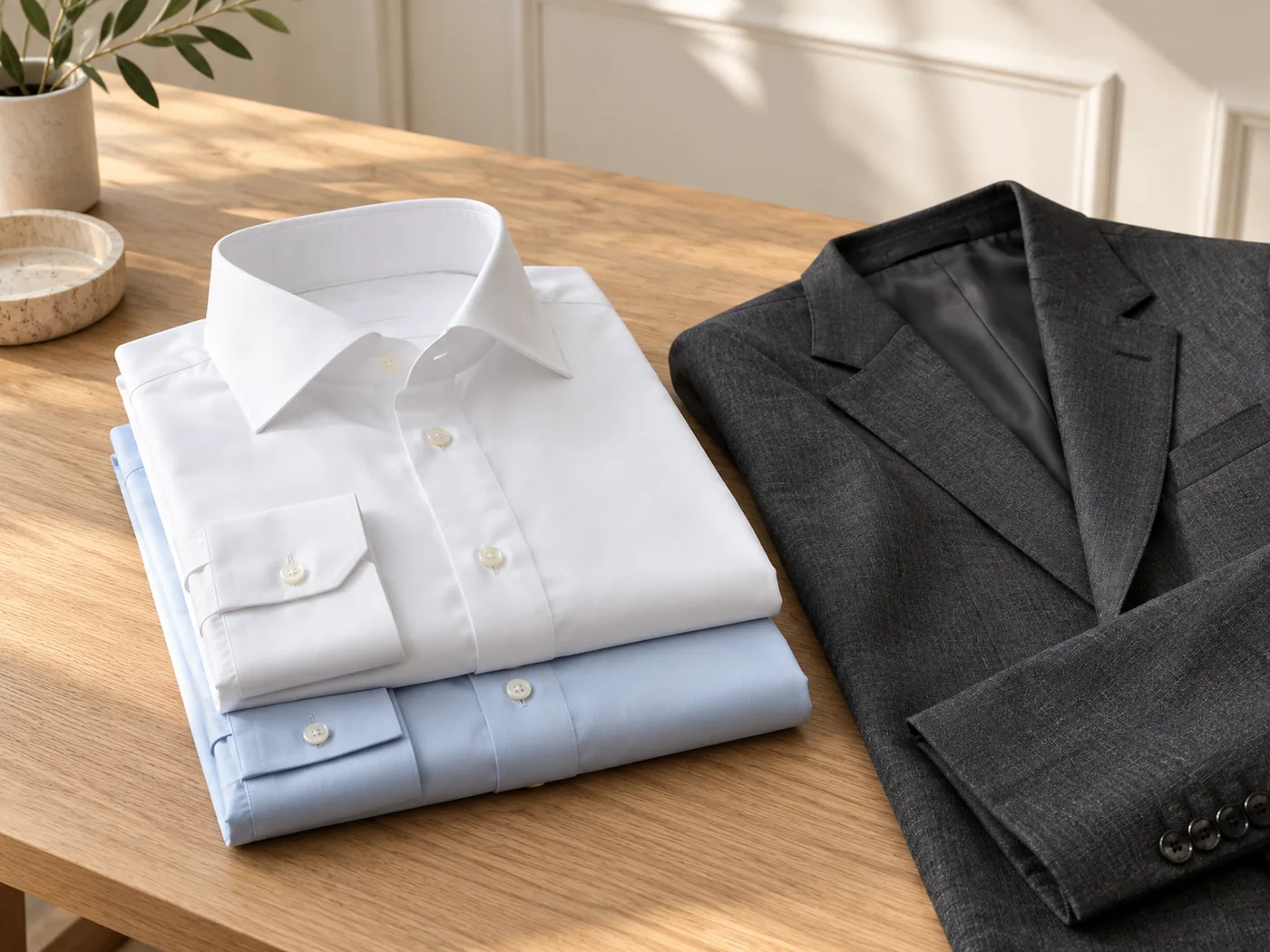
Complete the look with matching non-iron shirts
A suit programme rarely stands alone. BERKAM also makes non-iron dress shirts for office teams: easy-care shirts that stay presentable through a working day with minimal pressing. They can carry the same logo standard as the suits.
Order shirts and suits in one project to align colour, collar style and branding, and add dress trousers and skirts or formal vests where roles need them. See corporate staff shirts for options.
Sample-approval checklist
Mockups align intent; a physical sample confirms reality. Review the sample with one or two representative wearers and check:
- Fit block and size on real bodies, sitting, standing and reaching.
- Cloth shade and hand feel against the approved swatch, not a screen image.
- Logo position, legibility, colour and finish on the actual garment.
- Jacket sleeve and trouser waist/seat after any alteration.
- Labels, packing and the size list per wearer.
- A dated approval record linked to the style code.
Read the full sample approval process for the step-by-step workflow.
What to send for a quote
- Wearer roles and the number of people per role.
- Style choice (use the codes from the suit configurator or the 2026 catalogue).
- Per wearer: jacket size and block, trouser or skirt size, and any alteration.
- Measurement records for made-to-measure wearers, with units.
- Logo files (vector) and the preferred branding method.
- Matching shirts, trousers or vests needed.
- Target date and delivery address.
Reorders that actually match
Stock suits make replenishment simpler, provided you keep the records. Retain the style code, fit block and component sizes for every wearer, the approved sample, the cloth reference, the logo file and packing notes. Reconfirm fabric availability before each reorder, and a new starter can be matched in one message.
Five mistakes that make branded suits look cheap
- Ordering one size per person by label alone. Size labels differ between suppliers. Send net body measurements and let the team match block and size.
- Forcing jacket and trouser into a pair. Separate sizing exists for a reason; use it.
- Treating the logo as a large chest print. On tailored career wear, smaller and quieter reads as more premium. Choose an inner label, badge or discreet embroidery.
- Approving colour from a screen. Monitors shift shades. Approve cloth from a physical swatch and the sample.
- Altering before confirming measurements. Altered garments are non-exchangeable, so double-check every sleeve, waist and seat figure first.
Avoiding these five keeps a uniform programme looking like career wear, not event merchandise, and keeps reorders predictable.
Timing at a glance
Orders start at 100 pieces. Sampling takes 10–15 days. Logo-customised products take 15 production days; fully customised products take 45 production days. Production starts after sample and order approval, and transport is not included. Alteration charges and dispatch dates are confirmed separately.
Behind the stock range sits BERKAM’s factory in Dachen Town, Yiwu: 10,000 m², 200 employees, two suit lines and four shirt lines. Industry examples are on the bank uniforms and hotel uniforms pages, and the custom business suit programmes guide compares suit formats by role.
FAQ
Where can I get custom suits with my company logo made in bulk?
You can order branded office uniform suits directly from a suit factory such as BERKAM in Yiwu, China. Start from in-stock business suits in 37 sizes and 3 fits, add your logo as an inner label, approved badge or discreet embroidery where construction allows, and approve a physical sample first. Orders start at 100 pieces.
What are the 3 fits?
The fit blocks are labelled A, B and C. They cover the same height range but give progressively more room through the waist from A to C, so wearers with different builds can stay in the same style.
Which alterations are available, and can I return altered suits?
For a fee, jackets can have the sleeve length altered and trousers can have the waist and seat altered. Altered garments cannot be exchanged or returned.
What if someone does not fit any of the 37 sizes?
Suit jackets and trousers can be made to measure for atypical body shapes from the wearer’s measurement record, in the same cloth and colour as the rest of the programme.
How is a logo added without damaging the jacket?
Inner labels are the most discreet option, an approved badge suits customer-facing roles, and embroidery is used only where the jacket’s construction allows. Placement is checked on a sample before bulk.
What is the minimum order and timing?
Orders start at 100 pieces. Sampling takes 10–15 days, and logo-customised products take 15 production days after sample and order approval, excluding transport.
Can shirts match the suits?
Yes. BERKAM makes non-iron dress shirts for office teams, which can be ordered in the same project with the same branding standard.
Can men’s and women’s suits be coordinated?
Yes. Men’s and women’s jackets, trousers and skirts are sized separately but can share colour and cloth direction for one team look.
Plan your branded suit programme
Send your roles, sizes and logo, and the BERKAM team will recommend the right mix of stock, alterations and made-to-measure.