
A custom suit manufacturer for a corporate uniform or private-label program has to manage more than a good-looking sample. Buyers need a repeatable fit approach, documented garment specifications, a clear size allocation plan, branding controls and a record that makes replenishment easier. The right production route depends on schedule, quantity and how much individual fit adjustment the team needs.
Quick answer: compare suit manufacturers by the range of fit options they can support, sample and measurement controls, construction expertise, private-label handling and repeat-order records. Then decide whether ready stock, alterations, made-to-measure or custom production best fits the brief.
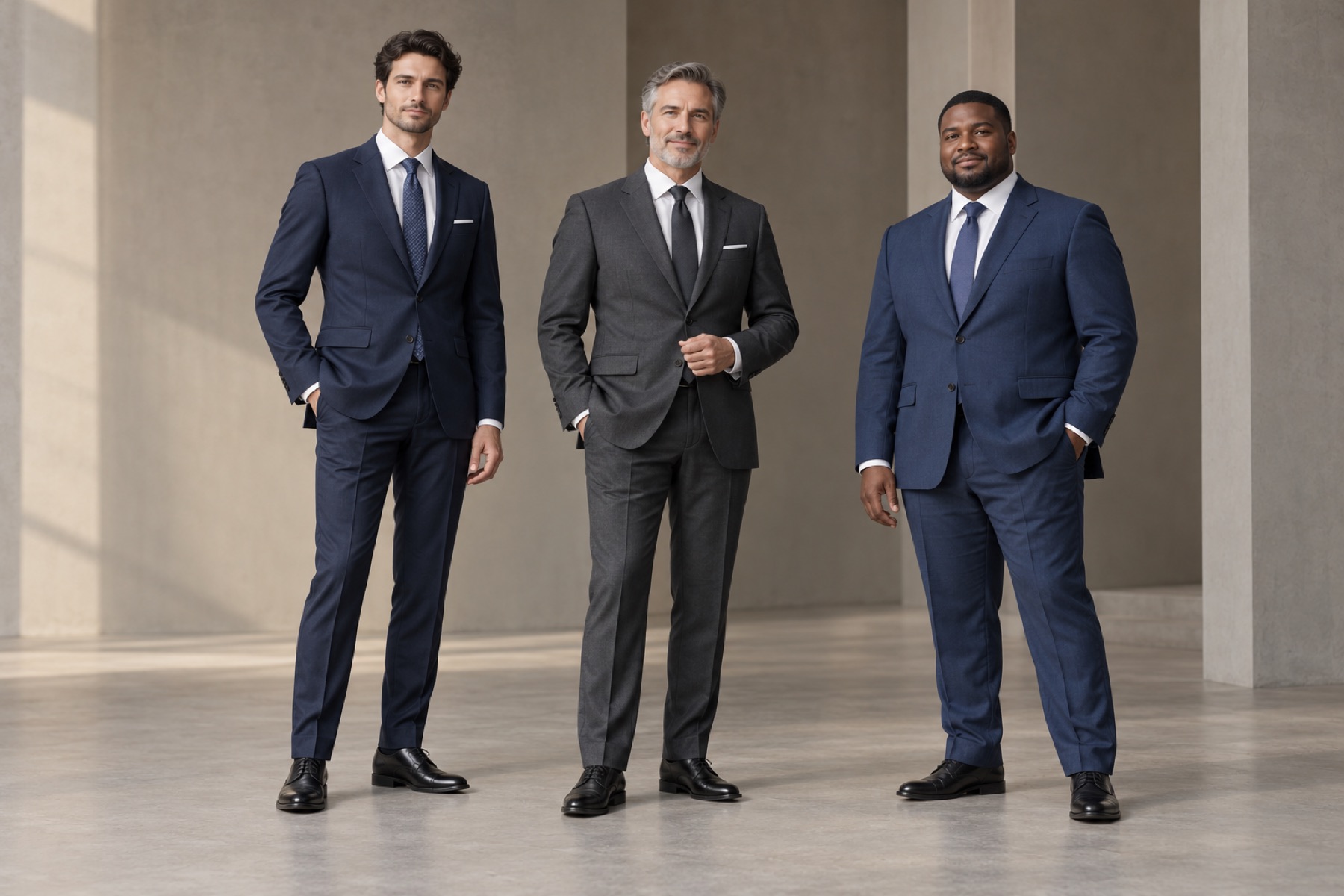
Choose the production route before the design
A supplier may call several different services “custom suits.” Ask what the term means for your project before comparing quotations.
- Ready-stock suit sets: useful when a trade partner or corporate team needs coordinated garments with a faster allocation process. BERKAM offers unbranded mid-range occupational wear stock for trade partners, including suits, trousers, skirts, shirts, ties and scarves.
- Stock with alterations: start with a suitable size, then request confirmed adjustments such as jacket sleeve length or waist, and trouser waist or seat. This keeps the core garment on the stock route while addressing selected fit differences.
- Made-to-measure: when the available size blocks do not meet a wearer’s needs, BERKAM can make to client-supplied measurement information. Agree on measurement points, units and the person responsible for taking them before production.
- Private-label or OEM production: for brands and uniform programs that need their own labels, design details and approved specifications. The style, construction, fabric and schedule are scoped with the manufacturer.
A structured size system can simplify team orders
BERKAM’s ready-stock suit sizing is organized around A, B and C fit versions with 37 suit size options. The range includes 37 men’s suit sizes, 21 men’s trouser sizes, 35 women’s suit sizes, and 18 women’s trouser or skirt sizes. These prepared options are intended to fit the great majority of people; an individual outside the available fit blocks can be considered for made-to-measure service.
For size matching, the buyer supplies net body height and body measurements such as chest, waist and hip, following the agreed measuring method. These are body measurements, not the finished garment dimensions. Jackets and trousers are packaged separately, so a distributor can combine the right top and bottom sizes instead of forcing every wearer into a fixed suit set.
Separate size selection is especially useful when a group has different upper- and lower-body proportions. Keep an approved size chart and fitting notes with the order, and route uncertain measurements to a second check before allocation.
Treat alterations and measurement data as controlled inputs
Even a broad size range should not be presented as a guarantee that every wearer will fit without adjustment. Identify what can be altered on the ready-stock garment and record the requested change on the individual order. For a made-to-measure suit, confirm who takes the measurements, whether the wearer is standing naturally, the units used, and how the measurements are reviewed before work begins.
A simple order record should connect each wearer or team quantity to the chosen size, alteration, garment style, color and label instruction. Store the final approved sample and measurement version. This is the reference that helps a later top-up match the original corporate uniform program.
Evaluate the manufacturer’s suit capability
Before issuing a bulk brief, ask to review the production steps behind the sample: pattern development, cutting and fusing, sewing, pressing, final inspection and packing. A clear process should show who approves the pattern, how measurements are checked, and how a later order is compared with the approved reference.
BERKAM describes a suit production setup that includes pre-shrinking equipment; JUKI and Brother sewing machines; specialist equipment from Pfaff, Strobel and Dürkopp; a three-dimensional pressing line; and Lectra CAD patternmaking. The company says its Italian craft director Luigi has worked with the group since 1999, alongside pattern-development and suit-construction specialists. Its suit operation focuses on mid-to-high-grade business and occupational wear and has served organizations across government, finance, telecommunications, education, energy and automotive sectors.
For a B2B buyer, equipment names alone are not a quality system. Ask how the factory applies its process to your style: what sample is approved, how fit and construction are reviewed, what changes require a new approval, and which records will be retained for reorders.
Questions to send a private-label suit manufacturer
- Which product route is available for this brief: stock, altered stock, made-to-measure or custom production?
- What size and fit information is needed, and does the chart use body or finished-garment measurements?
- Which requested changes can be made to stock, and how should each alteration be recorded?
- How are labels, trims, color references and garment packaging approved?
- What sample, measurement and production records will be kept for repeat orders?
- Which quantities, styles and target date should be included in the project quote?
Frequently asked questions
What does a custom suit manufacturer do?
A manufacturer develops or produces suits to an agreed specification. Depending on its service model, that can include stock sizing, alterations, measurement-based production or OEM and private-label work. Confirm the exact route, sample approvals and records in writing.
Can ready-stock suits be adjusted?
BERKAM offers selected alterations on ready-stock suits: jacket sleeve length and waist, and trouser waist and seat. Confirm the adjustment and affected garment with the supplier before allocation.
Can a manufacturer make suits from client measurements?
Yes. BERKAM can provide made-to-measure service using measurement information supplied by the client. A consistent measurement method and review step help reduce avoidable fit errors.
How should I request a quote?
Share the wearer groups, garment list, size or measurement approach, quantity by style, branding details and target schedule. BERKAM can then review the brief for a project-specific quotation.
Explore BERKAM business suits, review suit customization options, or send a corporate or private-label project brief.