
Industry Insights
15 Workwear and Uniform Suppliers: A Buyer’s Guide
Compare 15 workwear and uniform suppliers by business model: rental services, catalogue brands and made-to-spec manufacturers.
Quick answer: The right workwear supplier depends on what you need to buy: a managed rental and laundry service, a catalogue product, or garments made to your specification. This guide groups 15 examples by those three business models; it is a buyer shortlist, not a ranking.
By BERKAM Editorial Team · Updated September 19, 2026.
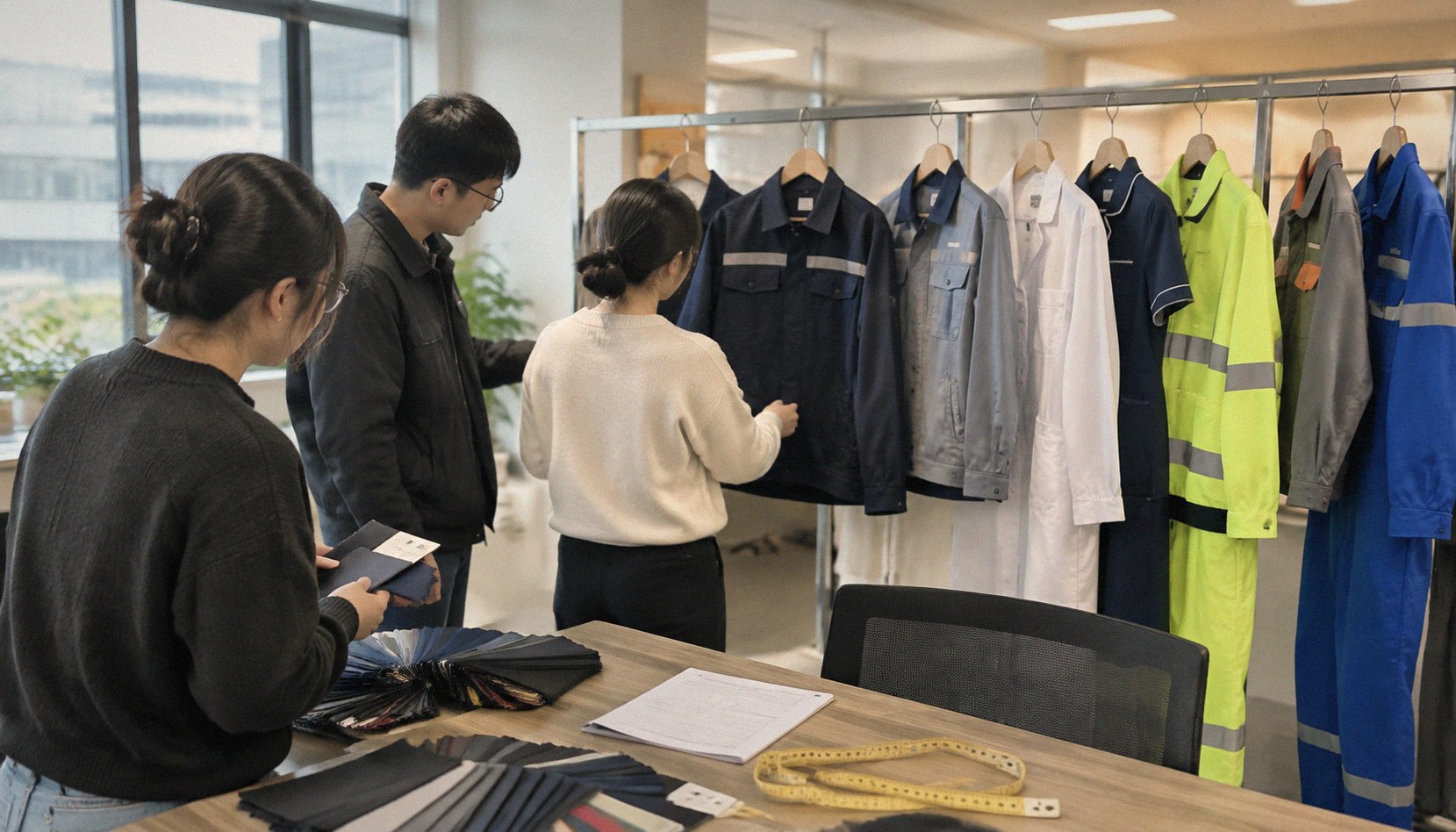
From the BERKAM showroom floor: uniform programme review covering garment construction, fabric options and specification.
How to use this supplier list
This is a buyer shortlist grouped by business model, not a ranked or exhaustive directory. The organizations differ in geography, product coverage and order route. Check whether each serves your destination market and programme size, then confirm current service terms, product availability, certification scope and production capability directly with the supplier.
Disclosure: BERKAM is included in the manufacturer section and publishes this journal. Its own profile is identified clearly so buyers can assess it against the same evidence they request from other suppliers.
Buyer check
Decide whether your programme requires a recurring service contract, a ready-made product or a made-to-spec garment. Compare suppliers within the same model first because their prices, lead times and responsibilities are not directly interchangeable.
Part 1 – Global uniform service and rental groups
This category covers contract-based uniform rental and service providers. Buyers can compare garment rental, laundering, repair, replacement, delivery routes and contract terms. Confirm local service availability, included garments, service frequency and exit terms for each site.
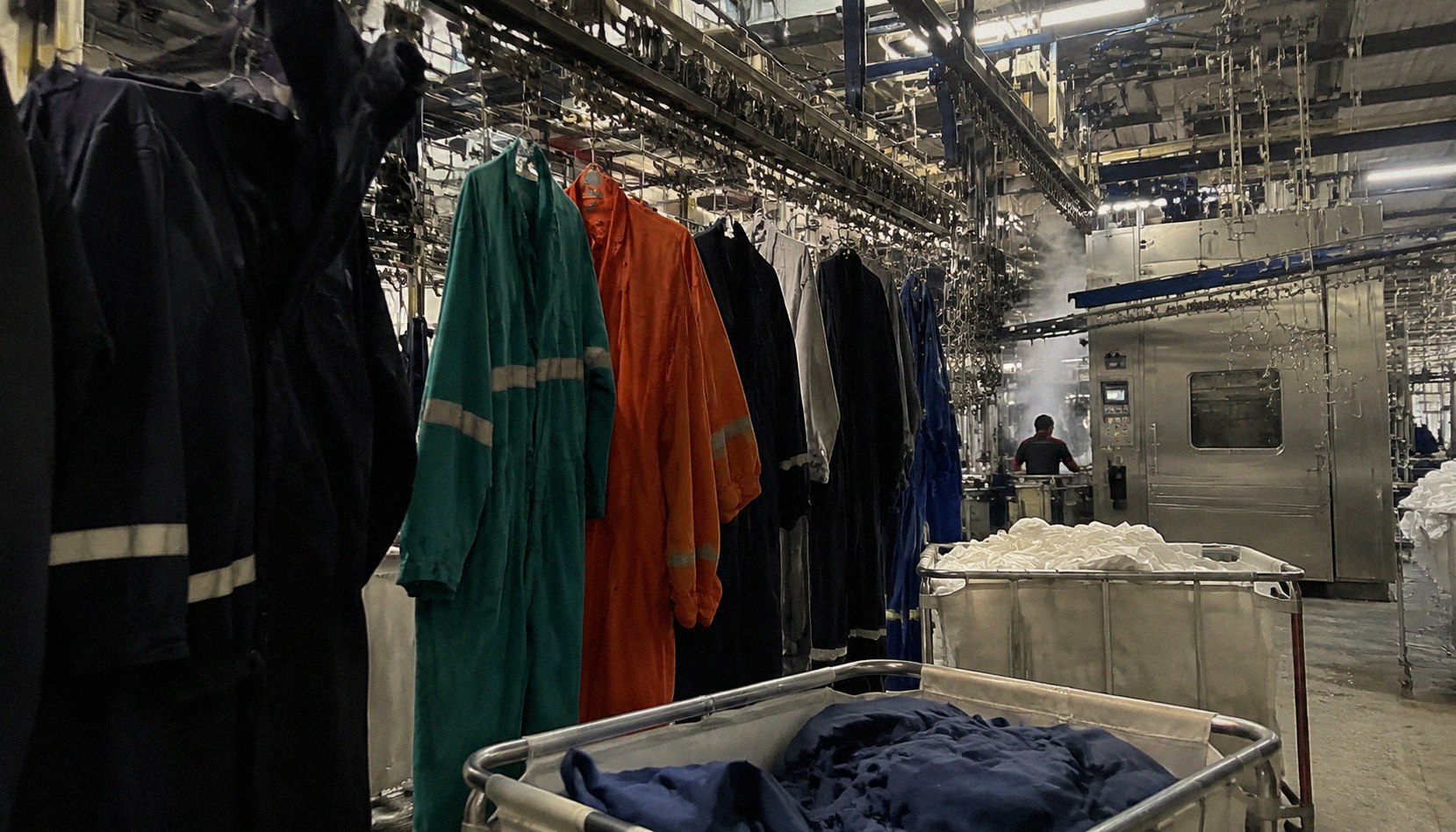
The uniform service model: garments are owned, laundered, repaired and replaced on a contract basis rather than purchased outright.
1. Cintas Corporation
Cintas provides uniform rental and related facility services in North America. Buyers evaluating a managed programme can compare its garment range, delivery route, laundering, maintenance, replacement process and contract terms with other local providers. Garment choice is generally more standardized than a made-to-spec manufacturing programme.
2. UniFirst Corporation
UniFirst offers uniform rental and related workplace services across North America. It can be considered in a managed-service tender where buyers want to compare garment supply, laundering, maintenance and replacement under one contract. Check the service footprint and contract conditions for each operating location.
3. Vestis
Vestis provides uniform and workplace supply services in North America. Buyers can compare its rental and service offer with other regional providers, focusing on site coverage, garment selection, laundering, replacement and service-agreement terms.
4. Alsco Uniforms
Alsco Uniforms provides uniform and linen rental services. Its combined workwear and linen offer may suit hospitality, healthcare and food-service buyers evaluating both garment and flat-linen service. Confirm local availability and the exact services covered by the contract.
5. Elis SA
Elis is a European rental and services group whose offer includes workwear and other site services. Buyers comparing multi-site programmes can assess its country coverage, garment service, laundering and other services required at each location. Confirm contract scope and local availability directly.
6. Lindström Group
Lindström is a textile rental and workwear service provider with operations across parts of Europe and Asia. It may be relevant to buyers coordinating programmes across countries. Confirm the current country footprint, service model and site-level terms before including it in a tender.
Part 2 – Workwear and PPE brands with global distribution
This category covers brands with defined workwear and personal protective equipment ranges, usually sold through direct and distributor channels. Check country-specific availability, product data sheets and certification scope for the exact garment. For regulated PPE, verify the applicable standard and garment-level evidence before purchase.
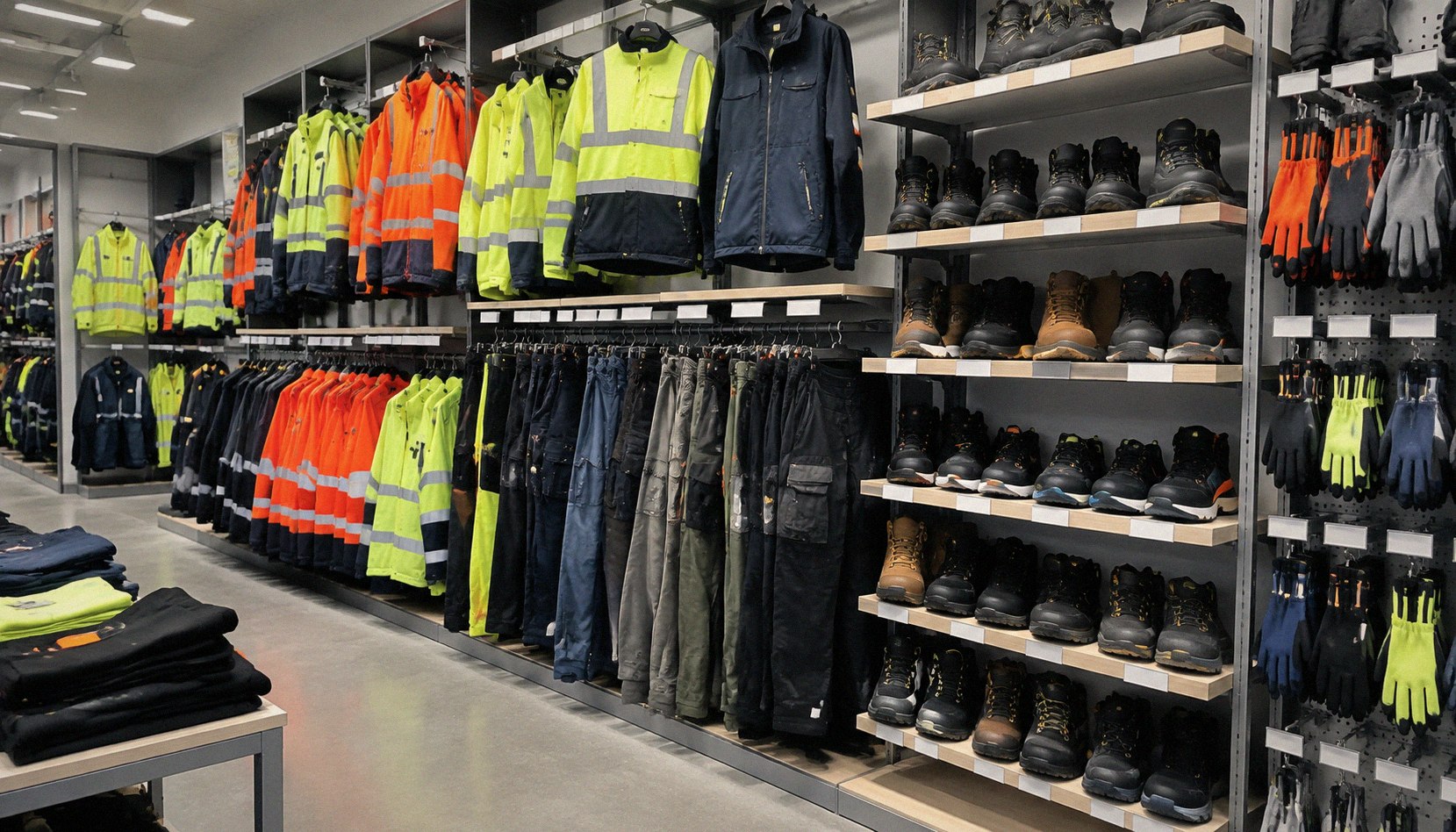
The brand and distribution model: a defined catalogue range, sold through distributors, with published technical data for each garment.
7. Strauss (Engelbert Strauss)
Engelbert Strauss (Strauss) offers workwear, safety footwear and protective equipment through a catalogue-led model. Buyers can review it when they need a defined range with product information and regional sales channels. Verify product specifications, conformity documents and market availability.
8. Mascot International A/S
Mascot offers workwear and safety footwear through an international brand and distributor model. Buyers can compare its current collection, fit range, product documentation and local sales support against the needs of the programme.
9. Fristads
Fristads offers a catalogue of workwear for professional use and is part of the Hultafors Group, which also includes Kansas. Check current product data, availability and sustainability claims against the documentation for the specific garment.
10. Portwest
Portwest offers workwear, safety footwear and personal protective equipment, including protective clothing ranges. Buyers sourcing PPE should verify certification and test evidence for the specific product and destination market rather than relying on a category-level description.
Part 3 – Asia-based apparel manufacturing groups
These manufacturers produce garments for other companies, including corporate uniforms, private-label ranges and made-to-measure programmes. They are relevant when you need a buyer-controlled specification, sampling and repeat production; confirm the factory, order size and quality process for the specific project.
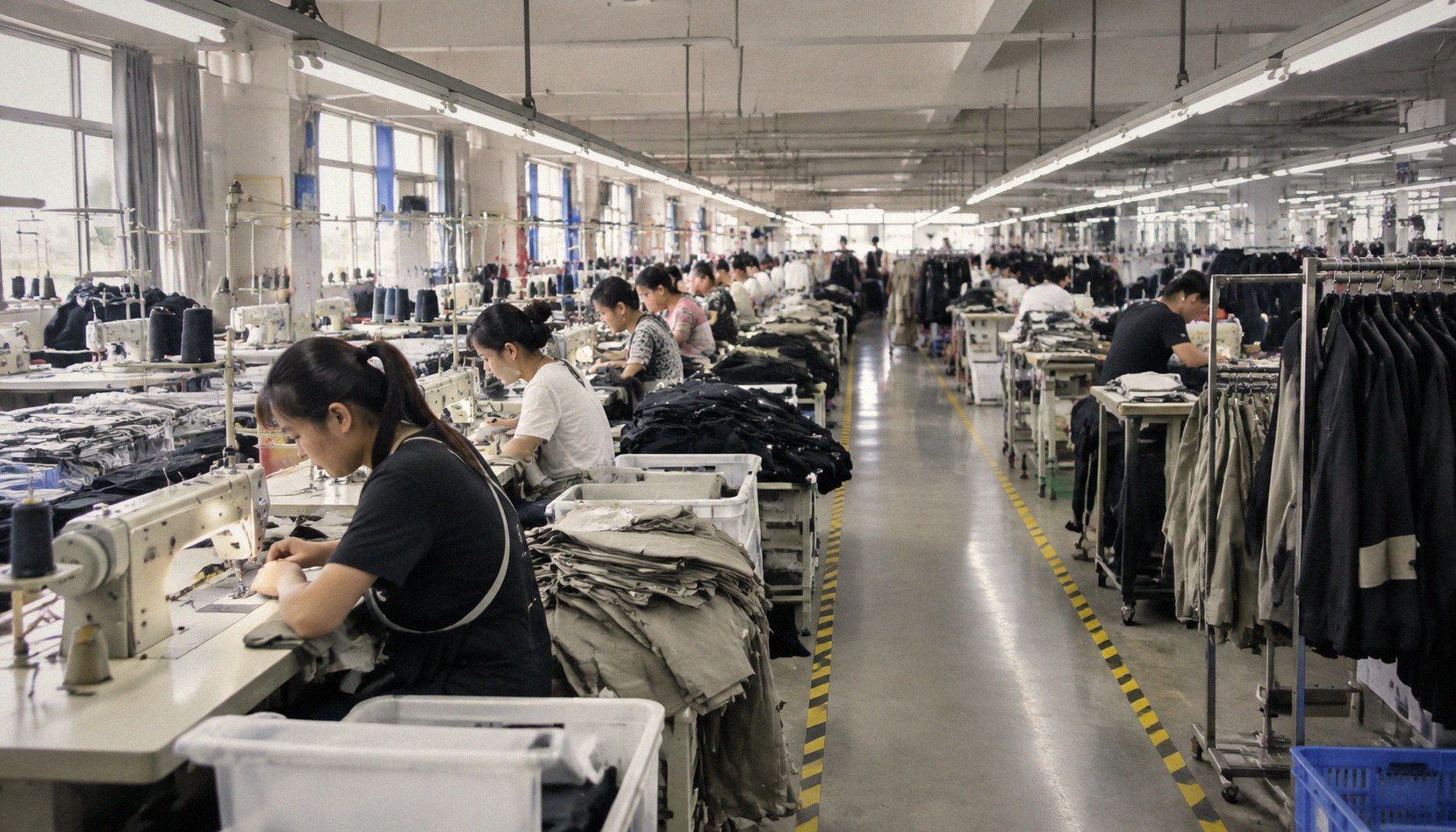
The manufacturing model: production capacity and engineering capability are sold against a buyer’s own specification, tech pack and approved sample.
11. Esquel Group
Esquel Group is a textile and apparel manufacturer with a focus that includes cotton shirtings and shirts. Buyers looking for vertically integrated shirt production can assess its current factory footprint, material options, sustainability information and programme fit directly with the group.
12. Dayang Group
Dayang Group is a Dalian-based apparel producer with made-to-measure and menswear capabilities. It may be relevant to buyers developing tailored corporate clothing at scale; confirm the product range, factory route and programme requirements with the company.
13. Jiangsu Sunshine Group
Jiangsu Sunshine Group combines wool textile and apparel capabilities. Buyers considering wool suiting or uniforms can assess the current fabric and garment offer, production route and repeat-order controls against their specification.
14. Shanghai Youti Clothing Co., Ltd.
Shanghai Youti Clothing trades internationally under the name Shunity and lists apparel products including suits, uniforms and shirts. Buyers evaluating it for a mid-sized programme should confirm current minimum quantities, production capacity, sampling and export terms directly.
15. BERKAM (Yiwu Jingyun Network Technology Co., Ltd.) — publisher’s own profile
Disclosure: this entry is BERKAM’s own, and BERKAM publishes this journal. We have marked it clearly so you can weigh it accordingly. The description below is drawn from our own published product and factory pages, which carry a standing caution: certificate details, capacity measurement periods and legal-entity documents should always be confirmed from project materials rather than from a marketing page.
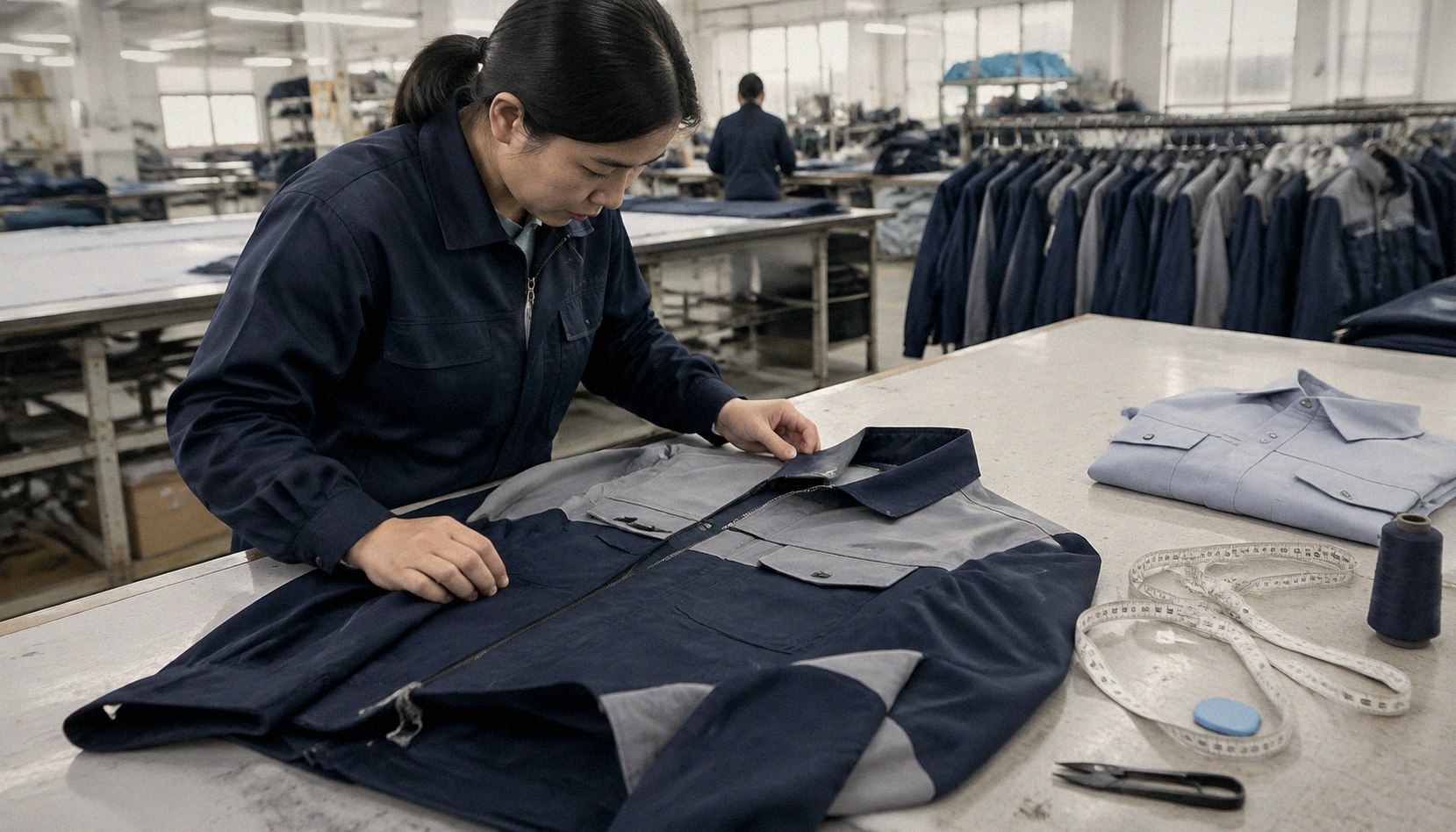
Workshop detail: sampling and inspection at the Yiwu base, where a workwear jacket is checked against the approved sample before bulk production.
Who we are. BERKAM is the corporate clothing brand of Yiwu Jingyun Network Technology Co., Ltd., a manufacturer based in Dachen Town, Yiwu, Zhejiang, China — the town that has been one of China’s principal shirt and garment manufacturing clusters for decades. We manufacture dress shirts, business suits and workwear, and we work with corporate teams, uniform distributors and private-label brands that need programmes to repeat cleanly rather than one-off runs.
Where we sit in the three categories above. We are a manufacturer, not a rental group and not a catalogue brand. Practically, that means three things that matter to a buyer comparing us against the other fourteen entries on this list.
First, you are buying a specification, not a catalogue item. Our workwear range starts from a defined set of catalogue references — for example a 50% cotton / 45% polyester / 5% elastane short-sleeve corporate shirt at 190 ± 5 g/m², a functional shirt including 2% conductive fibre at 180 ± 5 g/m², a poly-cotton 65/35 twill utility direction at 155 ± 5 g/m², and a winter insulated jacket with a 150D mechanical-stretch nylon shell. Those references are a starting point for a project brief, not a fixed offer. The final fabric, colour, logo method, performance requirement and fit are confirmed through sampling. Note also that anti-static, reflective, acid/alkali-resistant and flame-retardant descriptions in our catalogue are product-development directions: the applicable standard, test method, garment version and certification status must be confirmed project by project, and we do not present them as blanket claims.
Second, the commercial entry point is designed for mid-size programmes. Workwear programmes typically start at a minimum of 100 pieces per style, with pricing, sample policy, fabric availability and lead time confirmed per project after specification review. Small-batch and repeat-order thinking runs through how we quote: a uniform programme that cannot be reordered is not really a uniform programme.
Third, the split-by-role structure. Most corporate uniform buyers do not have one uniform problem, they have five — front desk, housekeeping, restaurant, engineering and management wear different things. We structure programmes by department and role, keeping one brand identity while matching fabric and construction to each role’s actual condition. Where a client operates multiple sites, carton labels and size splits can be packed by store so several locations can launch and reorder together.
What the process looks like. A normal programme runs through specification review against your tech pack, fabric sourcing aligned to wash cycle and climate, sample development with physical approval before any bulk cutting, logo integration by embroidery, screen print, heat transfer or woven label, and packing for multi-site distribution.
How to verify our capability. Review BERKAM’s Factory and Corporate Workwear pages as starting points, then confirm current capacity, certification scope, lead time and legal-entity details against project documents. We welcome factory audits and remote walkthroughs.
What we are not the best answer for. If you want a fully outsourced uniform service with laundering and route delivery, the group one companies are the correct choice and we will not pretend otherwise. If you need a certified catalogue PPE range off the shelf, group two is a better fit. We are the right conversation when you want your own specification produced, controlled against an approved sample, and repeatable on reorder.
Comparing the three models side by side
| Uniform service and rental groups | Workwear and PPE brands | Asia-based manufacturers | |
|---|---|---|---|
| What you buy | A managed garment service | A catalogue product | Production to your specification |
| Who owns the garment | The supplier | You, or the distributor arrangement | You, from bulk delivery |
| Laundering | Included in the contract | Not included | Not included |
| Specification control | Limited to the catalogue | Fixed to the published product | Fully specified by the buyer |
| Typical entry size | Contract value, not pieces | Per-piece, low entry | Project minimum, often 100+ pcs per style |
| Lead time | Service-led, defined by route | Stock or short production lead time | Confirmed per project after review |
| Best for | Multi-site outsourcing | Standard roles and PPE | Brand-led and role-specific programmes |
| Main risk | Locked into a standard garment | Product discontinued or changed | Specification drift between sample and bulk |
How to decide which of the 15 you actually need
Work backwards from three questions.
Do you want a service or a product? If your problem is that nobody is laundering, replacing or managing uniforms across many sites, you want a rental and service group. Buying garments cheaper does not solve a management problem.
Does the garment carry your brand, or someone else’s performance promise? If the uniform is a visible part of your brand identity and must match a specific construction, colour and fit, you need a manufacturer who can build to specification. If the requirement is a certified protective garment, you want a brand with the data sheet.
Can you repeat it? This is the question that eliminates most suppliers in practice. A uniform programme that cannot be reproduced in eighteen months — same fabric, same shade, same construction — will cost you again the following year, in replacement, in mismatched teams, and in rebranding. Test every candidate on repeatability before you test them on price.
Frequently asked questions
Are the companies on this list competitors of each other?
Only partly. Cintas, UniFirst, Vestis, Alsco, Elis and Lindström compete with each other in uniform service. Strauss, Mascot, Fristads and Portwest compete in branded workwear and PPE. Esquel, Dayang, Jiangsu Sunshine, Shanghai Youti and BERKAM compete for manufacturing programmes, though each has a different strength — shirts, tailored menswear, wool and suiting, flexible mid-size programmes, and role-based corporate uniforms respectively. A buyer may legitimately use one company from each group in the same uniform programme.
Can I use a manufacturer for a rental-style programme?
Not directly, and it is worth understanding why. A rental model requires the supplier to own the garment, finance it over the contract term, and operate laundering and route logistics. Manufacturers are set up to sell garments, not to hold them on their balance sheet and service them weekly. If you want rental economics, engage a service group; if you want to own your uniforms and control the specification, engage a manufacturer.
Why is BERKAM included in a list of workwear and uniform suppliers?
This article groups suppliers by business model and is not a size or revenue ranking. BERKAM is included as the publisher’s own example of a manufacturer-to-specification model, with that relationship disclosed so buyers can weigh the entry accordingly.
Sources and verification
Company profiles are buyer-facing summaries, not independent audits or endorsements. Service footprints, product ranges, certifications, capacity and commercial terms can change. Verify those details in each supplier’s current official materials and project documents before making a procurement decision. BERKAM’s own profile is publisher-produced; its factory capability, certification scope and legal-entity information should be confirmed against current project documents.
If you believe an entry is inaccurate or out of date, contact us and we will correct it.
This article is an editorial reference list for procurement teams. It is not a financial ranking, and it does not constitute a recommendation, endorsement, or statement of partnership with any company named. Verify all commercial, certification and capacity claims directly with the supplier concerned before placing an order.