
Bespoke Tailoring
How to Size a Whole Team for Corporate Suits: 37 Sizes, 3 Fits and a Plan for Everyone Else
A three-pass method for sizing staff suits: match ready-made sizes from four measurements, alter the near-misses, and make to measure for special body shapes.
Quick answer: Size a corporate suit team in three passes. First, match every wearer to a ready-made size from four net body measurements: height, chest, waist and hip. BERKAM’s in-stock men’s jackets come in 37 sizes across 3 fit blocks (A, B and C). Second, fix near-misses with paid alterations: jacket sleeve length only, and trouser length, mid-waist, waistband and seat. Third, make suits or trousers to measure for the few people whose body shape no standard size fits. Altered garments cannot be exchanged, so measure carefully.
Key takeaways
- Collect four net body measurements per wearer: height, chest, waist and hip.
- Match to 37 men’s jacket sizes in A, B and C fits; women’s ranges are 35 jacket and 18 trouser/skirt sizes. Jackets and trousers are sized separately.
- Paid alterations: jacket sleeve length only; trouser length, mid-waist, waistband and seat. Altered garments cannot be exchanged. Special body shapes are made to measure.
This guide is for HR and uniform teams rolling out suits to dozens or hundreds of people. It covers how to collect measurements, how the size system works, what can and cannot be altered, and how to keep the size record for reorders.
37
men’s jacket sizes
3
fit blocks: A, B, C
35 / 18
women’s jacket / trouser-skirt sizes
4
measurements per wearer
Why team sizing goes wrong
Most suit problems in a uniform programme are sizing problems, not quality problems. People guess their size from a retail label, jackets and trousers are forced into fixed pairs, and alterations are promised that the garment cannot take. The result is returns, delays and a team that does not look like a team.
A good sizing plan avoids all three. It uses measurements instead of labels, treats jackets and trousers separately, and only promises the alterations a stock suit can actually take.
Step 1: collect four measurements from every wearer
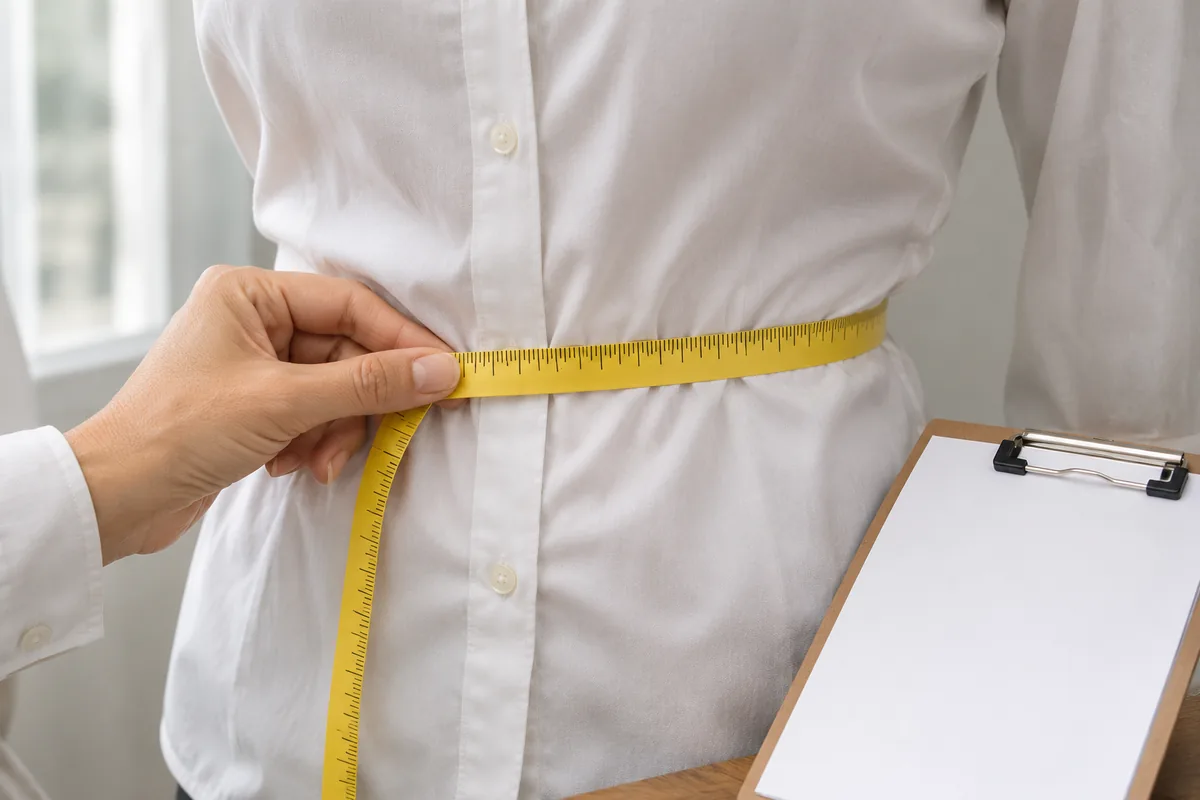
Ask each person for net body measurements, not the size on their current suit. Net means measured on the body, over a thin shirt, not on a garment.
| Measurement | How to take it | Common mistake |
|---|---|---|
| Height | Barefoot, standing straight against a wall | Using height with shoes on |
| Chest | Fullest part of the chest, tape level under the arms, breathing normally | Pulling the tape too tight |
| Waist | Natural waist, around the navel, relaxed | Measuring where trousers sit instead |
| Hip / seat | Fullest part of the seat, feet together | Measuring over a wallet or keys |
Collect the figures in one sheet with a wearer code, role, site and gender line. Have a colleague measure rather than self-measuring where possible; it is faster and more consistent.
Step 2: match each wearer to a size and fit block
The business suits size system lists 37 men’s jacket specifications. They are grouped into A, B and C fit blocks plus extended codes. The blocks pair a height with a different chest-to-waist balance, so a wearer with a fuller waist does not have to size up the whole jacket.
- Women’s ranges are separate: 35 jacket sizes and 18 trouser or skirt sizes, in the same colour family as the men’s suits.
- Jackets and trousers are packed separately. One person can wear a different jacket and trouser size, so you never force a fixed pair.
- Size charts show garment dimensions. Do not compare them directly with body measurements. Send body measurements and let the team recommend the block and size.
Size counts describe the sizing system, not live stock. Availability for each size is confirmed with your enquiry.
Measure bodies, not labels. Size jackets and trousers separately. Alter only what can be altered.
Step 3: alter the near-misses, within limits
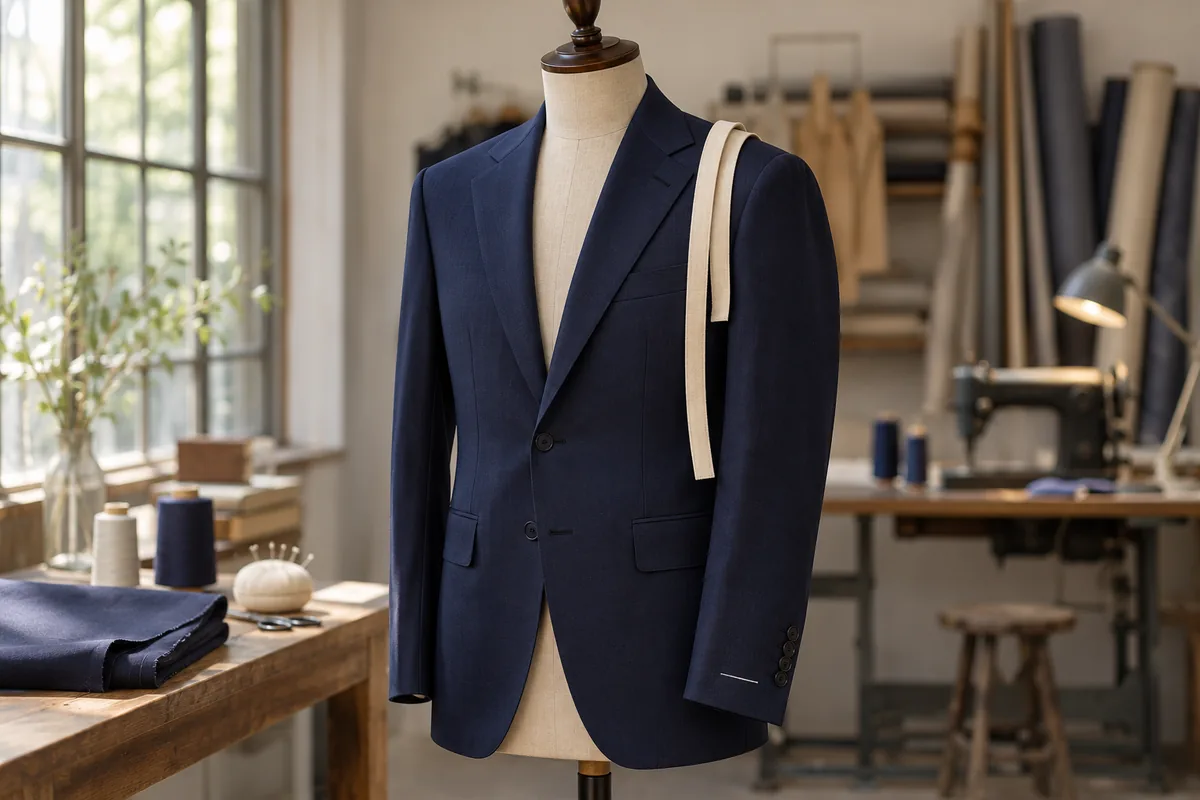
When a stock size is close, a paid alteration is faster than new production. What a stock suit can take is limited:
| Garment | Can be altered (paid) | Cannot be altered |
|---|---|---|
| Jacket | Sleeve length | Waist, chest, shoulders or length; choose a different size or block instead |
| Trousers | Length, mid-waist, waistband, seat/hip | Changes beyond the garment’s seam allowance |
A jacket that is tight or loose in the body needs a different size or fit block, not an alteration. Trousers can also be shortened or lengthened within the hem allowance.
Step 4: make to measure for special body shapes
Some wearers fall outside any standard chart, for example very tall, very broad or with a large difference between chest and waist. For them, BERKAM makes suit jackets and trousers to measure from the wearer’s measurement record, in the same cloth and colour as the rest of the team.
- Flag these wearers early; they set the critical path for the whole order.
- Send full measurements and say whether they are body or garment figures.
- Expect extra questions after review. Timing and terms are confirmed per project.
Build the size list
Bring it together in one table before you ask for a quote. Each row is one wearer:
- Wearer code, role and delivery site.
- Jacket style code, fit block and size.
- Trouser or skirt size.
- Alteration requested (sleeve; trouser length, mid-waist, waistband or seat) with the target figure.
- Made-to-measure flag and measurement record, if needed.
- Logo option and any name labelling.
This list doubles as your reorder record. Keep it with the approved sample and the catalogue style codes so a new starter can be matched in one message.
Plan the timeline backwards
Logo-customised products take 15 days and fully customised products 45 days after sample and order approval; transit is not included. The minimum order is 100 pieces. Allow time for measurement collection, sample review on two or three real wearers, and any alterations. Made-to-measure timing is confirmed per project, so start those wearers first.
A worked example
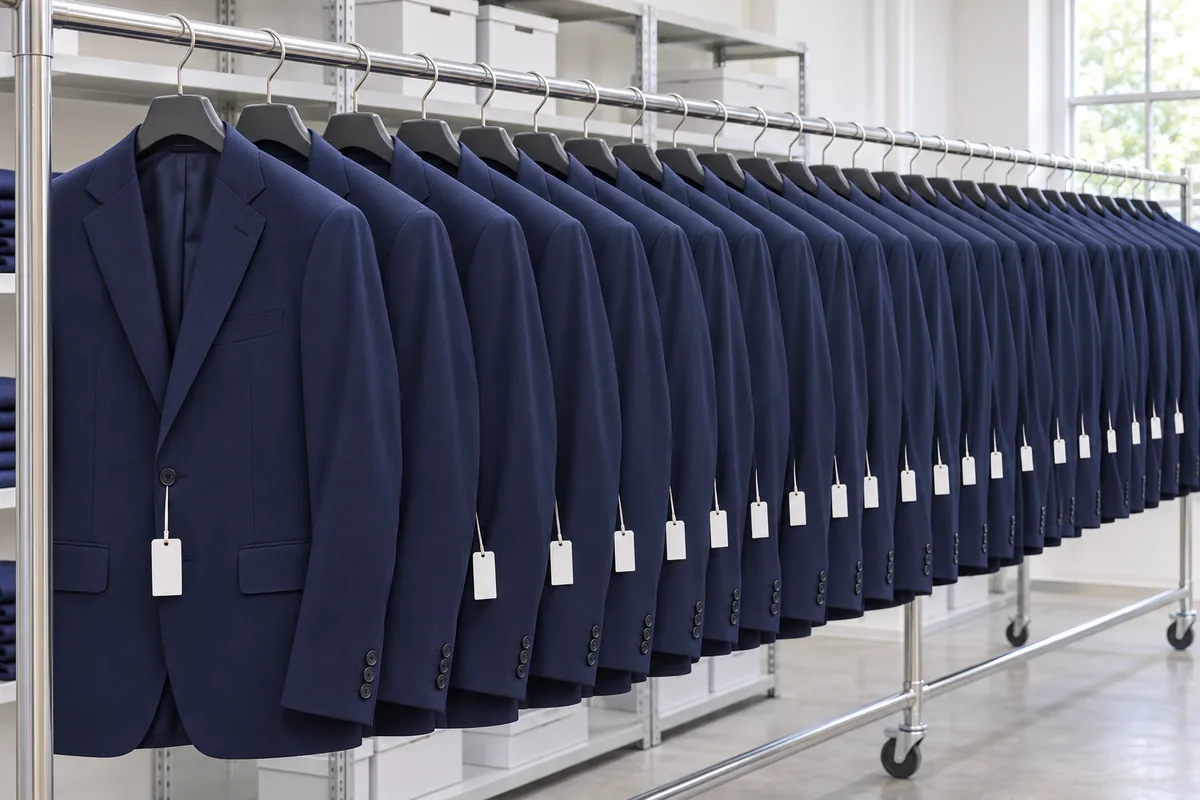
Picture a hypothetical branch network with 120 suit wearers across three sites. HR sends one measurement sheet with wearer codes. Most people match a stock size in their usual block. Several sit between sleeve lengths and get a paid sleeve alteration. A few need trouser waistband or seat adjustments. Two or three, perhaps very tall wearers, are flagged for made to measure on day one. Everyone receives a suit in the same cloth, colour and logo standard, packed by name and site.
The numbers will differ for every team; the sequence does not. Stock first, alterations second, made to measure last.
Five sizing mistakes to avoid
- Collecting retail sizes. Labels differ between brands; collect body measurements.
- Promising a jacket waist alteration. Only sleeve length can be altered on a stock jacket.
- Pairing jacket and trouser sizes. They are sold separately for a reason.
- Leaving special sizes to the end. Made-to-measure wearers need the most time.
- Not keeping the record. Without it, every reorder starts again.
For branding options on the finished suits, see custom suits with your company logo.
Choosing the suit itself? Compare cloth, lapel and fit options in custom business suit options.
FAQ
How do I collect suit sizes for a whole team?
Collect four net body measurements from each wearer: height, chest, waist and hip, in centimetres, using one method. Send them with a wearer code so the factory can recommend a fit block and size.
How many ready-made suit sizes are there?
BERKAM’s men’s jackets come in 37 sizes across A, B and C fit blocks. Women’s jackets have 35 sizes and women’s trousers and skirts 18.
Can the jacket waist be altered?
No. On a stock jacket only the sleeve length can be altered, for a fee. A jacket that does not fit the body needs a different size or fit block.
What trouser alterations are available?
For a fee, trousers can be altered in length and at the mid-waist, waistband and seat or hip.
Can I return altered suits?
No. Altered garments cannot be exchanged or returned, so confirm measurements before approving.
What if someone does not fit any standard size?
Suit jackets and trousers can be made to measure for special body shapes, in the same cloth and colour as the team.
Can one person wear different jacket and trouser sizes?
Yes. Jackets and trousers are sized and packed separately.
What is the minimum order and timing?
The minimum order is 100 pieces. Logo-customised products take 15 days after sample and order approval, excluding transit.
Send your team’s size list
Share your roles, measurements and logo. The BERKAM team will recommend sizes, flag alterations and identify who needs made to measure.