The Bridal Hair Bow Guide — Everything You Need to Know for 2025
The ribbon bow has had a quiet takeover of bridal hair. It started as an editorial choice — a few designers, a handful of editorial shoots — and has become mainstream enough that it now appears across the full range of bridal styles, from minimalist civil ceremonies to full-scale white weddings. It’s not a trend in the sense that it will be gone next year. It’s closer to a rediscovery of something that was always there.
If you’re considering a bow for wedding day hair — your own or as a detail for a bridal party — here’s everything you need to know to make it work.
Why the Bow Works for Bridal Hair
Wedding photography creates specific demands on hair accessories. They need to read clearly at a distance (in full-ceremony shots), look intimate and beautiful up close (in portrait shots), and hold up through hours of wearing, dancing, and the general chaos of a wedding day.
The bow meets these demands better than most accessories:
It reads at every scale. A silk bow on a low bun is visible in a full-length shot and beautiful in a close-up. Unlike small pins or delicate clips that can be invisible in wide shots, a bow has enough scale to register across the room.
It’s material-rich. Wedding photography rewards texture and depth. A well-made silk bow has the kind of visual interest — the way light catches the fabric, the slight movement — that photographs better than flat or matte accessories at the same scale.
It ages well in photos. Trend-specific accessories can date photographs. A silk bow in ivory or champagne is as timeless as a pearl earring.
The Styles
The nape bow. A silk bow tied around the base of a low chignon or low bun. This is the cleanest, most universally flattering bridal placement. It keeps the face visible and unencumbered, frames the nape beautifully for photographs taken from behind, and works with every wedding dress silhouette. This is the place to start if you’re uncertain.
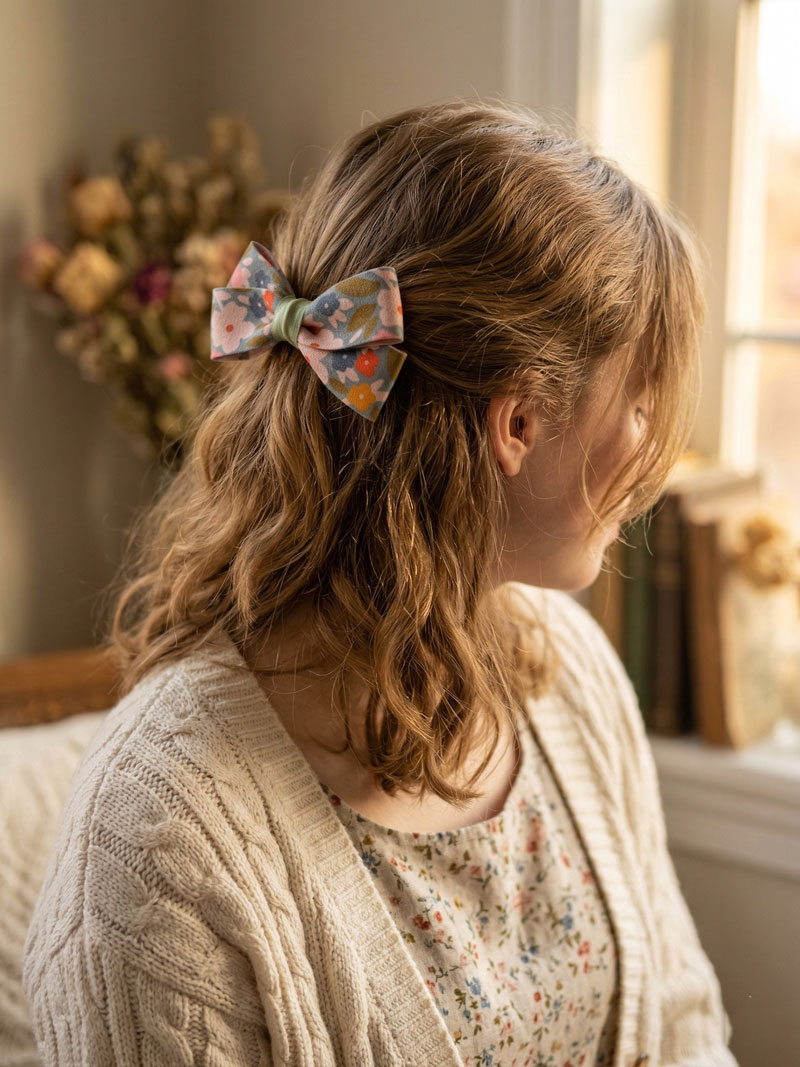
The half-up bow. A bow tied where a half-up section meets the gathered hair. Works particularly well with loose waves or natural texture. More romantic in register than the nape bow — slightly more "garden wedding" and slightly less "formal ballroom." Pairs well with floral dresses and outdoor ceremonies.
The ponytail bow. A wide silk bow tied around a low or mid-height ponytail. Less traditional in the bridal context but genuinely beautiful — particularly for civil ceremonies, second weddings, or brides who wear their hair in a ponytail regularly and want something that feels like themselves. The bow elevates the ponytail without changing its character.
The veil companion. A bow placed at the base of the veil attachment, visible beneath the veil’s edge. This is a particularly beautiful use for brides wearing a veil — the bow secures and decorates simultaneously, and it remains in place after the veil is removed at the reception.
The bun wrap. A long length of ribbon wrapped multiple times around the base of a bun and tied in a bow at the front. This is more decorative than a nape bow and has more visual weight — better for brides who want the bow to be a clear feature of the look rather than a subtle detail.
Fabric: The Most Important Decision
French silk. The strongest bridal choice. The weight, drape, and sheen of properly woven French silk photographs beautifully and holds its shape through a long day of wearing. In ivory or champagne, it’s essentially indistinguishable in color from most wedding dresses, which means it reads as part of the bridal look rather than an accessory added to it.
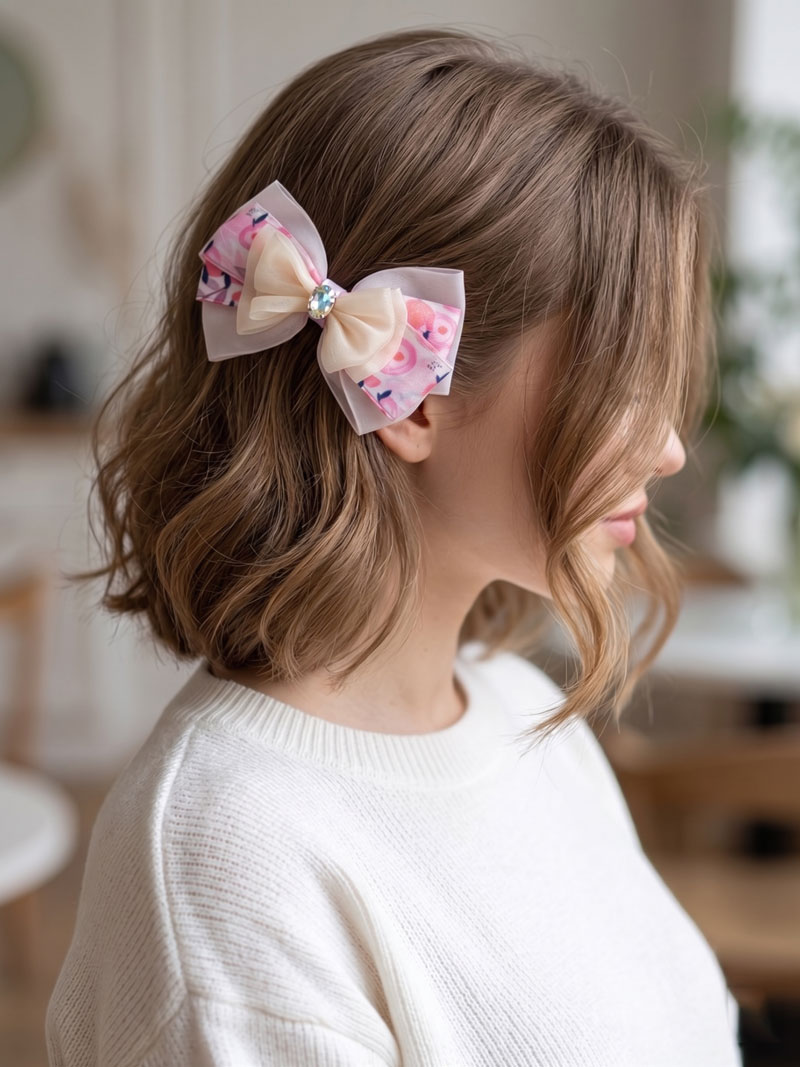
Organza. A sheer, slightly stiff fabric that has a different quality from silk — more structure, less drape, a slight luminosity. Beautiful for large, structured bow shapes where you want the loops to hold a specific form. Works particularly well for full-scale statement bows.
Grosgrain. Unusual in bridal contexts but not inappropriate, particularly for casual or civil ceremony weddings. The matte texture creates a different mood than silk — less romantic, more considered. A black or ivory grosgrain bow on a ponytail at a registry office ceremony is a completely legitimate choice.
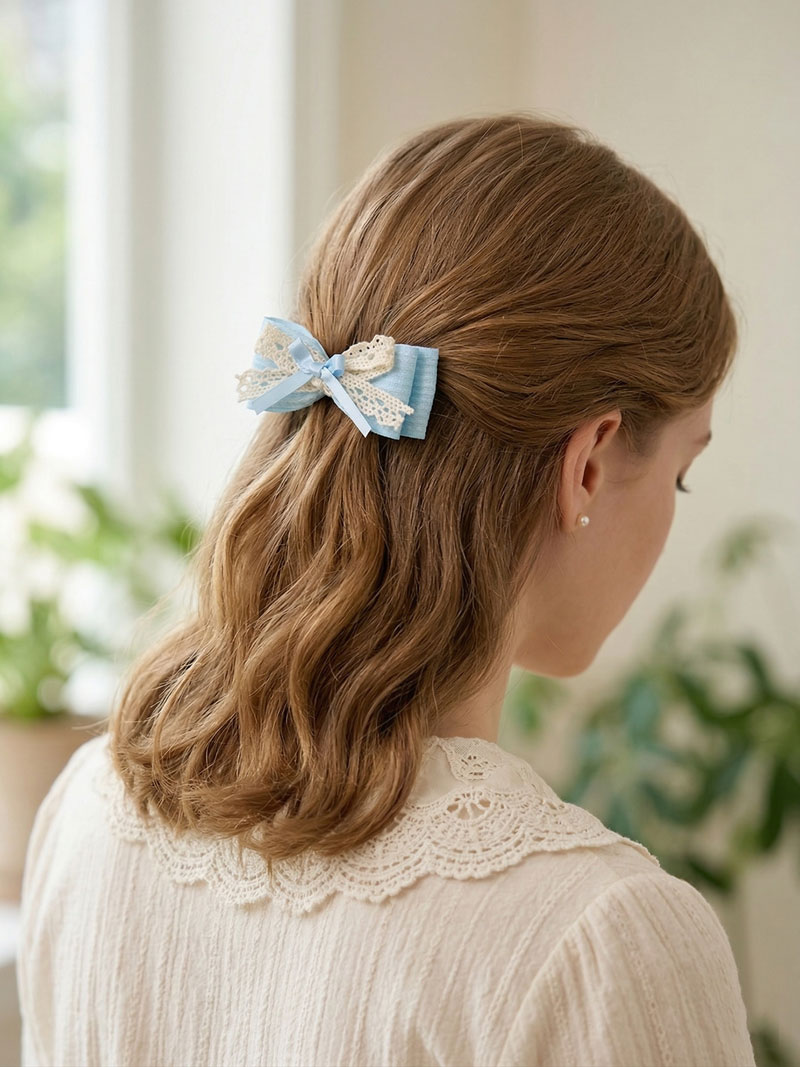
Lace ribbon. For brides whose dresses incorporate lace, a bow in coordinating lace creates a natural connection between the hair and the dress. This requires some care in matching the lace style (Chantilly lace is very different from embroidered tulle), but when done well, it’s a beautiful detail.
Practical Considerations
Test in your wedding day conditions. If your ceremony is outdoors in summer, test your chosen bow style in similar temperature and humidity. A bow that holds perfectly in a salon in March may behave differently outdoors in July.
Secure underneath first. Use a professional updo pin or elastic to secure the hair structure, then place the bow as a decorative element over it. Never rely on the ribbon alone to hold a wedding hairstyle.
Consider the photographer’s direction. If you’re having a first look or significant photos from behind (very common for bridal portraits), a nape bow or bun wrap is particularly well-placed. Discuss with your photographer what they’re planning to photograph and where.
Test with your veil. If you’re wearing a veil, place it at your trial run and see how the bow interacts with the veil attachment and drape. Some bow placements work perfectly with a veil; others conflict visually.
Order early. Custom or specific-color bows take time. Don’t leave this to the week before.
For the Bridal Party
A matching ribbon bow given to bridesmaids as a detail accessory is one of the more thoughtful versions of a bridesmaid gift. It’s personal, it’s wearable, and it creates a visual connection between the party members without requiring identical hair. Each bridesmaid wears the same bow in her own hairstyle — the result is cohesive without being identical.
Ivory or champagne coordinates with the bride without competing. A specific color that matches the bridesmaid dress shade creates a completed look in photographs.
[Browse bridal and occasion bows →]
Frequently Asked Questions
What type of bow is best for a bride’s hair?
French silk in ivory or champagne is the strongest bridal bow choice — the weight, drape, and sheen photograph beautifully and hold up through a full wedding day. Organza works for larger, more structured bow shapes. The nape placement (tied around the base of a low chignon) is the most universally flattering bridal position. Test your chosen style in a trial before the wedding day.
How do you keep a bridal bow in place all day?
Secure the hair structure first with professional pins or elastics before placing the bow. The bow should be decorative, not structural — it should sit over a base that’s already held. For long days, a small clear elastic wound through the ribbon at the attachment point (hidden inside the bow) can help prevent slipping without being visible.
Can a ribbon bow work under a veil?
Yes. A bow placed at the base of the veil attachment is a very beautiful combination — the bow secures and decorates the attachment point, and it remains visible and lovely after the veil is removed at the reception. Discuss placement with your hairdresser at the trial run and test with the actual veil.
What is the best ribbon color for a bridal hair bow?
Ivory and champagne are the most universally appropriate bridal bow colors — they coordinate with almost all wedding dress shades and hair colors without competing. White is a strong choice if the dress is a true white. For civil ceremonies or less traditional weddings, blush, pale gold, or even a soft sage can work beautifully depending on the dress and overall palette.
How big should a bridal bow be?
Scale to your hair volume and the formality of the setting. For most bridal updo styles (low chignon, bun), a ribbon 2–3 inches wide tied into a bow with medium-sized loops reads correctly. For a full-volume ponytail or a deliberate statement bow, go larger. At a casual or civil ceremony, a smaller, less formal bow fits the register better than a dramatic one.