How to Care for Lace Hair Accessories — Making Them Last for Years
Lace is the one material in the hair accessory world that most people either over-wash (and ruin) or never wash at all (and watch quietly degrade). Neither approach serves you well, especially when the lace in question is on something you wear near your face regularly.
The good news: caring for lace properly is not complicated. It’s mostly about knowing what to avoid, because lace is more vulnerable to the wrong treatment than to reasonable neglect.
Why Lace Needs Different Treatment
Lace — whether cotton Chantilly, nylon, or the embroidered varieties used in hair accessories — is a net structure. The pattern is created by the deliberate arrangement of threads around open spaces, and that structure is what gives lace its visual delicacy. But those open spaces also mean there’s less material holding each thread in place.
Applied force — rubbing, wringing, machine washing — doesn’t wash lace, it distorts it. The threads shift. The pattern loses its crispness. Once the net structure is disturbed, you can’t iron it back into shape without specialized equipment.
Hair accessories add a layer of complexity because lace is often combined with other materials: a ribbon backing, fabric-covered hardware, crystal or bead embellishments. Each of those materials has its own care requirements, and the treatment for lace may conflict with what’s ideal for the hardware.
The starting rule: always care for a lace accessory at the level of its most delicate component.
Cleaning: What Actually Works
For light soil and everyday wear: A barely damp cloth, gently blotted (never rubbed) against the lace surface. This handles most of the dust and surface debris that accumulates with regular wear. Let air dry completely before storing.
For product buildup or more significant soiling: A shallow basin of cool water with a very small amount of gentle lingerie detergent or baby shampoo. Submerge the lace piece, agitate the water gently with your hand rather than handling the lace directly, then lift it out without wringing. Support the piece fully as you move it — never dangle lace from one point, which stresses the net structure at that point.
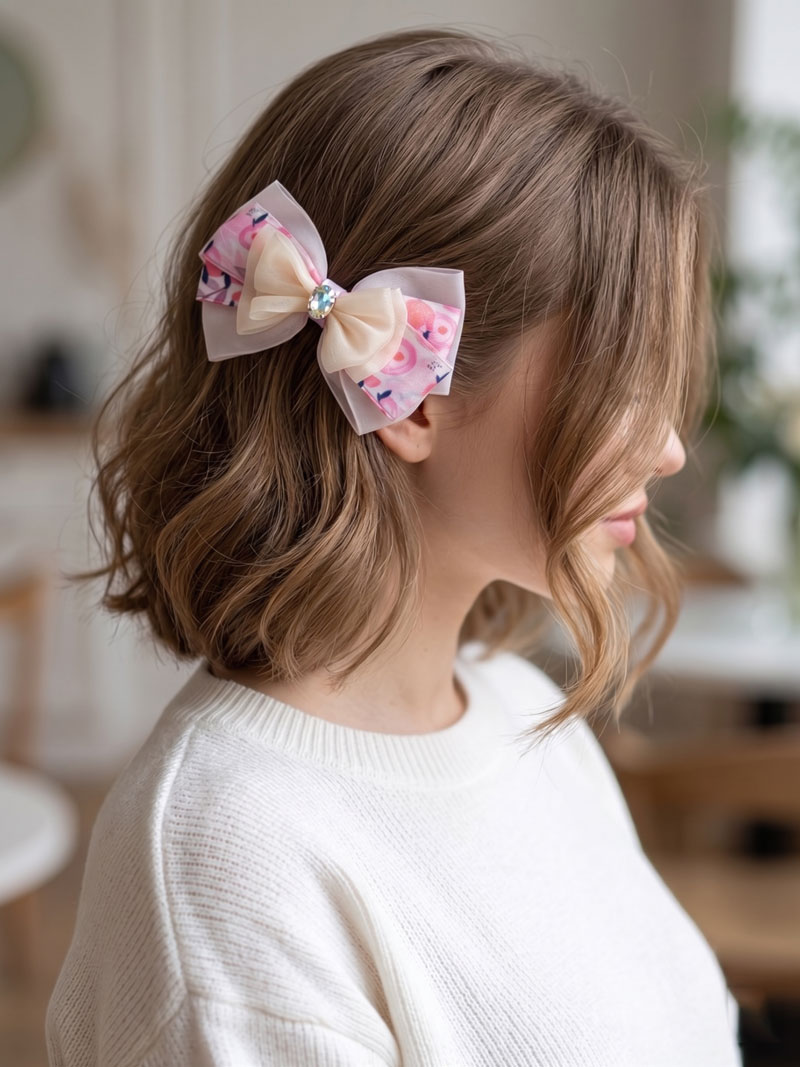
For crystal or bead embellishments (like those on the Floral Crystal Butterfly Bow or Confetti Dot Crystal Bow): keep the embellishment area out of the water if possible. Crystals on hair accessories are typically heat-set or glued, and extended water exposure can weaken the setting. Clean the lace body, avoid the crystals.
What not to do: No rubbing, no wringing, no machine washing, no soaking for extended periods, no warm or hot water.
Drying: The Step That Matters Most
Lace should never be hung to dry. Gravity pulls the water downward through the net structure and creates uneven tension that permanently distorts the pattern.
The correct method: after gently removing excess water by pressing the lace flat between two clean dry towels (don’t twist), lay the piece flat on a fresh dry towel or a mesh drying surface. Gently reshape by hand while the lace is still damp — ease the edges back to their correct shape, make sure any bow loops are positioned correctly. Let dry completely at room temperature, away from direct sunlight.
Direct sunlight is worth specifically avoiding with lace. UV exposure degrades natural fibers faster than almost any other factor, and with white or ivory lace, it creates that yellowing that’s very difficult to reverse.
Reshaping
If lace has lost its shape — particularly bow loops that have gone flat, or edges that have curled — the gentlest way to restore them is steam, not an iron.
Hold a garment steamer (or a kettle at a careful distance) near the piece without touching it, let the steam work into the lace for a few seconds, then gently ease the shape back with your fingers and hold until cool. This is significantly safer than applying an iron directly, which can melt synthetic lace or crush the net structure.
If you need to press lace flat (for a flat element of the accessory rather than bow loops), place several layers of clean white cloth over the lace and apply a barely-warm iron. Never apply an iron directly to lace.
Storage
Lace shouldn’t be compressed or folded in storage — the pressure flattens the net structure and creates creases that are difficult to remove.
For individual pieces: lay flat in a shallow drawer or box, ideally in a single layer. If you need to stack pieces, place a layer of acid-free tissue between each one.
For bow-shaped accessories: store with the loops shaped correctly. A small amount of tissue paper inside the loops keeps them round during storage and prevents them from collapsing under their own weight.
Keep stored lace away from light and humidity. Both accelerate fiber degradation. A fabric bag (not a plastic one, which traps moisture) in a dark drawer is ideal.
The Berkam Lace Pieces: Specific Notes
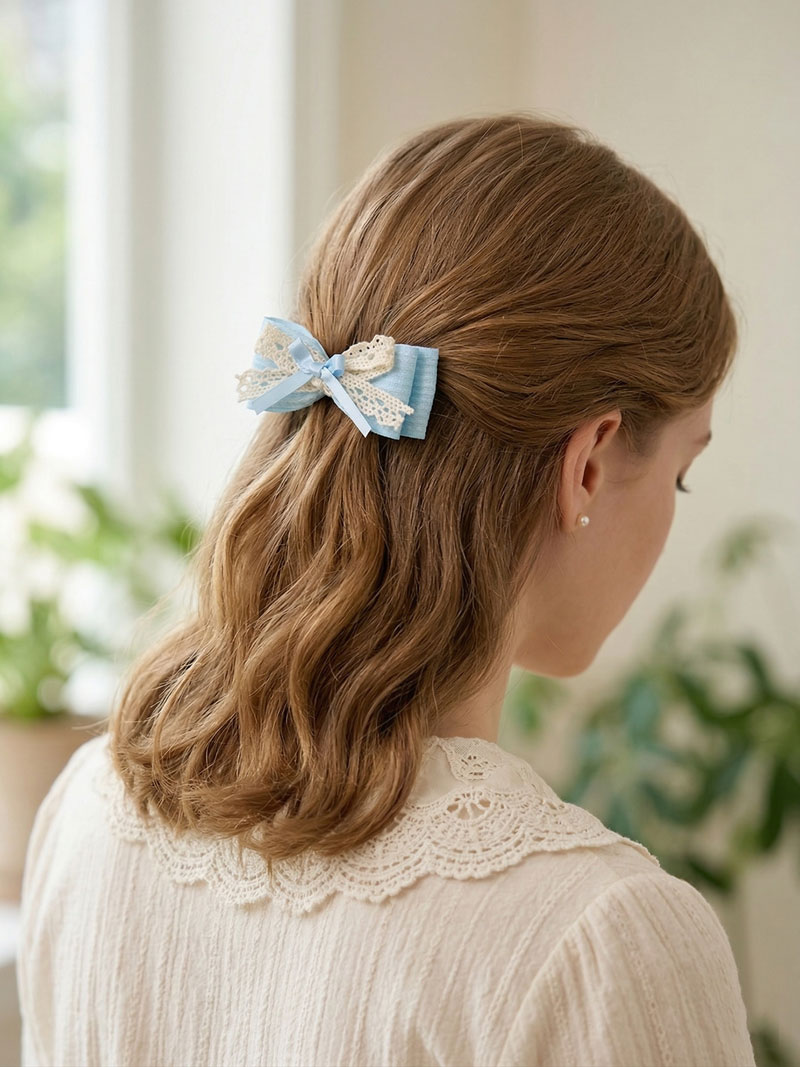
The Baby Blue Lace & Ribbon Bow and Golden Bird Lace Bow in our current collection use a woven lace that has good structural integrity — it’s not the delicate Chantilly variety that needs museum-level care. That said, all the principles above apply: cool water, no rubbing, flat drying, shaped storage.
The crystal pieces (Confetti Dot, Floral Crystal Butterfly, Rosy Bloom) have heat-set crystals that are robust under normal wear but benefit from keeping the crystal areas out of water during cleaning. The organza and chiffon bows (Blushing Rose, Lilac Rose) need the same flat-drying treatment as lace.
If you’re unsure about cleaning a specific piece, the safest default is a barely-damp cloth for surface cleaning and otherwise keeping the piece dry. Most light soil in regular wear is surface-level and responds to this.
[See our current lace bow collection →]
Frequently Asked Questions
How do you wash a lace hair bow?
Hand wash only, in cool water with a small amount of gentle detergent. Submerge and agitate the water gently rather than handling the lace directly. Never rub, wring, or machine wash. Rinse thoroughly, press between dry towels to remove excess water, then lay flat to dry completely.
Can you iron a lace hair accessory?
Not directly. If pressing is needed, place several layers of clean white cloth over the lace and apply a barely-warm iron — never iron lace directly, which can melt synthetic fibers or crush the net structure. Steam is generally safer than direct pressing for restoring shape to lace bow loops.
How do you stop lace from yellowing?
Keep lace away from direct sunlight and UV exposure, which is the primary cause of yellowing in natural and synthetic fibers. Store in a fabric bag in a dark drawer rather than in open storage. For white or ivory lace that has already yellowed slightly, specialist textile cleaning is the only reliable remedy.
How should you store lace hair accessories?
Lay flat in a shallow drawer or box, not folded or compressed. If storing bow shapes, place a small amount of tissue paper inside the loops to keep them round. Avoid plastic storage containers (which trap moisture) and keep away from direct light. Acid-free tissue between layered pieces prevents transfer and compression damage.
How long do lace hair accessories last if properly cared for?
A well-made lace hair accessory from quality materials, properly cared for, should remain in good condition for many years — potentially decades if stored well. The main failure modes are fiber degradation from UV exposure, structural distortion from improper washing, and hardware failure. If all three are managed, the lace itself is surprisingly durable.