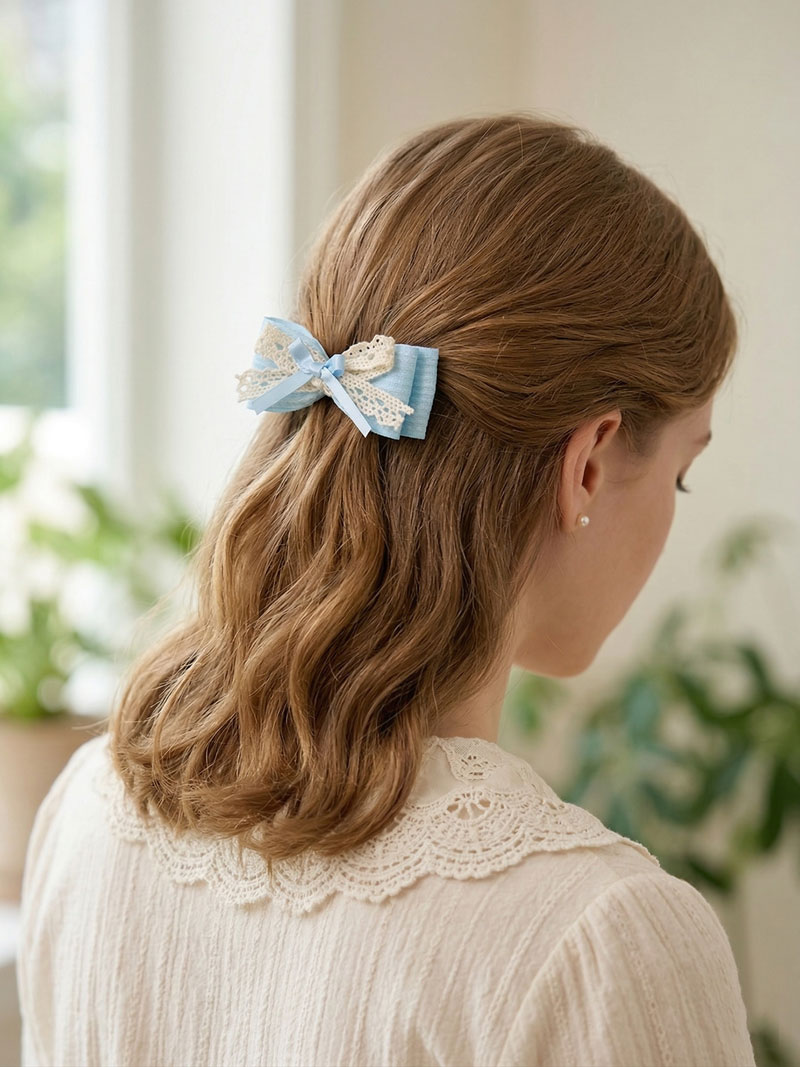
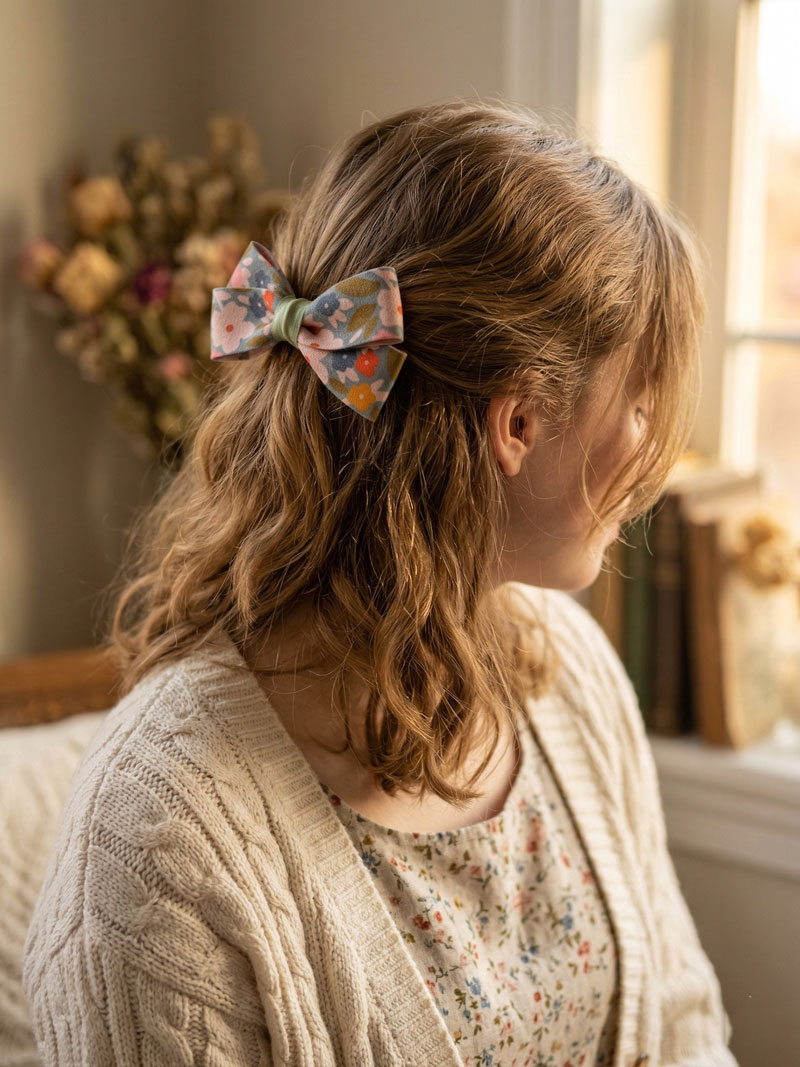
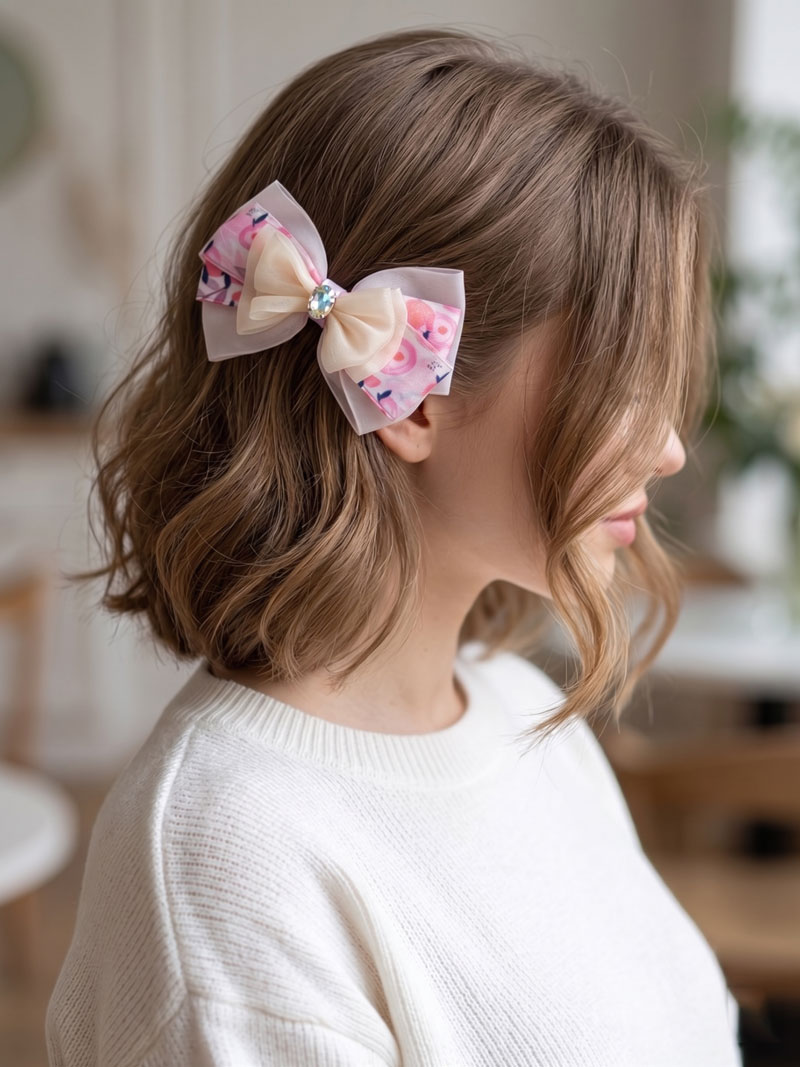
How We Choose Our Ribbons — The Criteria Behind Every Berkam Bow
People occasionally ask how we source our ribbons — usually fellow makers looking for suppliers, or customers who notice that a Berkam bow behaves differently from others they’ve owned. The answer always comes back to the same thing: a set of standards we’ve refined over time by handling a lot of ribbon that didn’t make the cut.
The Hand Test
Before anything else, you pick up the ribbon and feel it. It’s not scientific, but it tells you plenty.
What we want: body without stiffness. Hold a length horizontally — it should resist drooping and stay roughly level, but never feel rigid or papery. Ribbon that droops right away has no structure and makes a bow that collapses within hours. Stiff ribbon ties neatly but doesn’t drape naturally.
Thread Count and Weave
With woven ribbons, the density of the weave speaks directly to durability and behavior.
Low thread-count grosgrain shows gaps between the ribs, feels too light, and frays easily at the edges. Higher thread-count grosgrain has tight ribs, a dense handfeel, and holds its edge after cutting and sealing.
For silk, we look for true woven silk — not printed or coated versions. Hold it up to light, and you should see the thread structure.
The Color Test
We dye some of our own ribbon, but more often we source pre-dyed options — so we have to check that the color is properly set.
The test: dampen a small piece and press it against white cloth or tissue. If a lot of color transfers, the dye isn’t fixed and will run from rain, sweat, or humidity. Good ribbon might release a tiny bit of dye (they all do), but not enough to show up on hair.
Edge Behavior
Before we approve a new ribbon for production, we cut a short length, heat-seal the ends, and handle it repeatedly to see how it wears.
Good ribbon: the heat seal is clean and even. The edge stays sealed — no peeling, cracking, or discoloration.
Poor ribbon: the seal is uneven, the edge still frays, or heat causes color change.
What We Reject, and Why
Lightweight polyester that mimics silk: Looks similar in photos, performs completely differently. No body, too shiny, frays instantly, and slips in hair.
Ribbon with uneven dye lots: We test every batch against previous stock. Inconsistent dye lots mean bows from the same colorway don’t actually match.
Ribbon with surface coatings: Some manufacturers add a coating for better feel or shine. It wears off quickly and leaves an uneven, patchy finish.
Anything that feels cheap: There’s a flat, hollow quality to cheap ribbon that stands in sharp contrast to material with actual substance. We’ve handled enough to know it on touch.
[Browse what we’re working with this season →]
Frequently Asked Questions
What makes ribbon good for hair bows?
Good bow ribbon has body (so it holds shape instead of drooping), grip (so it stays tied, especially in fine hair), and durable edges (so it doesn’t fray). These come from weave density, fiber type, and construction — things you can feel before you even start making.
How do you test ribbon quality for hair accessories?
Hold a length horizontally — good ribbon resists drooping; bad ribbon sags right away. Press a damp piece against white cloth — heavy dye transfer means the color isn’t set. Heat-seal an end and handle it — a good seal stays intact without cracking or peeling.
What is the difference between cheap and quality grosgrain?
Quality grosgrain has tight, fine ribs, a dense weave, and actual weight — it feels solid. Cheap grosgrain has wider ribs, feels light, and sometimes has a plasticky coating. You can see the difference held up to light, and feel it in your hands.
Why does ribbon color consistency matter?
Accessories from the same color family should look consistent when worn together or compared. Inconsistent dye lots mean two rolls of the “same” color can look noticeably different. We test each new delivery against existing stock.
Does ribbon origin affect hair bow quality?
With French silk, yes. Mills in the Lyon region have woven silk for centuries, producing ribbon with a particular weight, drape, and sheen. For grosgrain, origin matters less — quality comes down to the mill’s standards, not its location.