The Fine Hair Bow Guide — How to Make It Work When Your Hair Won’t Cooperate
Fine hair has a particular relationship with accessories. The wrong one slips out within an hour. The right one stays all day and somehow makes the hair look more substantial than it actually is. The problem is that most accessory advice is written with medium-to-thick hair in mind, which means the specific mechanics of fine hair — why things slip, why certain bows overpower, why placement matters more than it does for other hair types — get skimmed over.
This is the guide that doesn’t do that.
Why Fine Hair and Bows Have a Complicated Relationship
Fine hair is slippery by nature. The individual strands are narrower than in medium or thick hair, which means there’s less surface area for elastics, clips, and ribbons to grip. Add to that the fact that fine hair often lacks the underlying volume to "support" a bow — to give it something to rest against — and you get a situation where the bow either slides down immediately or looks overwhelmed and floppy on hair that can’t hold its weight.
The solution isn’t to avoid bows. It’s to understand what works with the specific properties of fine hair and choose accordingly.
Three things matter most: ribbon weight, width, and placement.
The Weight Question
Heavier ribbon holds a bow shape better and grips fine hair more reliably than lightweight ribbon. This runs counter to the instinct that fine hair should have light accessories — but the confusion here is between the visual weight of a bow and the physical weight of the ribbon.
You want a ribbon with actual density: woven grosgrain, properly weighted silk, or a matte crepe. These fabrics stay tied, don’t slip against fine strands, and hold their loops without internal structure. Lightweight polyester satin is the worst choice for fine hair — it’s smooth, slippery, and has no body to stay in place.
What you’re feeling for when you hold ribbon: it should have a little stiffness when you hold a length horizontal. It shouldn’t immediately droop.
The Width Question
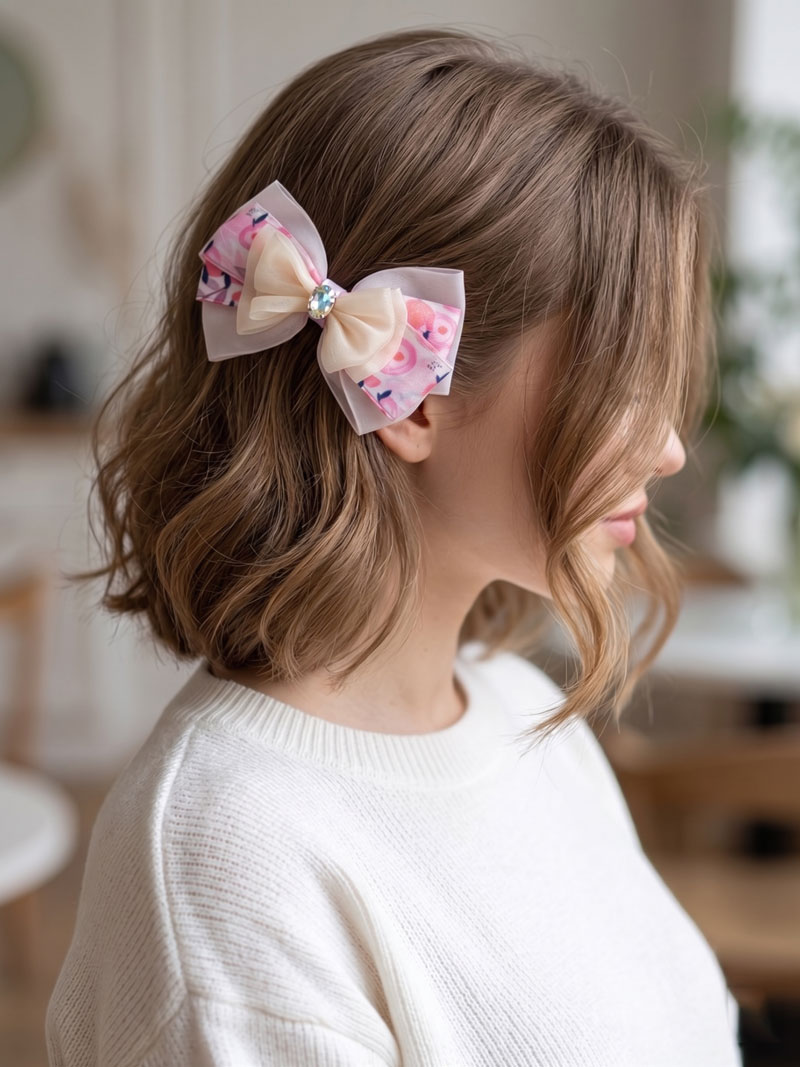
Counterintuitively, fine hair generally needs a narrower ribbon than you’d expect. A wide, dramatic bow on fine hair looks disproportionate — the bow is larger than the mass of hair it’s attached to. The sweet spot for most fine hair is 1 to 1.5 inches of ribbon width. At this width, with a properly weighted fabric, the loops sit cleanly and the bow holds its shape through the day.
The Placement Question
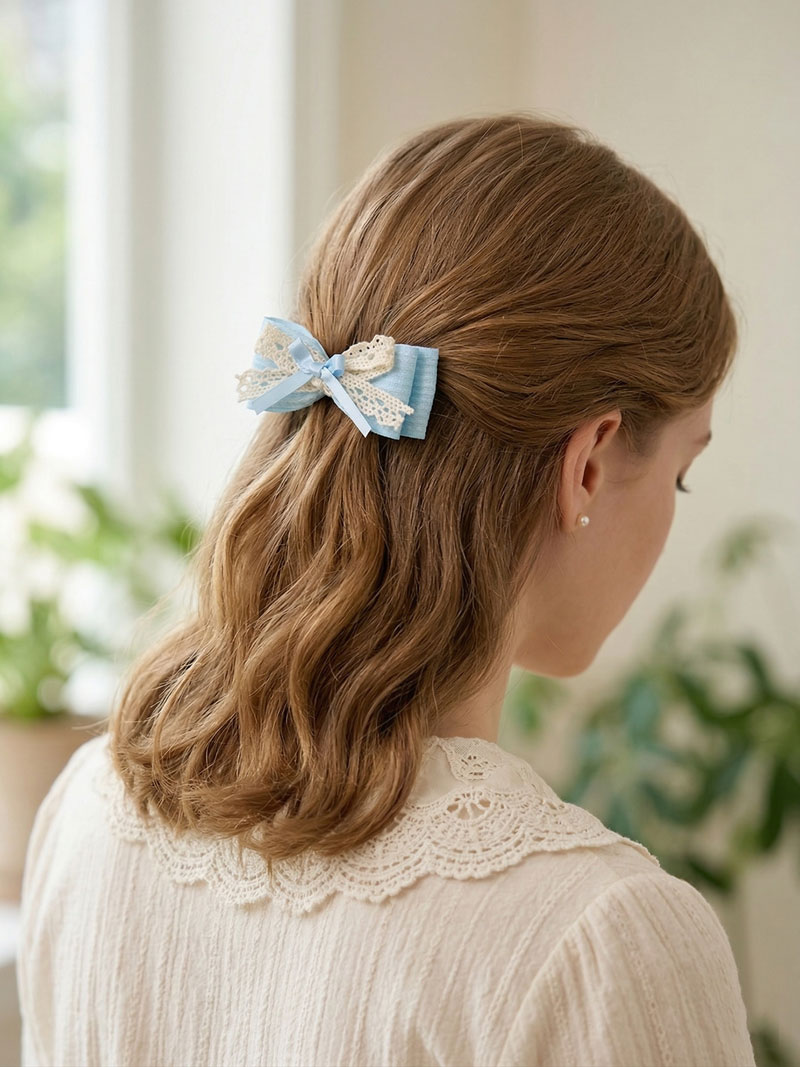
The nape is your best friend. A bow placed just above the nape at the base of a low ponytail or bun has a solid resting point and doesn’t have to grip much to stay in place.
Avoid the crown if you can. Fine hair doesn’t have the volume to hold a bow at the top of the head reliably. Things slide forward, the bow tilts, and by lunchtime it looks completely different from how it did at home.
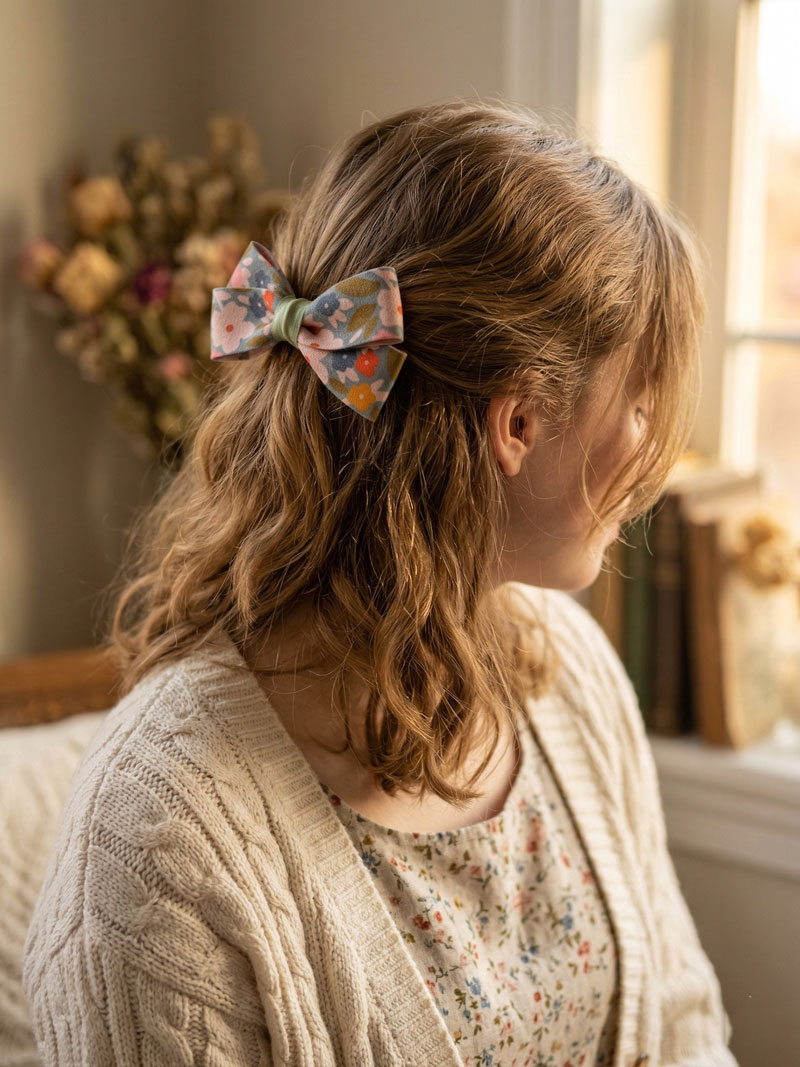
The half-up position works well if you secure the hair first with an elastic or pins, then tie the ribbon over that. The ribbon doesn’t have to do the structural work of holding the hair — it’s decorating a section that’s already secured.
The Pre-Slip Trick
Before tying any ribbon in fine hair, lightly backcomb the section of hair where the ribbon will sit. Just a small amount — you’re creating a little texture for the ribbon to grip against. A tiny mist of dry shampoo or texturizing spray on that section does the same thing.
The Styles That Work Best
Ribbon-tied braid: Braid your hair in a loose three-strand braid, then replace the elastic at the end with a 1-inch grosgrain ribbon. Because the bow is at the tip of the braid, it doesn’t need to grip the hair — it’s essentially tied around itself.
Low ponytail, nape placement: Gather all hair into a low ponytail, secure with an elastic, then tie your ribbon over the elastic so it covers it completely. The elastic does the gripping; the ribbon does the looking-good.
Single twist half-up: Take the top section of hair, twist it once, and pin it near the crown with a small pin. Tie a narrow silk ribbon over where the twist meets the pin. The twist adds enough structure to give the bow something to anchor to.
Wrapped bun: If your hair is long enough to form a small bun, wrap a length of ribbon around the base of the bun twice, then tie in a bow. Two wraps significantly increases the grip compared to one.
[Find the right bow for your hair →]
Frequently Asked Questions
What type of hair bow is best for fine hair?
Grosgrain is the best ribbon fabric for fine hair: its ribbed texture grips thin strands rather than slipping against them. Use a narrower width than you might for thicker hair — 1 to 1.5 inches is the right range for most fine hair. Avoid smooth polyester satin, which has no grip and slides out of fine hair consistently.
How do you stop a hair bow from slipping in fine hair?
Before tying the ribbon, lightly ruffle the hair at the attachment point or apply a small amount of dry shampoo. This creates texture for the ribbon to grip against. Using ribbon with actual body (grosgrain, weighted silk) rather than lightweight satin also makes a significant difference. For clip bows, make sure the clip teeth are clean.
Where should you place a hair bow on fine hair?
The nape is the most reliable position for fine hair: a bow at the base of a low ponytail has a solid resting point and doesn’t rely on the hair above it to stay in place. Avoid crown placement — fine hair doesn’t have the volume to keep a bow anchored at the top of the head through a full day.
Can fine hair wear a large ribbon bow?
A very large bow on fine hair tends to look disproportionate because the bow exceeds the mass of hair it’s attached to. Stick to a medium bow at maximum — 1.5 inch ribbon width is a reliable ceiling for most fine hair types.
What hairstyle works best for ribbon bows on fine hair?
The ribbon-tied braid works best: braid your hair loosely, then replace the elastic at the end with a narrow grosgrain ribbon. The ribbon is tied around the braid tip rather than needing to grip the hair directly, so slippage is minimal.